
Impact of Diabetic Status on Repeat Revascularization Following Coronary Angiography
Background:
Although substantial progress has been made in recent decades in the management of patients with coronary artery disease (CAD), diabetes is associated with increased risk of cardiovascular morbidity and mortality. We aimed to determine the impact of diabetes and its treatment status on long-term revascularizations following baseline coronary angiography (with or without a baseline revascularization procedure), in the contemporary post-2000 era.
Methods:
Coronary angiography was performed for evaluation of CAD in 14,337 consecutive patients in a single center between the years 2000-mid 2015, and their immediate revascularization status within 2 months was recorded [none, percutaneous coronary intervention (PCI) or cardiac surgery (CABG)]. Subsequent revascularization procedures were determined retrospectively and related to diabetic and baseline revascularization status.
Results:
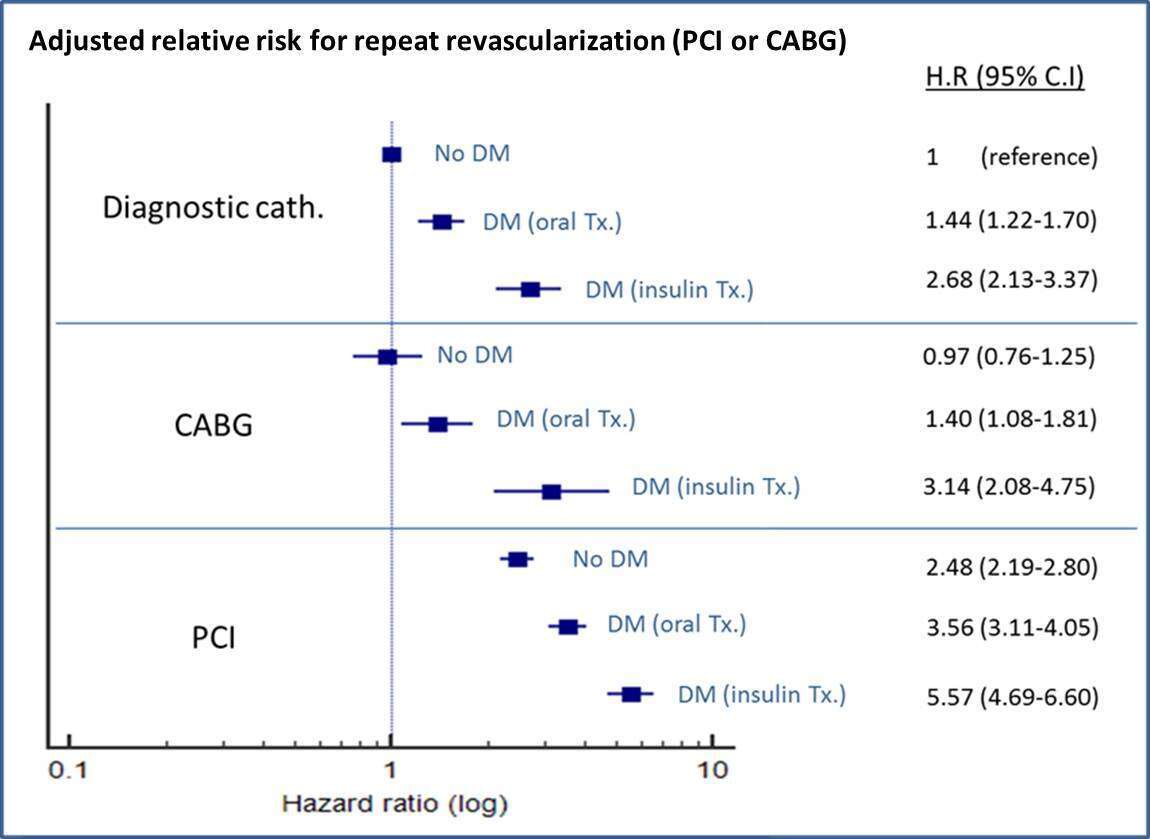
Mean age was 64±11 years (72% males) and 37% were diabetics at angiographic presentation. The baseline revascularization status following angiography was (a) None (n=6,172), (b) PCI (n=6,689) and (c) referral to CABG surgery (n=1,476). Over the median follow-up of 65 months (IQR 29-108) revascularization rates (PCI or CABG) were 11.9% in group (a), 27.7% in group (b) and 11.7% in group (c). In a multivariate-adjusted model, a graded increase in the rate of repeat revascularization from no diabetes to orally and insulin treated diabetes was demonstrated in each of the 3 baseline cohorts (p<0.001; Figure). In addition, further revascularizations (≥2 repeat procedures) were also significantly more common in diabetics vs non-diabetics, in particular if insulin-treated (10.1% vs. 2.7% in the no index revascularization group, 19.5% vs. 5.9% in the PCI group and 8.2% vs. 2.5% in the CABG group).
Conclusions:
The presence of diabetes and in particular insulin-treated diabetes is an independent predictor of long-term repeat coronary revascularizations, regardless of any index revascularization procedure performed at study baseline. The high rates of repeat revascularizations in diabetics following PCI remain a challenging issue.
Powered by Eventact EMS