
The Contractile Apparatus Factory: Sarcomere Assembly in Cardiomyocytes is Facilitated by mRNA Localization, on-site Protein Synthesis, and Degradation of Mislocalized Protein
Background:
The sarcomere is the basic contractile unit of the cardiomyocyte. It consists of 10-15 proteins working in unison in order for normal contraction to function. Sarcomere assembly requires these proteins to be located in specific, repeating locations and in known stoichiometric ratios. The subcellular molecular mechanisms involved in sarcomere assembly have not been well described. The objective of our study is to shed light on the mechanisms that are required for sarcomere assembly.
Methods:
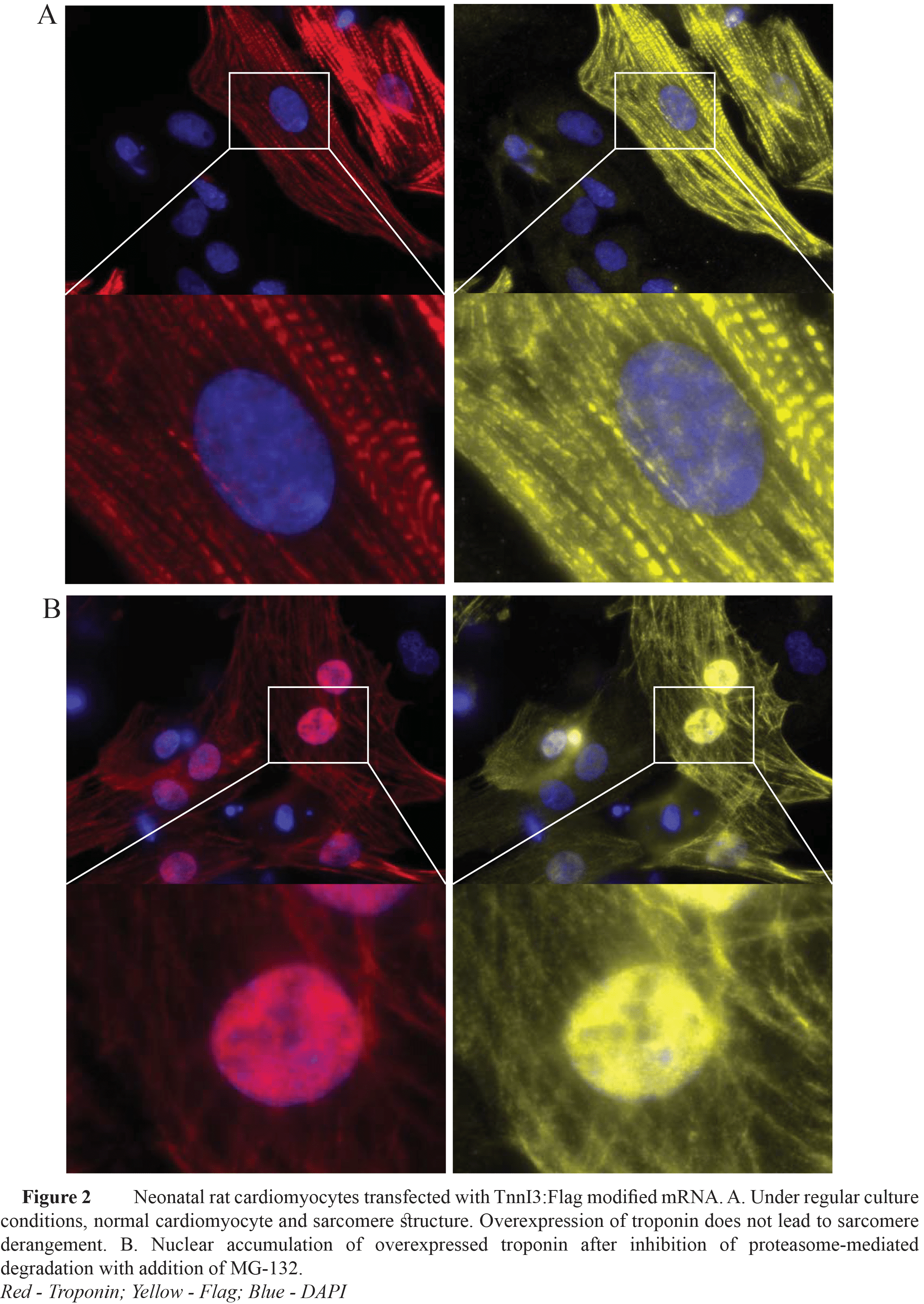
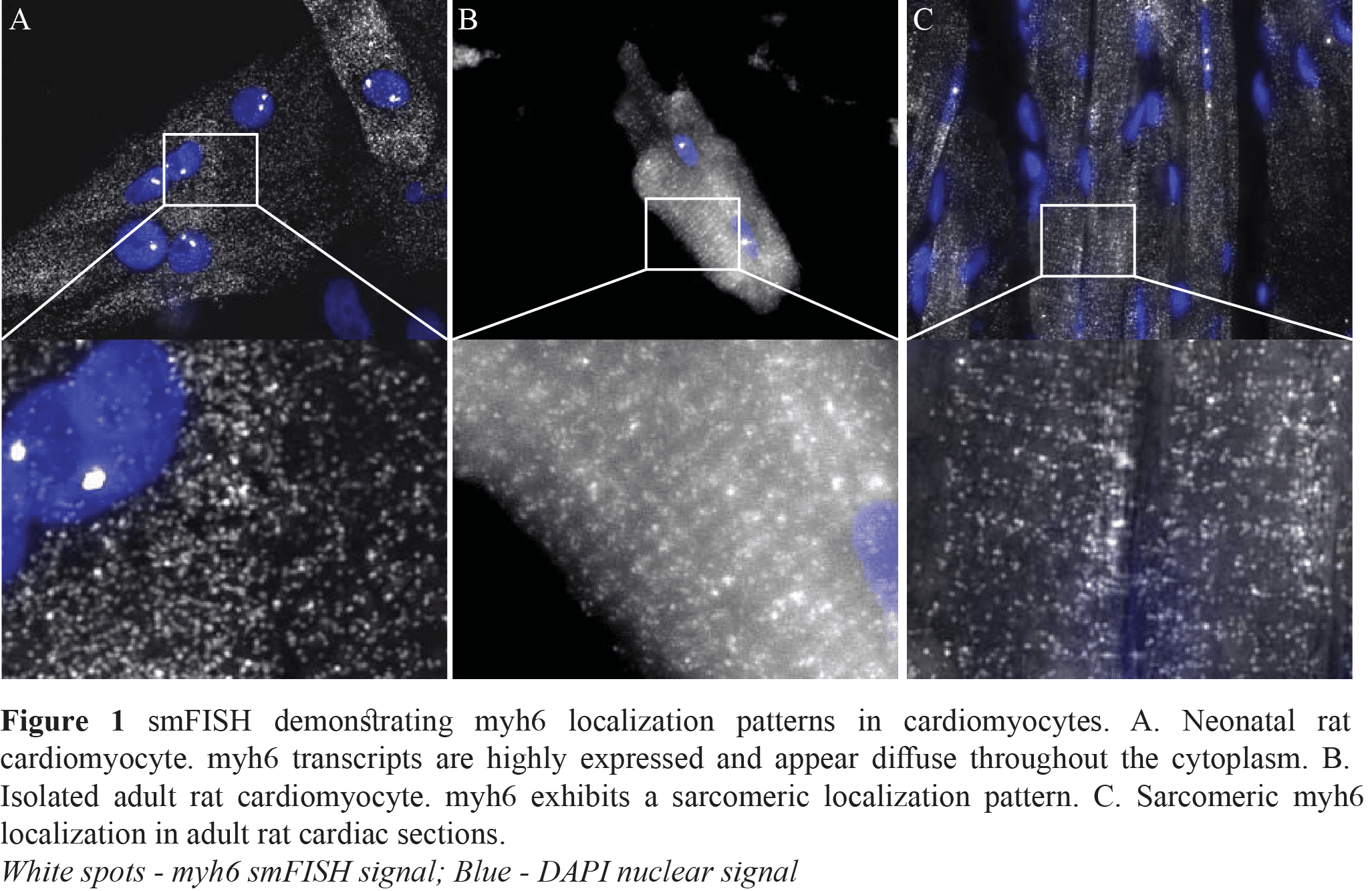
Experiments were done on neonatal and adult rat cardiomyocytes, and on cryosections of adult rat hearts. Sarcomeric mRNA localization was investigated by single-molecule fluorescence in-situ hybridization (smFISH) assay. Protein synthesis location was studied by bio-orthogonal labeling of nascent protein in neonatal rat cardiomyocytes. Sarcomeric protein overexpression was induced by transfection of troponin-I (cTnI) modified mRNA in neonatal cardiomyocytes. Degradation was inhibited by addition of the proteasome inhibitor MG-132.
Results:
We show that sarcomeric transcripts are localized in adult cardiomyocytes and hearts (Figure 1b-c). In neonatal cardiomyocytes mRNA is distributed throughout the cytoplasm, with less apparent sarcomeric localization. Despite this limited mRNA organization, nascent protein synthesis assays in neonatal cardiomyocytes demonstrated localized on-site synthesis of protein at the sarcomeric z-lines. mRNA localization is not required for localized sarcomere synthesis as overexpression of cTnI mRNA did not lead to accumulation of mislocalized troponin, and sarcomeric structure appears preserved (Figure 2a). Inhibiting the ubiquitin-proteasome pathway led to a less organized sarcomere and accumulation of troponin in the nucleus (Figure 2b), showing that mislocalized sarcomeric protein is rapidly degraded.
Conclusions:
Sarcomere assembly involves mRNA localization followed by on-site protein translation. Since sarcomeric proteins are needed at precise stoichiometric ratios, protein levels are also regulated by directed degradation of mislocalized and un-integrated sarcomeric proteins. Understanding these mechanisms might in the future allow for novel interventions to prevent pathological heart growth.

Powered by Eventact EMS