Characteristics and Outcomes Associated with 30-day Readmissions Following Acute Coronary Syndrome over the Past Decade
2Sackler School of Medicine, Tel-Aviv University
3Cardiology, Meir Medical Center
4Leviev Heart Center, Sheba Medical Center
Background:
Readmissions following acute myocardial infarction are associated with high economic burden and poor outcome. Less established data exist regarding the characteristics and outcome of patients readmitted following the full spectrum of acute coronary syndrome (ACS). We sought to explore trends, indices and prognosis associated with readmission at 30 days post ACS over the past decade.
Methods:
The study population comprised 13,010 ACS patients who were enrolled and prospectively followed up in the bi-annual Acute Coronary Syndrome Israeli Survey (ACSIS) from 2000 through 2013. Multivariate analysis was utilized to identify factors independently associated with 30 days readmission and subsequent long-term mortality.
Results:
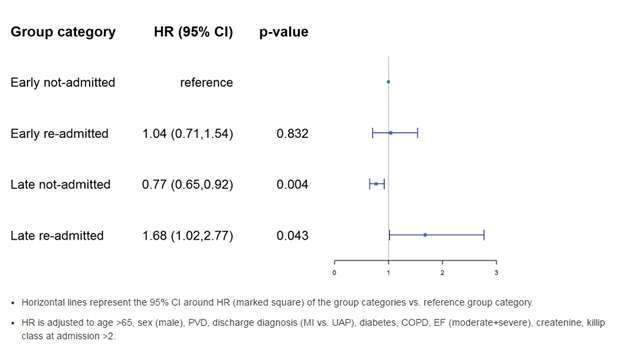
Among 13,010 study patients, 556 patients (4.2%) were readmitted urgently within 30-days of the index event. Stent thrombosis during the index hospitalization (OR 8.43 [4.11-16.07];p<0.001), Female sex (OR=1.34 [1.1-1.63];p=0.003), older age (>65) (OR=1.28; [1.06-1.55]p=0.011), and lack of dual-antiplatelet therapy (OR=1.52[1.25-1.86];p<0.001) were among the indices independently associated with readmissions. Patients who were readmitted were less likely to be treated with guideline directed medical therapy during hospitalization and at discharge and were less likely to undergo coronary angiography. A significant trend for decline in readmission rates following ACS was observed between 2000 and 2013 (p-value for trend<0.001;Figure-1). However, the association between readmission and subsequent poor long-term outcome was more pronounced among patients readmitted in more recent years (2008-2013;Figure-2).
Conclusions:
Patients readmitted following ACS comprise an undertreated, high-risk cohort. Our findings suggest that despite a significant declined in readmission rates following ACS over the past decade, readmission within 30-days following ACS still carries a dismal outcome.
Figure-1:Trend in 30-day Readmission Rates Between 2000-2013.
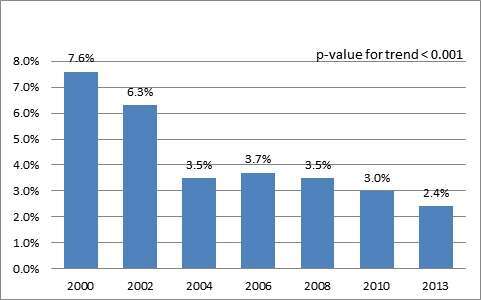
Figure-2: Cox Proportional Hazard Model for Mortality at 1 year with 95% Confidence Intervals.

Powered by Eventact EMS