
Structural and Functional Echocardiographic Changes Following Kidney Transplantation – The Role of Allograft Function
2Nephrology and Hypertension, Rabin Medical Center Beilinson Hospital, Petach Tikva
3Department of Transplantation, Rabin Medical Center, Beilinson Hospital, Petah Tikva
4Faculty of Medicine, Sackler Faculty of Medicine, Tel Aviv University, Tel Aviv
Background:
Kidney transplantation is associated with early improvement in cardiac function and structure. However, data on cardiac adaptation and its relation to kidney allograft function remain sparse.
Objectives:
The aim of the study was to investigate the relationship between post-transplant kidney function and echocardiographic measures in patients with normal/preserved pre-transplant cardiac structure and function.
Methods:
The cohort included 113 patients who underwent kidney transplantation at a single tertiary medical center in 2000-2012 and were evaluated by echocardiography before and after transplantation. Data were collected from the hospital’s transplantation registry and echocardiography database. The relationship between allograft function and post-transplantation changes in echocardiographic measures was analyzed.
Results:
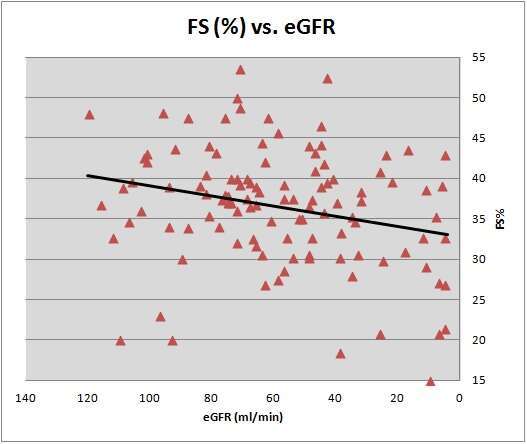
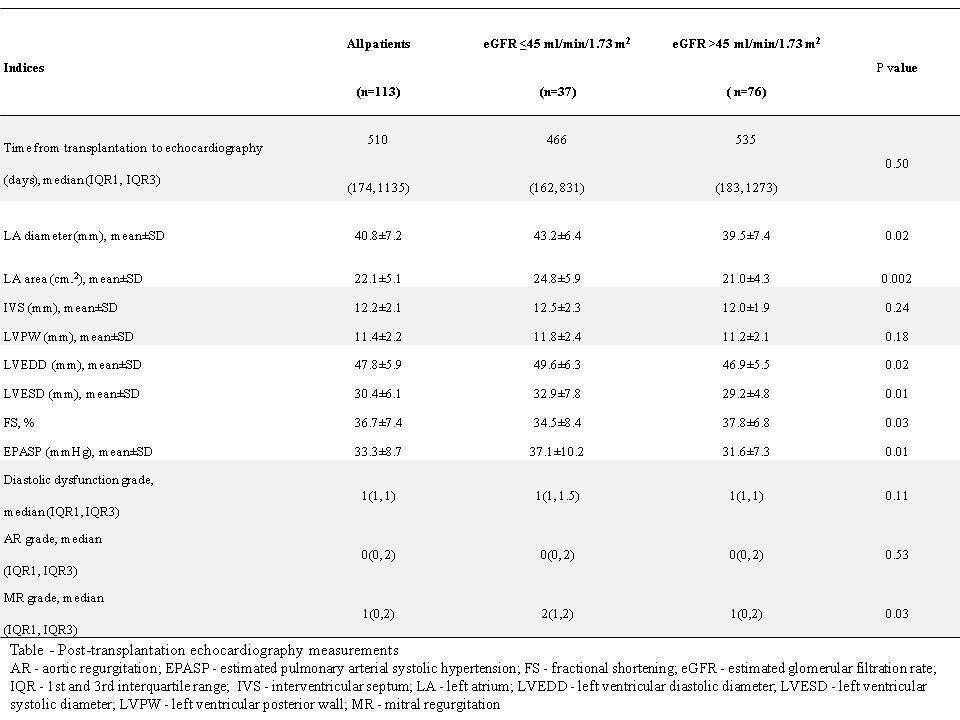
Echocardiography was performed at a median of 510 days (IQR1 174, IQR3 1135) after transplantation. Post-transplantation estimated glomerular filtration rate (eGFR) was directly correlated with left ventricular (LV) systolic function (figure) and inversely correlated with LV dimensions, LV wall thickness, left atrial diameter, and estimated systolic pulmonary arterial pressure. In patients with significant allograft dysfunction (eGFR ≤45 ml/min), LV hypertrophy worsened, with no improvement in LV dimensions. In patients with preserved kidney function, there was a significant reduction in both LV diameter and arterial pulmonary systolic pressure (table).
Conclusions:
In kidney transplant recipients with preserved pre-transplantation cardiac measures, kidney allograft function significantly affects intermediate-term cardiac structure and function. Periodic echocardiographic follow-up is advisable, especially in patients with kidney graft dysfunction.
Powered by Eventact EMS