BIOLOGICAL METHANE OXIDATION
2Department of Biochemistry and Molecular Biology, Wayne State University, School of Medicine, Detroit, MI
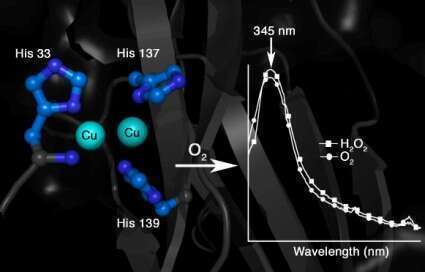
Vast world reserves of methane gas are underutilized as a feedstock for production of liquid fuels and chemicals due to the lack of economical and sustainable strategies for selective oxidation to methanol. Current processes to activate the strong C-H bond (104 kcal/mol) in methane require high temperatures, are costly and inefficient, and produce waste. In nature, methanotrophic bacteria perform this reaction under ambient conditions using metalloenzymes called methane monooxygenases (MMOs). There are two types of MMOs. Soluble MMO (sMMO), which is expressed by several strains of methanotrophs under copper limited conditions, oxidizes methane with a well characterized catalytic diiron center. Particulate methane monooxygenase (pMMO), an integral membrane metalloenzyme produced by all methanotrophs, is composed of three subunits, pmoA, pmoB, and pmoC, arranged in a trimeric complex. Despite 20 years of research and the availability of multiple crystal structures, the metal composition and location of the pMMO metal active site remain controversial. We have shown that pMMO activity is dependent on copper, not iron, and that the copper active site is located in the soluble domains of the pmoB subunit rather than within the membrane. Recombinant soluble fragments of pmoB (spmoB) bind copper and exhibit propylene and methane oxidation activities. Disruption of each copper center in spmoB by mutagenesis indicates that the active site is a crystallographically modeled dicopper center. Spectroscopic studies of both pMMO and spmoB provide evidence for dioxygen binding at this site.
Powered by Eventact EMS