
Endogenous GLP-1 Response to Acute Coronary Event in Patients with and without T2DM
2Department of Cardiology, Assaf Harofeh Medical Center
3Diabetes Laboratory, Assaf Harofeh Medical Center
Background:
GLP-1, initially described as gut hormone, targets various, widely dispersed receptors. Among other extraglycemic effects, various cardio-protective effects of GLP-1 analogues and DPP4 inhibitors have been shown. Significant reduction of cardiovascular morbidity in diabetic patients treated with GLP-1 analogues has been demonstrated. In acute setting, administration of GLP-1 analogues in patients undergoing reperfusion treatment after acute myocardial infarction, reduced the infarct size and improved clinical outcome. Our previous study demonstrated significantly increased levels of endogenous GLP-1 on the first day following acute myocardial infarction.
Aim:
To evaluate whether diabetic patients display aberrant expression of GLP-1 system in various coronary heart disease (CHD) presentations.
Methods:
T2DM and non-diabetic patients with acute coronary syndrome, STEMI and non-STEMI and stable coronary artery disease (SCAD) undergoing coronary angiography as well as healthy controls were enrolled. Blood samples were collected at onset of ACS, at 24h and 48h after coronary angiography. Patients with SCAD were sampled before and at 24h after coronary angiography. Plasma levels of main endogenous compounds of GLP-1 system, including total and active forms of GLP-1 and soluble form of the DPP4 (sDPP4) enzyme were measured.
Results:
90 patients were enrolled: 22 STEMI, 26 non-STEMI, 17 SCAD and 25 healthy controls. Levels of sDPP4 were significantly reduced in both T2DM and non-diabetic CHD patients compared to healthy controls. In non-diabetic patients with ACS levels of total and active GLP-1 significantly increased (p<0.05) after 24h and decreased consequently whereas in T2DM patients no significant increase in GLP-1 was found.
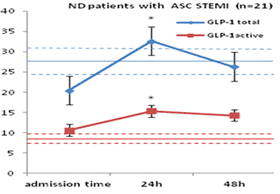
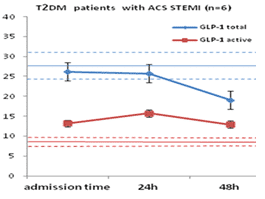
Conclusion: These preliminary data demonstrate the presence of common and distinctive defects in GLP-1/DPP4 system in patients with CHD with and without T2DM. The reduced sDPP4 levels may be common in patients with CHD regardless of their diabetic status while a failure to increase GLP-1 levels during ACS characterizes only patients with T2DM.

Powered by Eventact EMS