Baseline Patient Characteristics and their Association with Biological Prosthetic Aortic Valve Degeneration in Patients Following Aortic Valve Replacement.
Background:
Bioprosthetic valves are recently implanted in younger population. TAVI is also increasingly being performed in younger patients and in those at lower surgical risk. As a result, life expectancy after bioprosthetic aortic valve replacement (BAVR) will increase. Recent reports predict more than 50% incidence of bioprosthetic valve failure after 12–15 years from BAVR. Little is known of the effect of cardiovascular risk factors on long-term outcome after BAVR
Aim:
To determine the impact of risk factors, medical therapy and baseline echocardiographic parameters on the deterioration of bioprosthetic aortic valve hemodynamic function.
Methods:
The study included 88 patients who underwent BAVR (46 TAVI). Patients underwent echocardiographic studies before, immediately after and every 6 months after BAVR. Patients were divided into a group with and a group without bioprosthetic aortic valve degeneration (BAVD). BAVD was defined as an increase of 10mmhg in mean gradient by echocardiography or an increase of at least one level of valve regurgitation.
Results:
During a median follow up of 36 month, BAVD was observed in 21 (24%) patients. The average age was 77.31±8.86 and 76.76±11.02 years in patients without and with BAVD, respectively (p=0.816). There was no significant difference in baseline risk factors between the groups, except of a lower incidence of hypertension in patients with BAVD. Baseline echocardiographic parameters were also similar between the groups as were baseline hemoglobin, white blood cells, platelets, renal and liver function tests. There was no difference between the groups in baseline medical therapy, including statin therapy. No difference was observed in lipid profile between the groups (Table).
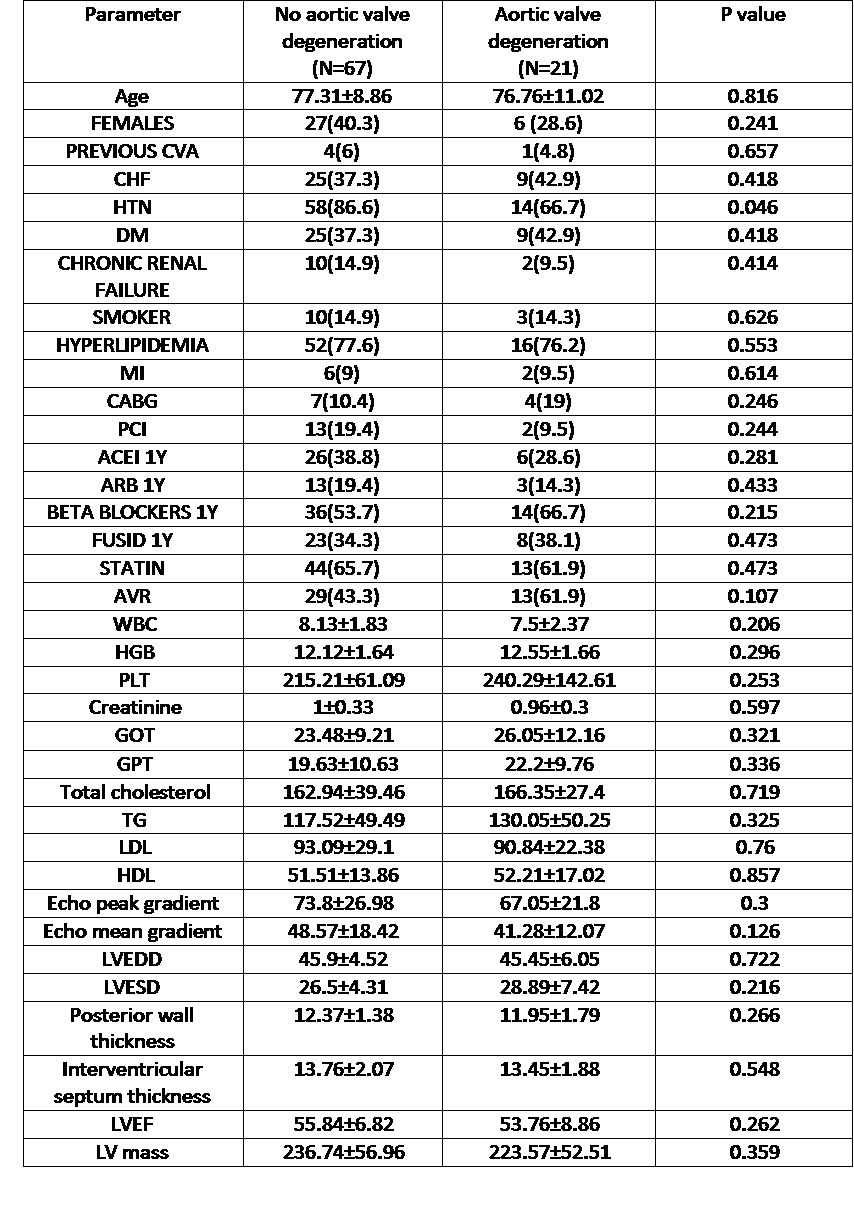
Conclusions: In elderly patients who underwent surgical or transcutaneous BAVR, there are no significant differences in baseline characteristics that are in correlation with BAVD. A borderline, paradoxical difference was observed in the frequency of hypertension between the groups.

Powered by Eventact EMS