Anticoagulation after Transcatheter Aortic Valve Implantation is Associated with Higher Bleeding Risk but no Thromboembolic Benefit
2The Sackler Faculty of Medicine, Tel Aviv University
Background:
The optimal antiplatelet or anticoagulation regimen after transcatheter aortic valve implantation (TAVI) is unknown. Currently, treatment of patients is not evidence-based and is determined according to the physician’s discretion.
Methods:
A retrospective analysis on 544 patients that underwent TAVI in Sheba Medical Center (2008-2016). Baseline and clinical follow up to 1-year was completed. Patients were grouped according to whether discharge medication regimen included anticoagulation (N=142) or antiplatelet drugs (N=402). Endpoints included all bleeding events and all thromboembolic events.
Results:
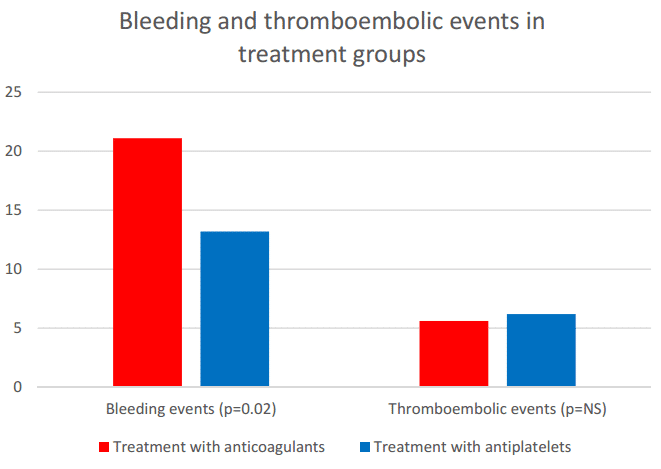
Mean age was 81(±7) years, and 51.1% were women. There were no significant differences between treatment groups in patients’ age, sex, previous percutaneous coronary intervention, cerebrovascular accident, Euroscore2 score, or creatinine. However, patients in the anticoagulation group suffered more often from atrial fibrillation (68.3% vs. 15.4%, p<0.01), or had a mechanical mitral valve (4.9% vs. 0.1%, p=0.01) compared to patients on antiplatelet treatment. While there was no difference in the rate of thromboembolic complications between groups (5.6% vs. 6.2%, p=0.8), there was a significant higher rate of bleeding in the anticoagulation group (21.1%) compared to the antiplatelet group (13.2%, p=0.02, figure).
Conclusions:
Discharge of patients with anticoagulation after TAVI is associated with nearly a 2-fold increase in bleeding risk, but with no significant reduction in the risk for thromboembolic events as compared to antiplatelet therapy during up to 1-year follow-up.

Powered by Eventact EMS