Ethnic Differences Among Israeli Patients Presenting with Acute Coronary Syndrome: A Report From the Israeli ACSIS Registry
2ACSIS Registry, ACSIS Council
Background:
An increase in life expectancy and a reduction in cardiovascular mortality have been recognized during the last decades in all Israeli ethnic groups including Israeli Arabs. However, Life expectancy is still lower among Israeli Arabs compared to the non-Arab population and cardiovascular diseases are still the leading cause of death in this group. The aim of this study was to evaluate ethnic differences in baseline characteristics and outcome among Israeli patients hospitalized with acute coronary syndromes (ACS).
Methods:
The data of the Acute Coronary Syndromes Israeli Survey (ACSIS) registries (2006-2013) were analyzed for baseline characteristics and age adjusted mortality (Cox models) comparing Arab patients with ACS to their non-Arab counterparts.
Results:
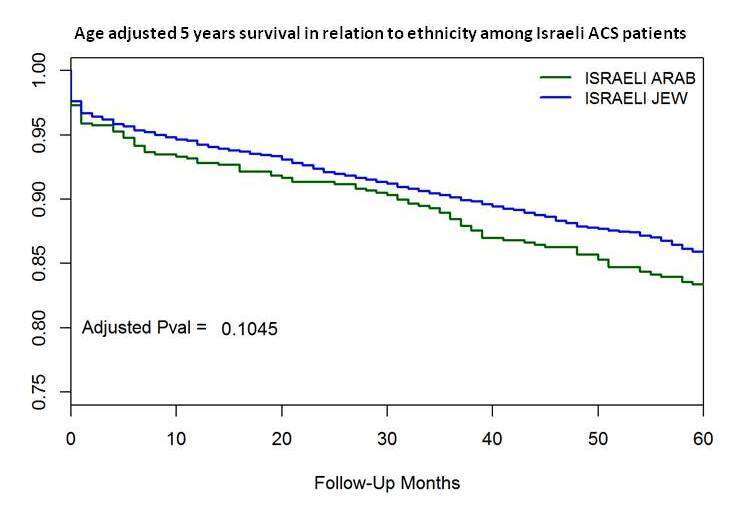
7055 hospitalized patients with ACS were included in this analysis, 3067 of which were STEMI patients. Of the 7055 patients, 1251 were Israeli Arabs (18%). Arab ACS patients were significantly younger at ACS presentation (age 59±11 years) vs. all others (65±12) (p<0.01), were more likely to be males (81.4% vs. 77.0%, p=0.01), and had higher prevalence of diabetes mellitus (47% vs. 34%, p<0.01) and smoking history (57% vs. 34%, p<0.001) when compared to the non-Arab population (mostly Jewish). Age and gender adjusted 1-year mortality was higher (p=0.025) among Arab ACS patients but at 5 years there was no difference (p=0.1) between the two groups (Figure).
Conclusions:
Israeli Arabs present with ACS at a significantly younger age and have higher prevalence of smoking and diabetes mellitus than non-Arab patients. Although age adjusted 1 year mortality was higher among Arab Israelis presenting with ACS, long term survival was similar to non-Arabs. These findings underscore the need for population-based primary prevention plans among Arab Israelis but also demonstrate the beneficial effect of secondary prevention therapies on long term survival in this group.
Powered by Eventact EMS