Biocompatible vs. Conventional Perfusion Strategy in Patients Undergoing Surgery of the Proximal Aorta
Background :
•Surgical treatment of diseases of the proximal aorta requires use of cardiopulmonary bypass for prolonged period of times
•Deep hypothermia and low-flow or circulatory arrest are frequently utilized
•Patients are exposed to the inherent pathophysiological adverse effects of cardiopulmonary bypass
•We have previously shown that a biocompatible perfusion strategy (BPS) was safe and effective in patients undergoing coronary artery bypass grafting
•The purpose of this study was to evaluate the use of our biocompatible perfusion strategy in patients undergoing proximal aortic surgery
•106 patients undergoing surgery of the proximal aorta between 2008 to 2015 were enrolled.
•We compared 63 patients who had surgery with BPS to 43 patients operated using convential perfusion strategy (Con)
Methods:
•BPS consisted of a membrane oxygenator, tip-to-tip closed-system heparin-bonded cardiopulmonary bypass circuits, low systemic anticoagulation (target ACT – 350 sec) using heparin titration curves, low prime volume, avoidance of systemic cooling when low-flow or circulatory arrest is not indicated, and routine use of cell saver and anti-fibrinolytics.
•The important different components of the Con strategy included open, non-coated circuits and standard anticoagulation (target ACT >480 sec)
•We retrospectively analyzed data that were prospectively collected using the American Society of Thoracic Surgeons Adult Cardiac Surgery Database definitions.
Results:
Table 1: Patient Clinical and Surgical Profiles
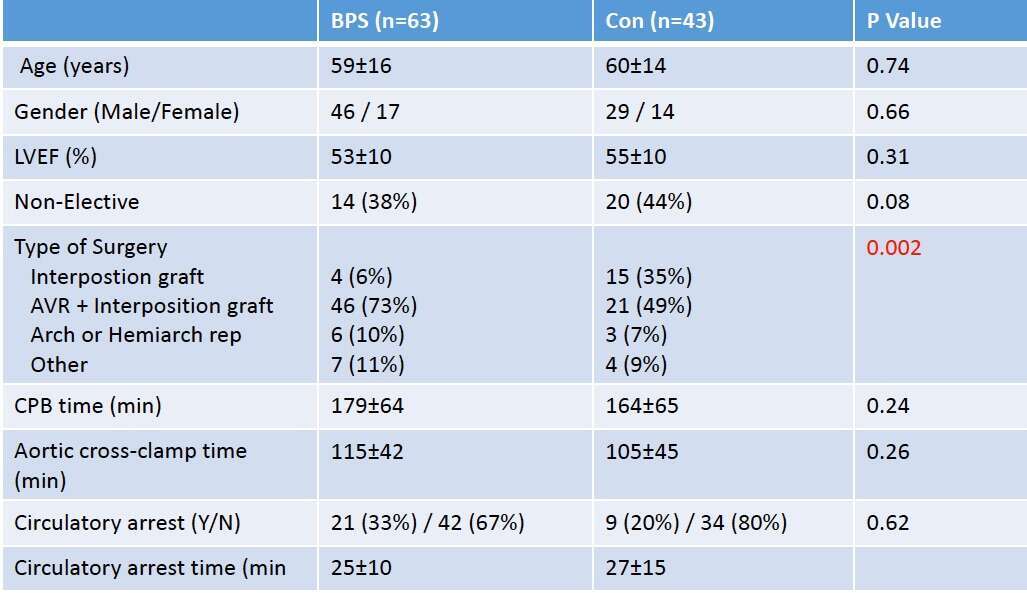
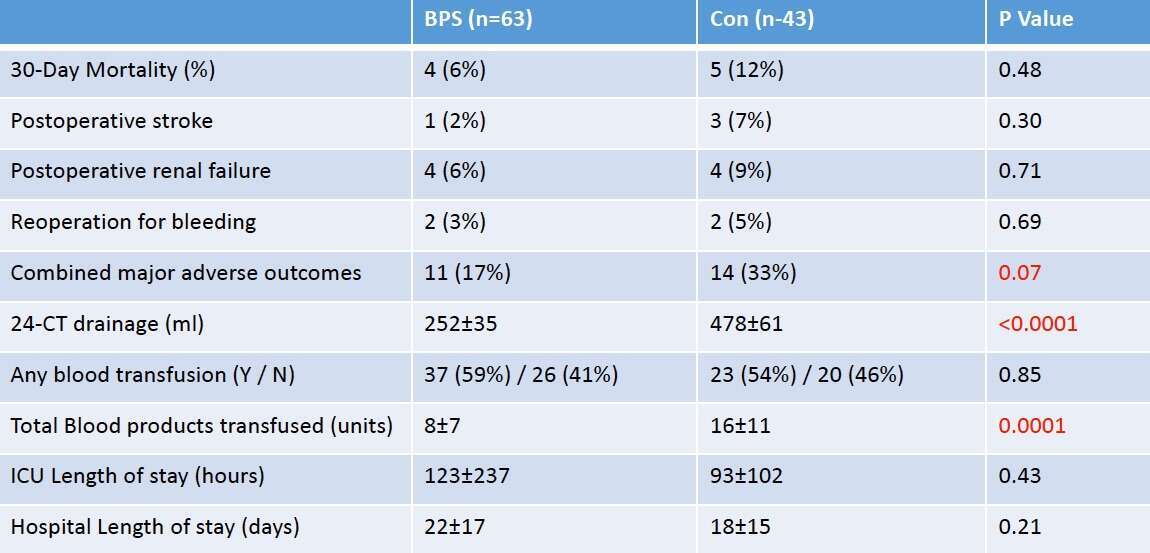
Table 2: Clinical Outcomes
Conclusion:
•Biocompatible perfusion strategy is safe and effective in patients undergoing complex surgery of the proximal aorta
•It is associated with excellent clinical outcomes and reduced allogeneic blood transfusions

Powered by Eventact EMS