A Decade Trends in Percutaneous Coronary Intervention Practice: Insights from 18,641 Patients’registry
Objective:
To evaluate the trends accompanying percutaneous coronary intervention (PCI) practice and outcomes during the last decade.
Methods:
Between Jan-2004 and Dec-2016, 18,641 consecutive PCI`s at our medical center were divided into time quarters according to procedural date (Q1: 2004-2006, n= 4,865; Q2: 2007-2009, n= 4,977; Q3: 2010-2012, n= 4,230; Q4: 2013-2016, n= 4,569). Temporal trends regarding patients’ characteristics, procedural issues and outcomes were analyzed.
Results:
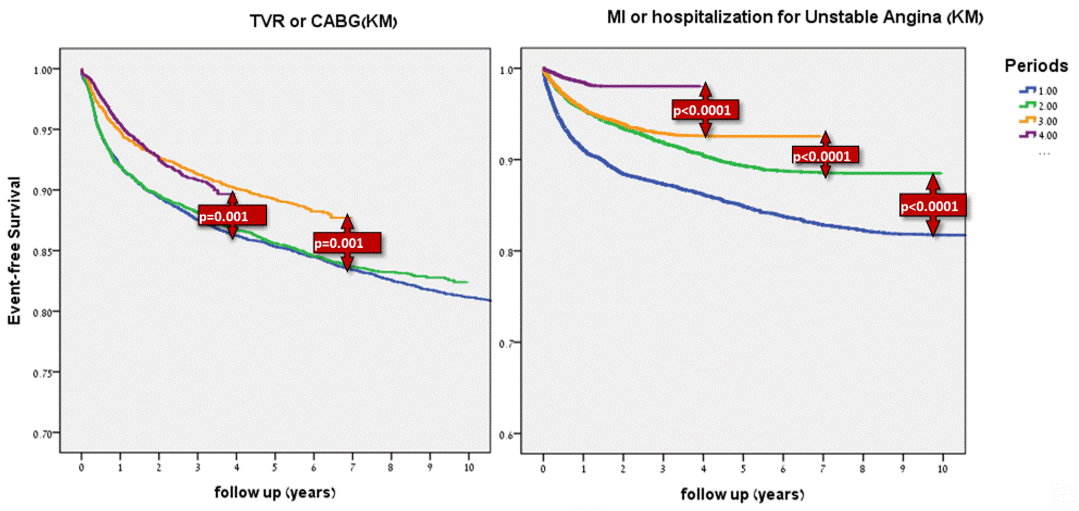
Mean patients age was 65 (±11) years, 4242 (22.8%) females, 10,926 (58.6%) of the procedures carried out in acute-coronary-syndrome (ACS) settings. Throughout the years, octogenarians constituted a larger part of the population (from 10.7% to 15.5%, p<0.001), and although the burden of hypertension (p<0.001) and smoking history (p<0.015) decreased, the burden of most co-morbidities increased, including baseline left-ventricular (≥moderate) and chronic kidney dysfunction (from 13% and 18.1% to 17.2% and 21.7%, respectively, p
Conclusions:
In the last decade, PCI had evolved to offer better prognosis to more elderly, sicker patient population, with more complex coronary disease. The shift to DES and to enhanced PCI techniques may explain part of this progress.

Powered by Eventact EMS