
Treatment with bezafibrate is associated with reduced risk of cancer in patients with coronary heart disease
2Cardiology, Sheba Medical Center
3The Israeli Association for Cardiovascular Trials, Sheba Medical Center
4Oncology, Wolfson Medical Center
5Epidemiology and Preventive Medicine, Tel Aviv University
6Cardiology, Shaare Zedek Medical Center
Background: Bezafibrate, peroxisome proliferator activator receptor a (PPARa) agonist, appears to downregulate vascular endothelial growth factor (VEGF), vascular endothelial growth factor receptor (VEGFR) and hypoxia inducible factor-1 a (HIF-1a) and thus may have adjunct role for the treatment of cancer.
Objective: This study was designed to evaluate the possible long-term reduction in cancer risk associated with bezafibrate therapy among participants with coronary heart disease (CHD).
Methods: Participants were 2980 patients with CHD (mean age, 60.0 years; 92% men), free of cancer, enrolled in the Bezafibrate Infarction Prevention (BIP), a double-blind trial, from 1990-1992. Patients randomized to receive 400 mg of bezafibrate (n=1486) or a placebo (n=1494) daily were followed up for cancer for a median of 21.3 years. Survival techniques were used to assess the bezafibrate-cancer association.
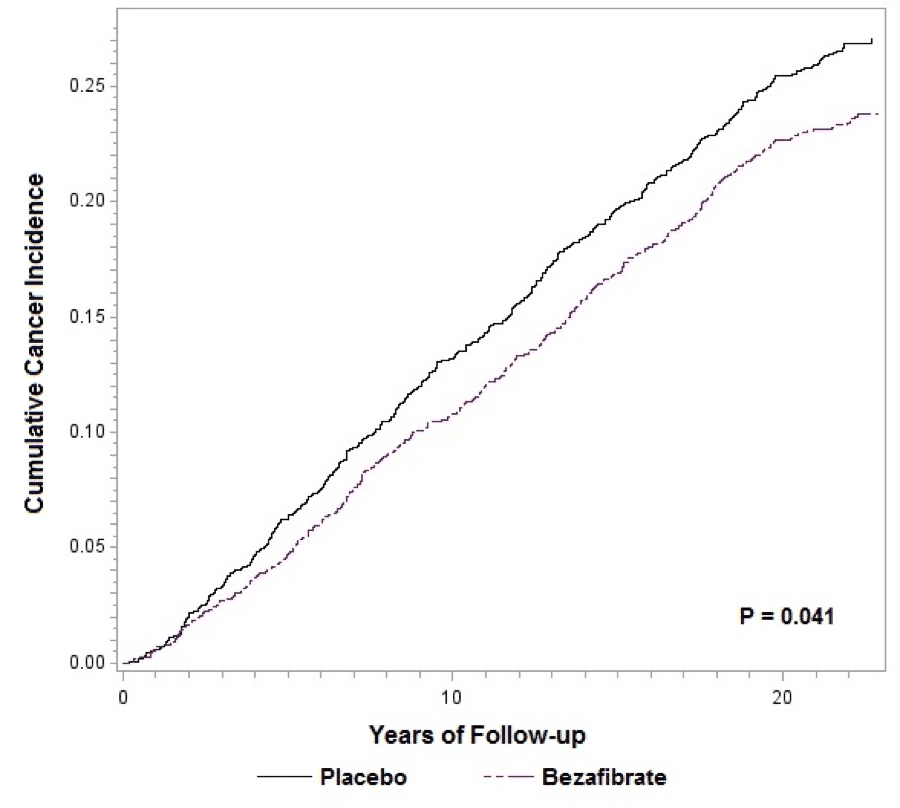
Results: Clinical characteristics and laboratory values were well balanced between the two groups. During 46108 person-years of follow-up, 753 patients developed cancer. With death considered a competing event, the cumulative incidence of cancer was lower in the bezafibrate vs placebo groups, with the lines diverging at approximately 2 years (Figure). The overall hazard ratio (95% CI) for cancer in in the bezafibrate vs placebo groups was 0.85 (0.74-0.98). The association was not sensitive to adjustment for on-trial lipid levels, but was attenuated (hazard ratio, 0.92; 95% CI: 0.79-1.07) upon adjustment for on-trial fibrinogen levels.
Conclusions: Bezafibrate treatment is associated with reduced risk of cancer among CHD patients enrolled in the BIP trial. The association is partially mediated through on-trial fibrinogen but not lipid levels.

Powered by Eventact EMS