Triggering Method Significantly Alters the Cumulus Cell Gene Expression among High Responder Patients - a Whole Transcriptome Investigation by Next Generation Sequencing
2IVF and Andrology Units, Sheba Medical Center
3Pinchas Borenstein Medical Leadership Program, Sheba Medical Center
4Obstetrics & Gynecology, University of Toronto
Introduction: Double trigger (DT), combining GnRH agonist (GnRHa) and low dose hCG, has been reported as a promising regimen to improve clinical outcome compared to single trigger (ST) of GnRHa alone among high responder patients during IVF. The molecular mechanism for these observations is not clear.
Aim: To investigate cumulus cells (CC) transcriptome after exposure to either DT or ST by next generation sequencing (NGS) in high responder patients.
Materials & Methods: This prospective study included patients undergoing IVF-ICSI with a high ovarian reserve according to ovarian reserve and previous ovarian response. DT group (N=7) were treated by GnRHa 0.2 ml & HCG 1000 units while ST cohort (N=6) had GnRHa 0.2 ml only. For each patient, CC of three MII oocytes were trimmed, lysed, and RNA was extracted. Differential mRNA expression was evaluated by NGS. Biologically significant genes were determined by clinical relevance and participation in a defined pathway.
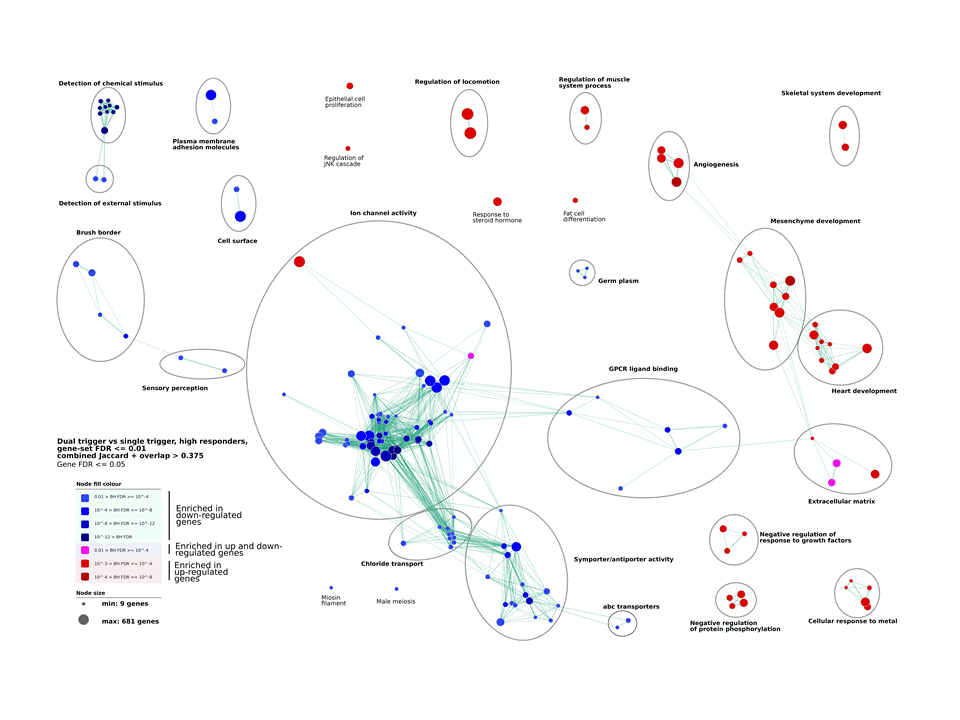
Results: Both groups had similar average age, AMH, AFC, gonadotropins consumption, and E2 on trigger day. 1790 genes were differentially expressed between DT and ST (fold change 2, respectively, false discovery rate < 0.05). Pathway analysis revealed selective depression of ion channel activities and enhancement of mesenchymal-origin and angiogenesis by DT compared to ST (Figure 1).
Conclusions: Low dose hCG adds sustained LH activity to GnRHa. DT significantly alters several intra cellular processes within CC. This comprehensive transcriptome investigation adds important molecular explanations for the clinical superiority observed by DT compared to ST in high responder patients.

Powered by Eventact EMS