Catheter Ablation of the Slow Pathway as a Treatment for Severe Sinus Node Dysfunction in a Patient with Incessant Atrioventricular Nodal Reentry Tachycardia
Aim: Radiofrequency ablation (RFA) of slow/fast atrioventricular nodal reentry tachycardia (AVNRT) is considered to be an effective and safe procedure. We describe an unusual case of abolition of severe sinus node dysfunction after successful slow pathway (SP) ablation in a patient with incessant AVNRT.
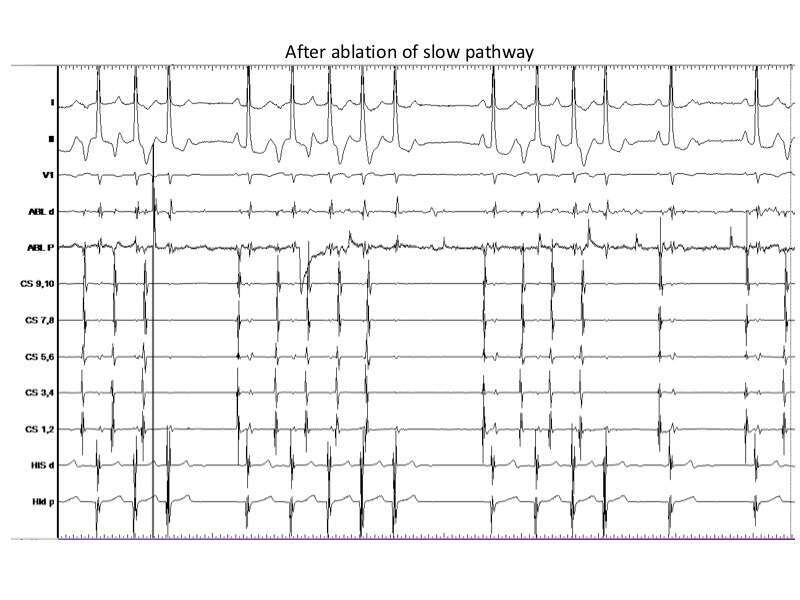
Case report: An 85-year-old woman with a 2-year history of recurrent paroxysmal supraventricular tachycardia (PSVT) was referred to the emergency department after another episode of PSVT. She was recommended to undergo RFA in the past, but she refused. At patient admission, an SVT at a rate of 150 beats/min presumably due to AVNRT was documented. The patient was given 6 mg adenosine intravenously which promptly terminated the tachycardia and was followed by a sinus pause and long RP tachycardia (150– 170 beats/min) later proved to be due to atrial tachycardia (AT). The episodes of AT were always short-lasting and repetitive, followed by marked sinus pauses of 2.5-8.6 seconds. Occasionally, the AT degenerated into episodes of apparently typical AVNRT. Because of satisfactory hemodynamic status we did not implant a temporary pacemaker. A diagnostic electrophysiology study confirmed that the mechanism of incessant PSVT was typical slow/fast AVNRT. A dramatic improvement of sinus node function occurred within seconds after termination of AVNRT due to SP block which allowed avoidance of pacemaker implantation. 24-hour Holter monitoring performed during hospitalization and 3-month post-discharge recorded no abnormal sinus pauses.
Conclusion: Our case suggests that in patients with severe bradytachycardia syndrome associated with AVNRT, the effects of SP ablation on sinus node function should be assessed before permanent pacemaker implantation. Whether SP ablation could be effective in the treatment of sinus node dysfunction in patients with antegrade dual AV nodal pathways warrants further investigation.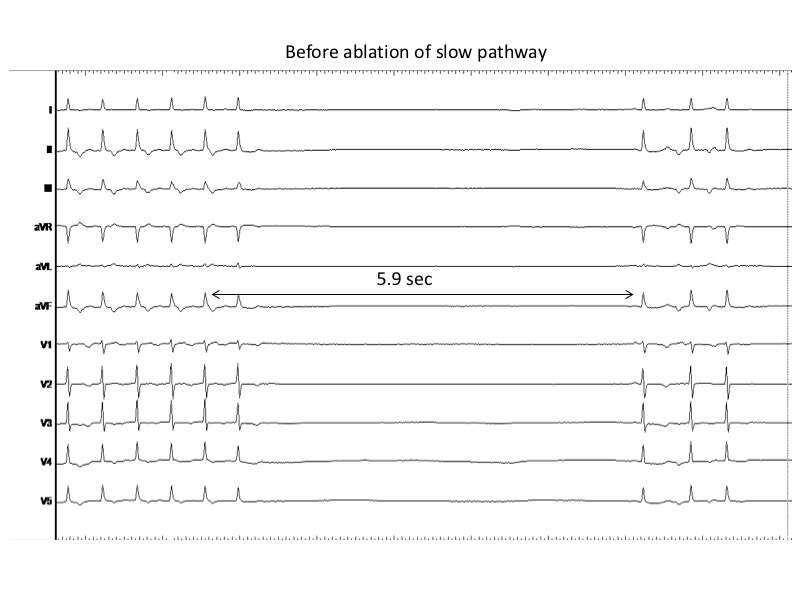
Powered by Eventact EMS