Chamber-Specific Cardiomyocytes Derived from Human Induced Pluripotent Stem Cells for Pharmacological and Arrhythmia Studies
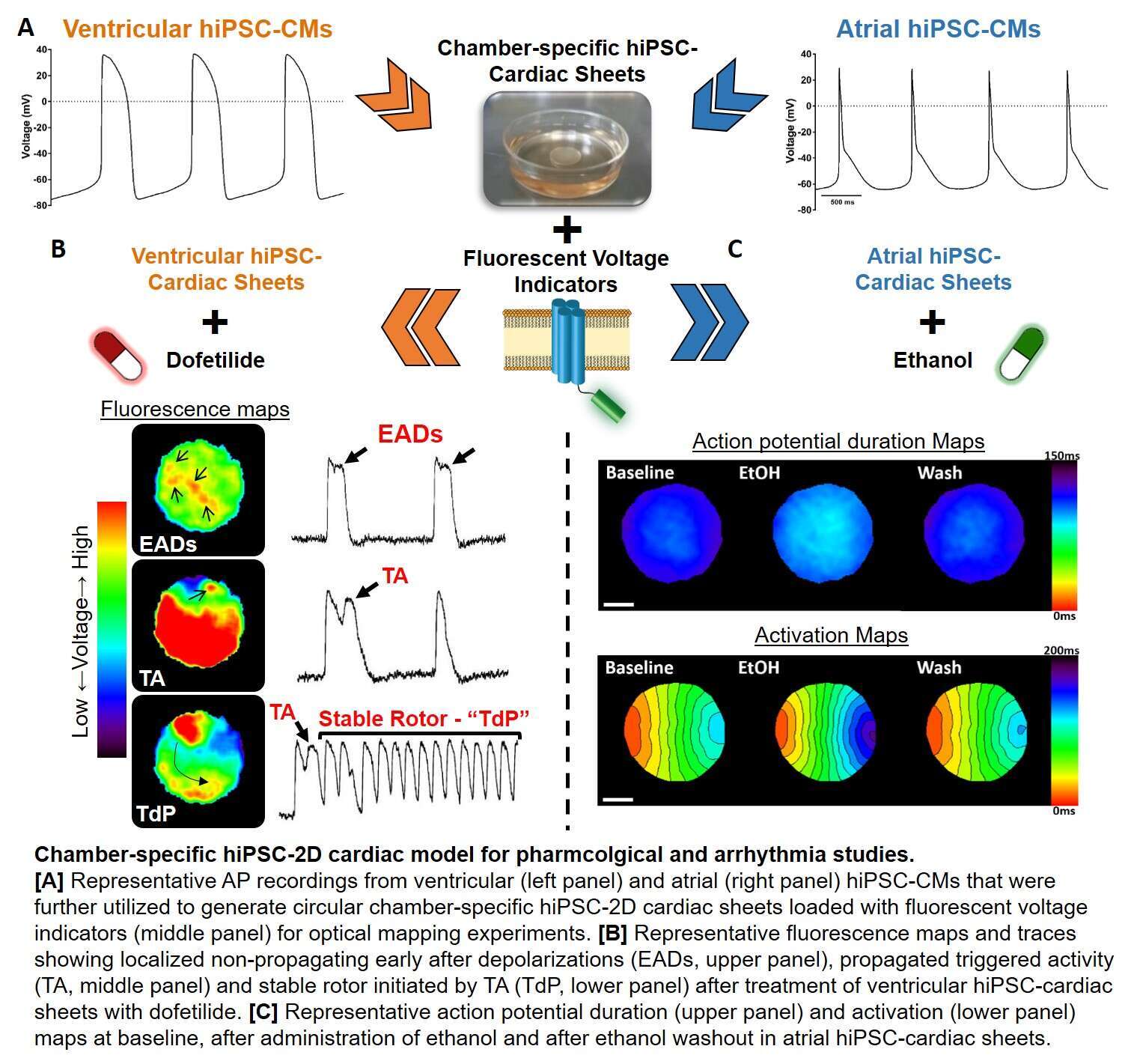
Aims: 1) To establish chamber-specific differentiation protocols to yield purified populations of human induced pluripotent stem cell (hiPSC)-derived atrial and ventricular cardiomyocytes (CMs). 2) To establish a two-dimensional cardiac model derived from hiPSC-CMs to study the mechanisms underlying and the treatment of atrial and ventricular drug-induced tachyarrhythmias.
Methods and Results: hiPSCs were coaxed to differentiate to the cardiac lineage. Retinoic acid (RA) was either supplemented or not on days 3-5 to derive pure atrial or ventricular populations, respectively. Following differentiation, hiPSC-CMs were reseeded at low density for patch-clamp and immunofluorescence experiments or as circular hiPSC-cardiac cell sheets (hiPSC-CS) which were mapped using a customized optical mapping system. hiPSC-atrial-CMs distinctly expressed the proteins COUP-TF1 and Connexin40, while lacking the ventricular isoform MLC2v. Further patch-clamp recordings revealed a shorter AP duration (APD90: 233.2±1.5 vs 363.7±2.7 ms, p<0.01) and a more triangular APs with steeper repolarization (APD90/APD50: 3.07±0.41 vs 1.28±0.12, p<0.05) in comparison to APs from hiPSC-ventricular-CMs. In addition, hiPSC-atrial-CMs exclusively expressed the atrial ACh-sensitive potassium current IK,ACh (at -120mV: -3.8±1.65 vs -0.17±0.27 pA/pF, p<0.0001). Administration of high-dose ethanol to atrial hiPSC-CS caused a reduction in both APD80 (-8.3±2.6%, p<0.05) and conduction velocity (-19.3±2.3%, p<0.001). Moreover, application of high-dose dofetilide to ventricular hiPSC-CS resulted in significant prolongation of APD80 (+70.7±15%, p<0.001) that led to the development of early afterdepolarizations (EADs), which could cause triggered activity (TA) and this, in turn, could initiate re-entry that stabilizes as a spiral-wave. Finally, dofetilide`s torsadogenic risk could be alleviated by administration of MgSO4 or by applying rapid electrical pacing.
Conclusions: Chamber-specific 2D models of hiPSC-CMs can serve as a unique experimental platform for studying atrial and ventricular tachyarrhythmias in-vitro and for testing novel therapeutic strategies.
Powered by Eventact EMS