
A CASE REPORT OF COMPLETE HYDATIDIFORM MOLE
COEXISTING WITH NORMAL FETUS
PROBLEM STATEMENT
To report a case of Twin molar pregnancy with coexistent viable fetus.
To search for local incidence of twin molar pregnancy with coexisting viable fetus and to describe the clinical, diagnostic and therapeutic aspect of complete hydatidiform mole with coexisting fetus.
CASE
A case of a 22-year old female with complete hydatidiform mole with coexisting fetus, with known hyperthyroidism. Serial ultrasonographic studies and beta-human chorionic gonadotropin (β-hCG) was done to confirm presence of the complete hydatidiform mole. Pregnancy was carried up to 20 3/7 weeks age of gestation. Due to heavy vaginal bleeding and imminent abortion the fetus was delivered followed by suction curettage. Methotrexate administration was done post correction of anemia. And close follow up with serial β-hCG monitoring was done as outpatient basis.
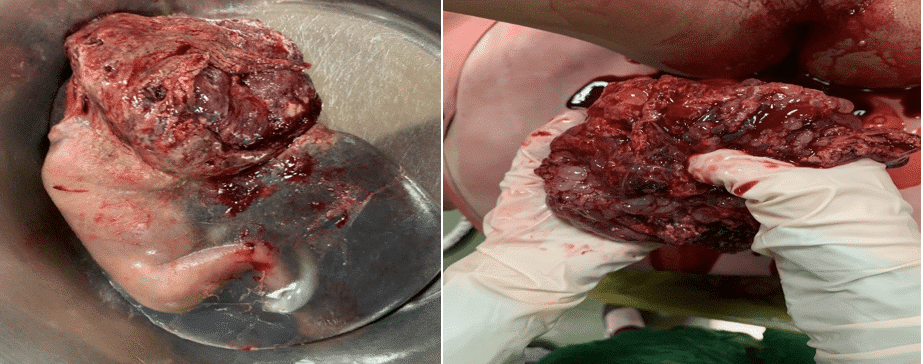
Abortus (200g) with a normal placenta followed by passage of vesicular tissues approximately 600cc. Suction curettage done with estimated blood loss of 600cc
DISCUSSION
Complete hydatidiform mole coexisting with normal fetus (CHMCF) has a rare occurrence with an incidence rate of 1/22,000 to 1/100,000 pregnancies. These uncommon cases pose several diagnostic and management challenges.
Molar pregnancy is an abnormal trophoblastic proliferation with villous stromal edema. Complete hydatidform mole with coexisting fetus is unusual case. CHMCF is usually diagnosed during the second trimester, sonographic features of hydatidiform mole presents at 2nd trimester. There is a 40% chance of fetal survival in patients with CHMCF thus close follow up and prenatal checkup is important. There is mother versus fetus dilemma in the management of CHMCF. Risk for mother include excessive bleeding, pre-eclampsia, hyperthyroidism and development of GTN hence, these complications have to be considered to decide whether to continue or terminate the pregnancy. Therefore, in CHMCF, the management is individualized.
CONCLUSION
Complete mole with coexisting fetus in the spectrum of gestational trophoblastic disease occurs sporadically. There are limited reports and studies pertaining to the diagnosis and management of this disease. There is still no standard guideline regarding fetal surveillance, management, timing and manner of termination of pregnancies complicated with mole . Thus the treatment and management is suggested to be individualized.
