ASSOCIATION OF GENETIC MARKERS WITH INFERTILITY IN WOMEN UNDERGOING BARIATRIC SURGERY
23rd Department of Obstetrics and Gynecology of Attikon University Hospital, Medical School of Athens, Athens
3General Surgery, Iaso General Epigonta Peristatika, Athens
4General Surgery, Eugendeio Therapeutrio, Athens
5General Surgery, Ealing Hospital, London
Abstract
Problem statement
Obesity is a global health problem affecting people across developed and developing countries, with approximately 650 million of all ages diagnosed worldwide. Studies have shown that obesity has an impact on fertility.
Methods
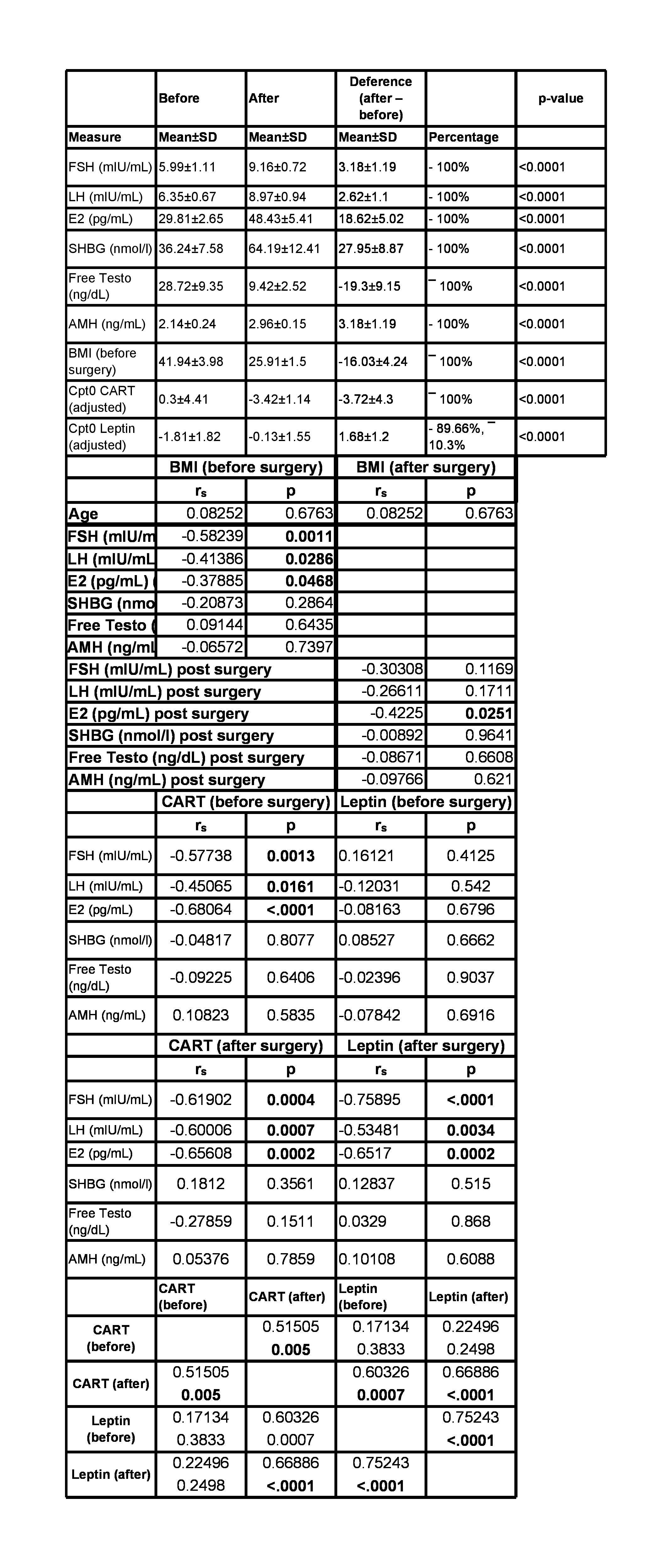
Research has shown that morbid obesity can effectively be treated by bariatric surgery and may also improve infertile women. The study included 32 patients and investigates the role of reproductive hormones, FSH (follicle-stimulating hormone), LH (luteinizing hormone), E2 (estradiol), free testosterone (FREE TESTO), AMH (anti-Müllerian hormone) and SHBG (sex hormone-binding globulin) with BMI before and after surgery. Additionally CART (cocaine and amphetamine-regulated peptide), an anorexic neuropeptide, and leptin were also studied in order to establish a possible relation between BMI reduction CART and leptin expression and hormone levels in infertile obese female patients under 40 years old.
Results
The study has shown that the mean reduction in BMI after the surgery was 16.03 kg/m2, with statistically significant differences observed (p-value <0.0001). We found significant changes in hormone levels following the surgery, FSH showed a mean difference of 3.18±1.19 before and after surgery, with a p-value of <0.0001, LH exhibited a mean difference of 2.62±1.1 before and after surgery, with a p-value of <0.0001, E2 levels demonstrated a mean difference of 18.62±5.02 before and after surgery, with a p-value of
Conclusion
The observed correlations may provide valuable insights into the factors influencing CART and leptin regulation in the context of obesity and bariatric surgery. These findings highlight the positive impact of bariatric surgery on BMI reduction and suggest a potential link between the surgical intervention, hormonal changes and gene expression.
There is no Disclosure of Interest in our study.
Table 1: Correlation between hormones and gene expression before and after bariatric surgery