ARE WE THERE YET? – REAL WORLD EXPERIENCE OF THE SAFETY AND EFFICACY PROFILE OF FOLLITROPIN DELTA USING DOSING ALGORITHM IN POTENTIAL HYPER-RESPONDERS
Problem Statement
The COVID-19 pandemic necessitated adaptations in practices to mitigate ovarian hyperstimulation syndrome (OHSS), a serious complication of assisted reproductive technology (ART). Follitropin-delta, emerged as an alternative drug for ovarian stimulation for potential hyper-responders, using weight and AMH adjusted dosing algorithm. This study aims to compare safety and effectiveness of implementing follitropin-delta in potential hyper-responders during the pandemic to other real-world experience (RWE).
Methods
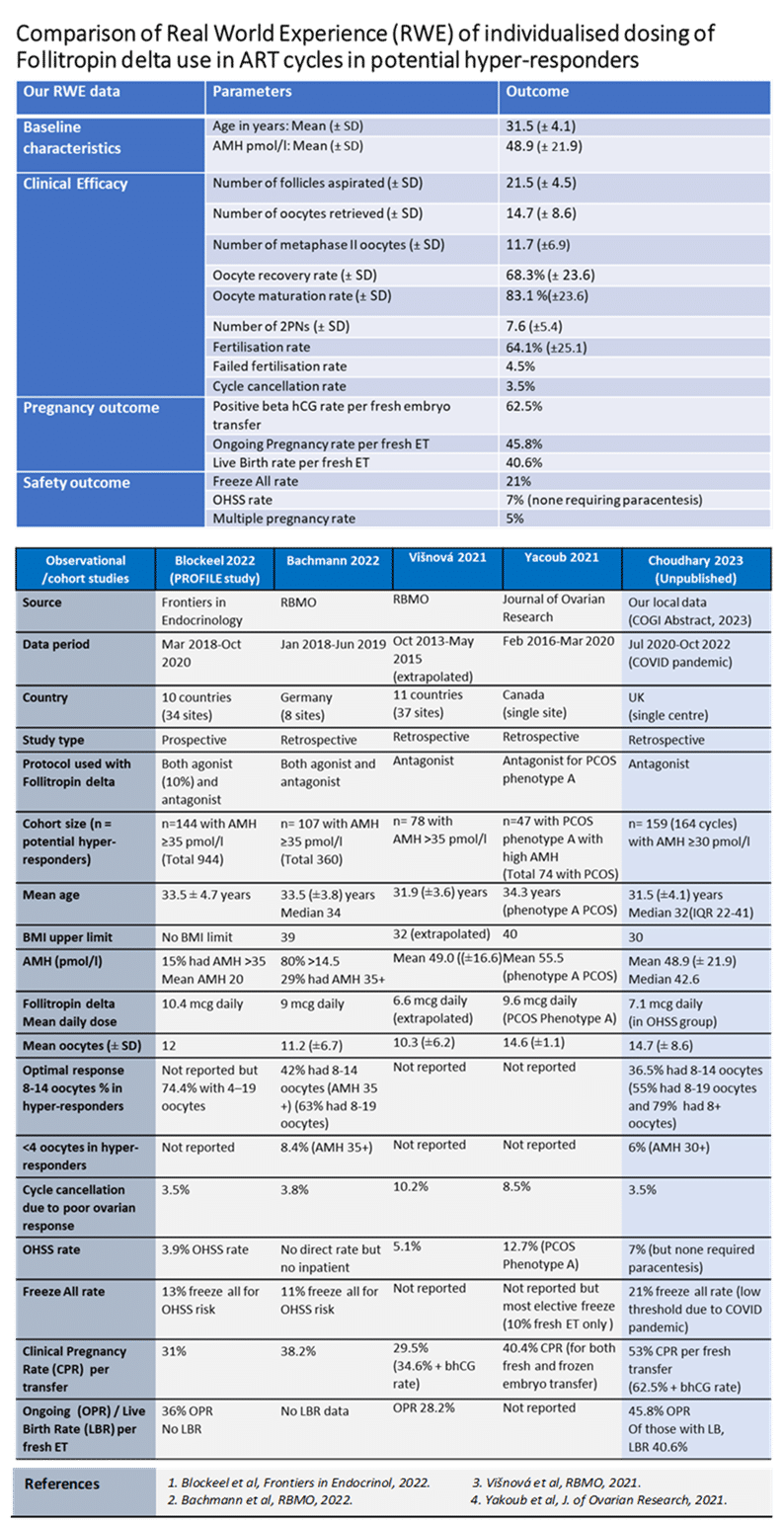
Retrospective analysis conducted on potential hyper-responders (BMI ≤30 and AMH ≥30 pmol/l) undergoing antagonist protocol ART cycles and personalised dosing using follitropin-delta algorithm between Jul-2020 and Oct-2022. Demographic characteristics and indicators for clinical efficacy and safety were collected and compared with published data, with a defined population of potential high responders1. Primary outcomes were the number of oocytes retrieved and OHSS rates. Secondary outcomes included the "freeze-all" rate, need for paracentesis, ongoing pregnancy(OPR) and livebirth rate(LBR).
Results
164 ART cycles with individualized follitropin-delta dosing were performed in 159 hyper-responder participants (Median AMH 42.6 pmol/l). Mean number of oocytes retrieved was 14.7 ± 8.6. The OPR was 45.8% and LBR was 40.6% per fresh transfer. Twelve women developed moderate or high grade OHSS (7%), with ten experiencing OHSS post hCG-trigger (83%) highlighting need for judicious use of hCG-trigger. Of 31 women who had an agonist trigger, 2 developed OHSS. The OHSS cohort had a higher mean AMH (53.6 ± 4) and a lower daily dose of follitropin-delta (mean 7.11 mcg). None required paracentesis, but one woman (0.6%) developed acute kidney injury requiring "freeze-all," with a 5-day inpatient stay and close monitoring until full recovery. 50% of the OHSS cohort had "freeze-all" (n=6), while remaining half had fresh transfers resulting in 5 livebirths and one miscarriage. The OHSS cohort had, on average, 6 additional oocytes and 3 additional embryos compared to all who received follitropin delta.
Conclusions
Implementing personalised dosing with follitropin-delta in hyper-responders during the pandemic demonstrated a feasible alternative for favourable outcomes and adaptations for risk minimization in ART. Although a large RWE cohort in hyper-responders showing encouraging outcomes, further research and long-term monitoring are required to validate these results.
Disclosure: MC-consultancy,-grant-and-support-for-meeting-attendance-from-Ferring Pharmaceuticals.
Graph table