
Postoperative Antibiotic Prophylaxis Following Cardiac Implantable Electronic Device Implantation And The Risk Of Device Infection
2Clinical Research Center, Soroka University Medical Center, Israel
3Department of internal Medicine C, Soroka University Medical Center, Israel
4Department of Clinical Microbiology and Infectious diseases, Hadassah Medical Center, Israel
5Cardiology Department, Soroka University Medical Center, Israel
Background:
Cardiac implantable electronic devices (CIEDs) are vital for management of cardiac arrhythmias. Device infections remain a major challenge leading to significant morbidity and mortality. Current guidelines recommend preoperative intravenous antibiotic prophylaxis, while the role of postoperative oral antibiotics remains unclear.
Purpose:
To evaluate the incidence of CIED infections among patients who were treated with and without postoperative oral antibiotic therapy.
Methods:
This retrospective cohort study included 1,527 patients who underwent CIED implantation at Soroka university medical center between January-2018 and December-2022. All patients received a preoperative intravenous dose of cefazolin or clindamycin (if beta-lactam allergy documented). Patients were grouped based on their treating physicians` practices, with some routinely administering postoperative oral antibiotics and others not.
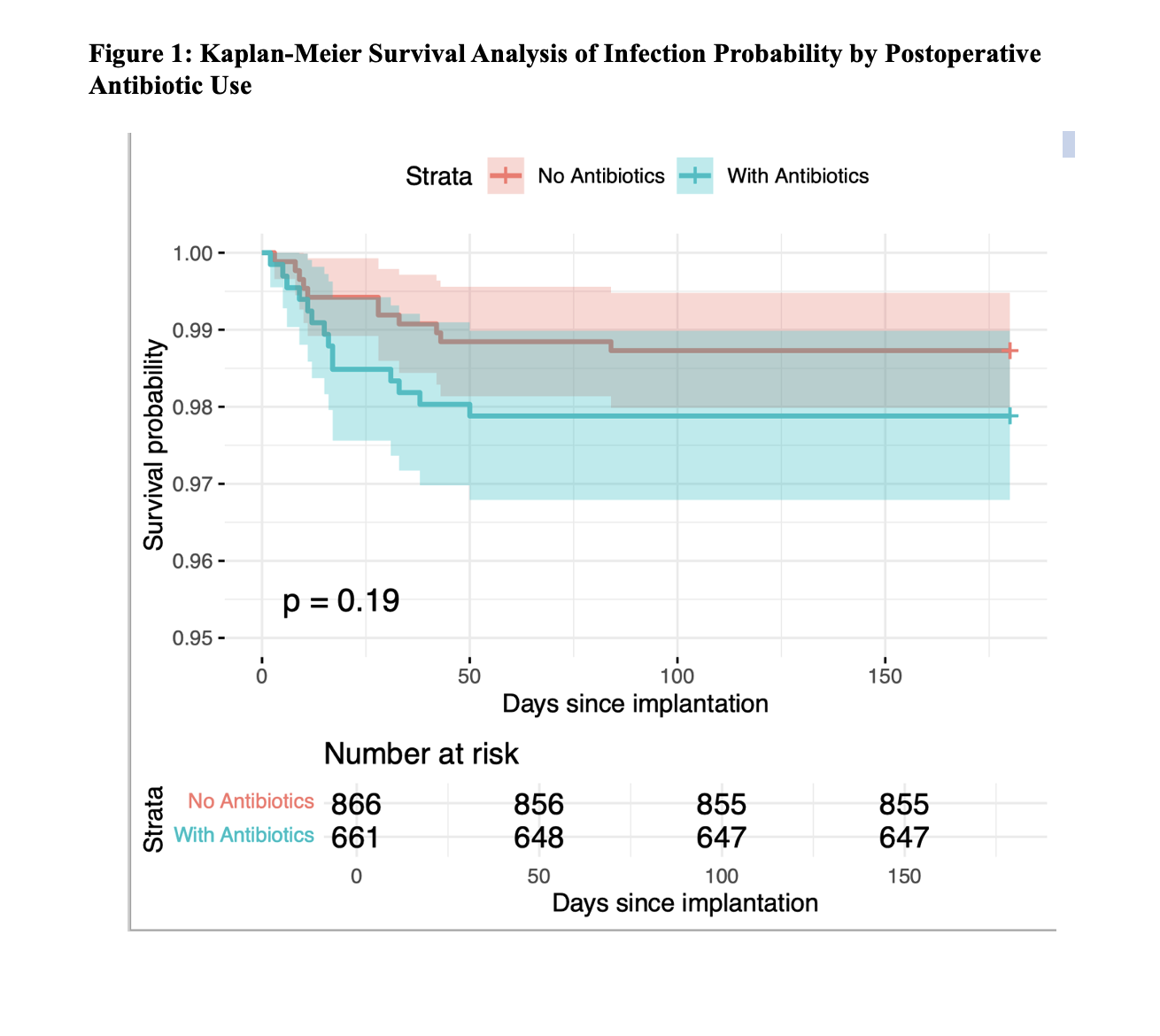
The postoperative oral antibiotics received Amoxicillin/Clavulanic acid or Clindamycin for 3–5 days. Patients requiring antibiotics for other reasons or with incomplete follow-up were excluded. Outcomes included composite rates of superficial skin infections, pocket infections, and bloodstream infections within six months post-implantation. Kaplan-Meier survival analysis and multivariable logistic regression were used for statistical evaluation.
Results:
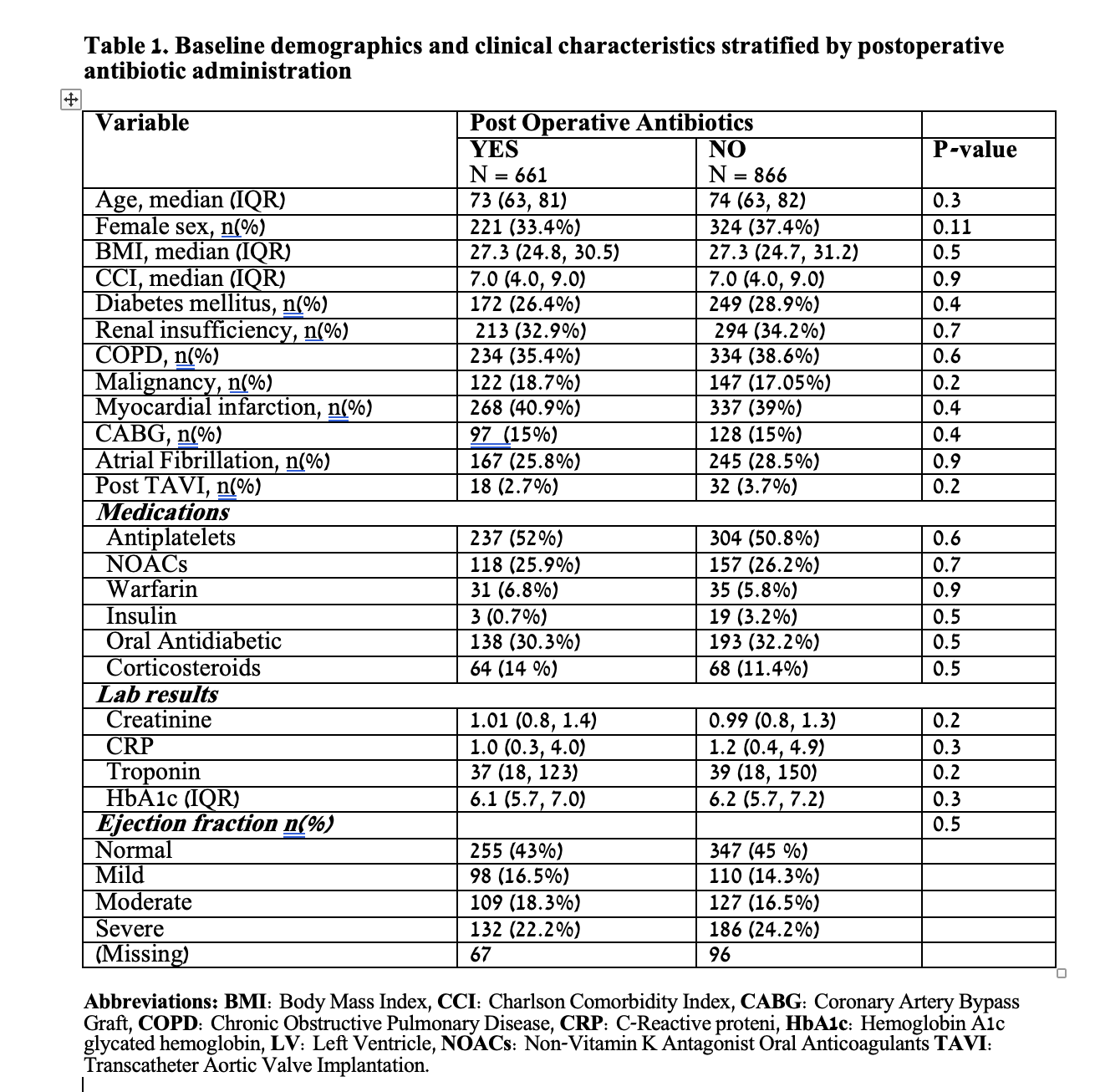
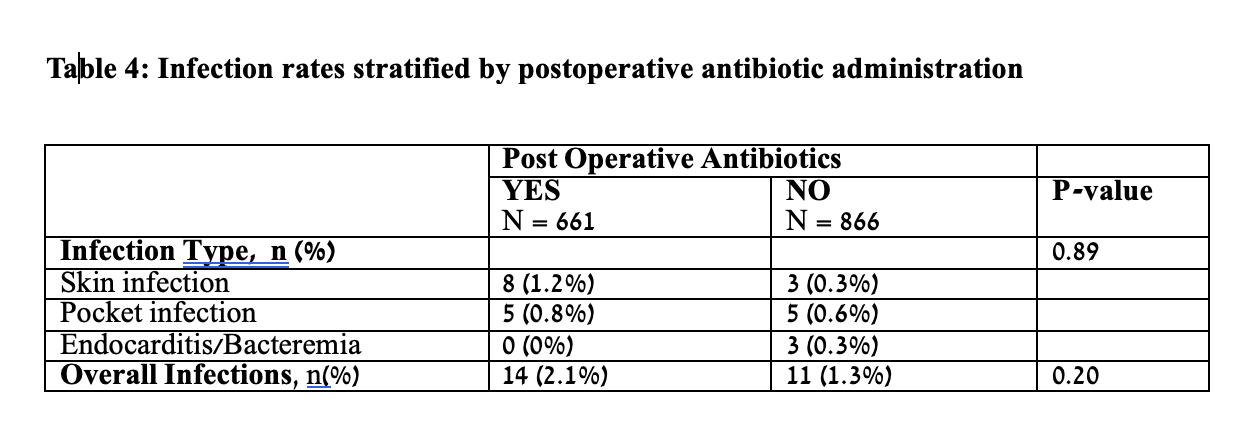
The cohort included 886 patients in the no-antibiotic group and 661 in the antibiotic group. Mean age was 73 years, with 35% females. Most patients (80%) underwent first-time implantation, while 20% underwent replacements/revisions. Infection rates were 1.3% (n=11) in the no-antibiotic group and 2.1% (n=14) in the antibiotic group, with no significant difference (p=0.19). Multivariate analysis identified older age as protective, with each year reducing infection risk by 4%. Conversely, post-TAVI procedures were associated with a six-fold increased risk of infection.
Conclusions:
CIED infections within six months post-implantation were uncommon, with no significant difference between groups, and no advantage to the antibiotics group. These findings support guideline recommendations prioritizing preoperative antibiotic prophylaxis while limiting postoperative use to minimize antimicrobial resistance.
israelheart@ortra.com מייל לשאלות
