
Incidence, management and outcomes of patients With incident Atrial Fibrillation in the contemporary direct oral Anti coagulants era. A National Study
2Faculty of Health Sciences, Ben-Gurion University of the Negev, Israel
3Clinical Research Center, Soroka University Medical Center, Israel
4Cardiology department, Rabin Medical Center, Israel
5Cardiology Department, Meir Medical Center, Israel
6Community Cardiology, Clalit Health Service, Israel
7Cardiology Department, Carmal Medical Center, Israel
8Research Center, Clalit Health Service, Israel
Introduction
There are scarce data regarding AF epidemiology, management and outcome in the current era of wider use of the direct oral anticoagulants (DOAC) and early rhythm control strategies.
Purpose
To describe the prevalence, incidence, management and outcomes of AF patients in the last decade.
Methods
Patients with incident AF aged 18 years old or older were included in this study from January 1st, 2012, to December 31st 2022. All the data and diagnoses were extracted from electronic medical records a using a large data sharing platform. Patients with congenital heart disease, rheumatic heart disease, prosthetic valves and significant (>moderate) mitral stenosis, were excluded. The primary outcomes were all cause death, ischemic stroke, and the combined endpoint of death, and ischemic stroke. The median follow-up time was 52 months.
Results
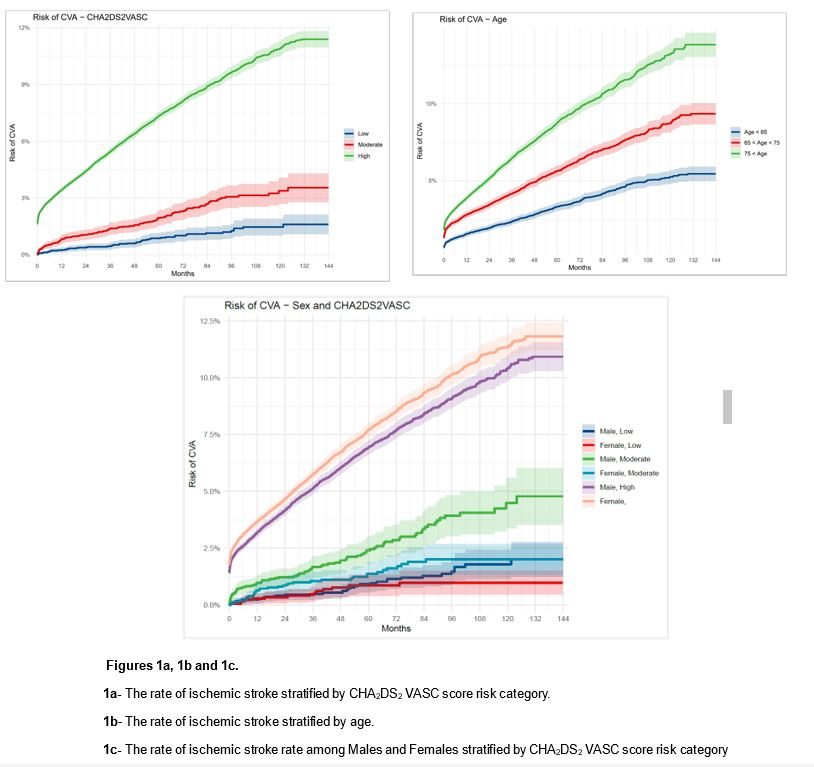
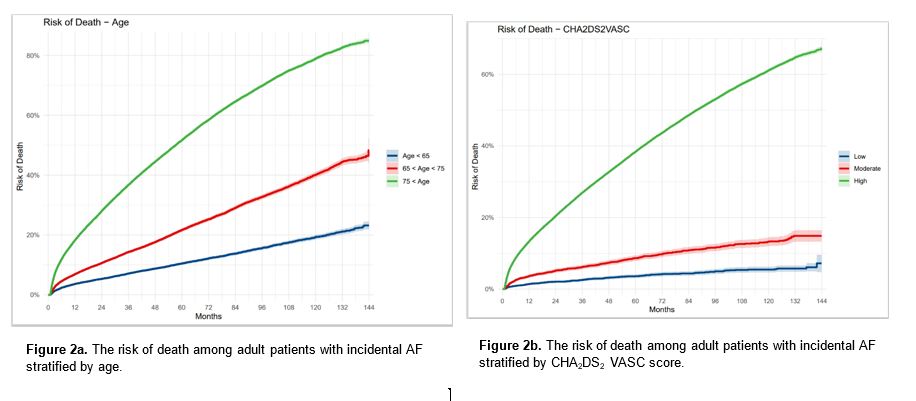
79,215 patients were included in the study, the mean age was 73. The incidence of AF was directly related to age and was higher in males across all age groups. DOACS were used in 47% and Warfarin was used in 13%. The rate of anticoagulant therapy among patients with CHA2DS2 VASC >2 was 60%. The risk of ischemic stroke was directly related to age and thrombotic risk. Similar rates of stroke were demonstrated for men and women at different thrombotic risk (Figures 1a,1b and 1c). The risk of death was directly related to age and thrombotic risk (Figures 2a and 2b).
Conclusions
The rate of early treatment with anticoagulant therapy in this study population is higher than previously reported rates, with increasing use of DOAC therapy and decreasing rates of Warfarin therapy. Nevertheless, the incidence rate of stroke and death are only mildly lower compared to previous reported rates. In addition, we did not observe a significant difference in ischemic stroke rates between men and women.
israelheart@ortra.com מייל לשאלות
