
Marital status and outcomes of octogenarian and nonagenarian patients hospitalized with heart failure.
2Cardiology, Sheba Medical Center , Tel Aviv University Israel, Israel
3Family Medicine, Clalit Health Services, Israel
4Cardilogyis, Rabin Medical Center, Clalit Health Services, Israel
5Cardiology, Haemek Medical Center, Clalit Health Services, Israel
Objectives: to examine the association between marital status and outcomes of octogenarian and nonagenarian patients with HF.
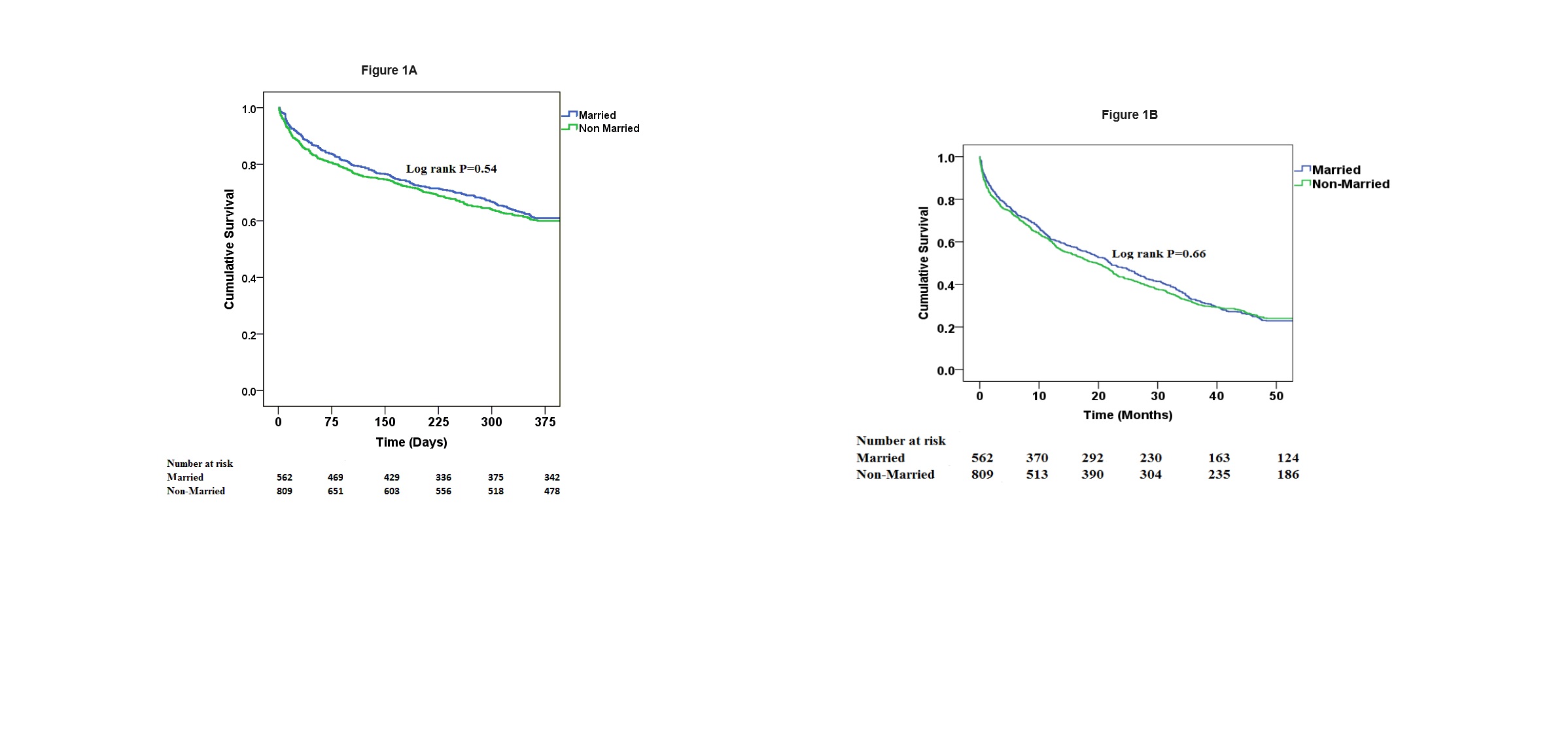
Methods: a retrospective analysis of 1371 octogenarians and nonagenarians who were hospitalized with HF and enrolled in the multicenter national survey in Israel between March and April 2003 and were followed until December 2014. Patients were classified into married (N=562) and unmarried (N=809). The clinical characteristics of the patients at baseline by the marital status categories were compared by using the T-test for continuous variables and by the chi-square test for categorical variables. Kaplan–Meier survival analysis was used to present survival estimates according to the different marital status categories and the subsequent 1and 4 years survival probability. Multivariate stepwise Cox proportional hazard regression modeling was used to assess the independent predictors of mortality among the whole study population as well as among married and unmarried patients.
Results: Married patients were more likely to be males, smokers, and more likely to have past myocardial infarction and previous revascularization. Also, they tended to have higher rates of peripheral vascular disease and dyslipidemia. Survival analysis showed that 1- and 4-years mortality rates were similar between married and unmarried patients. Consistent independent predictors of 1- and 4-years mortality among both groups were age and advanced HF (NYHA>2). Charlson comorbidity index was a predictor of mortality among unmarried patients at both 1- and 4-years follow-up while in married patients only at 4 years of follow-up. Prescription of digoxin at discharge was an independent predictor of 1- and 4-years mortality just among unmarried patients.
Conclusions: Being unmarried by itself among the octogenarian and nonagenarian population with HF does not confer an increased risk of mortality. Nevertheless, unmarried patients had different clinical profile as well as some different predictors of mortality compared to their married counterparts.
israelheart@ortra.com מייל לשאלות
