
The effect of empagliflozin on circulating endothelial progenitor cells in patients with diabetes and stable coronary artery disease
2Faculty of Medical & Health Sciences, Tel Aviv University, Israel
3Felsenstein Medical Research Center, Rabin Medical Center, Israel
Background: Diabetes mellitus (DM) is associated with premature atherosclerotic disease, coronary artery disease (CAD) and chronic heart failure (HF), leading to increased morbidity and mortality. Sodium-Glucose Co-transporter 2 Inhibitors (SGLT2i) exhibit cardioprotective benefits beyond glucose lowering, reducing the risk of major cardiovascular events (MACE) and HF in patients with DM and CAD.
Endothelial progenitor cells (EPCs) are bone marrow-derived cells involved in vascular repair, mobilized in response to vascular injury. The number and function of circulating EPCs (cEPCs) are negatively affected by cardiovascular risk factors, including DM. This study aimed to examine the response of cEPCs to SGLT2i treatment in DM patients with stable CAD.
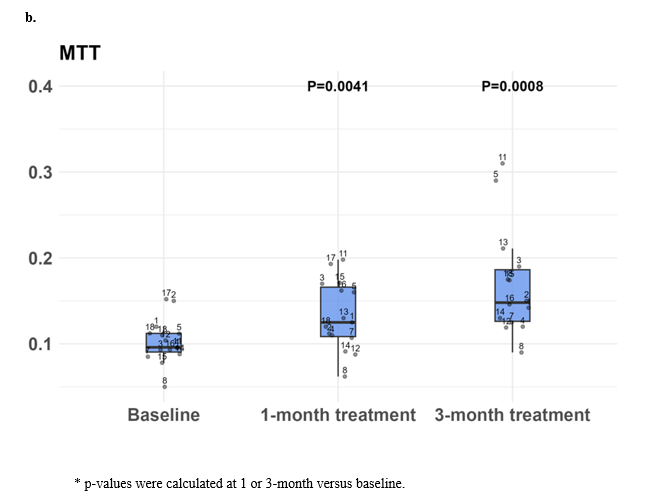
Methods: A prospective single-center study included patients with DM and stable CAD who were started on an SGLT2i (empagliflozin). Peripheral blood samples were collected at baseline, 1 month, and 3 months to evaluate cEPC levels and function by flow cytometry, immunohistochemistry and MTT assays.
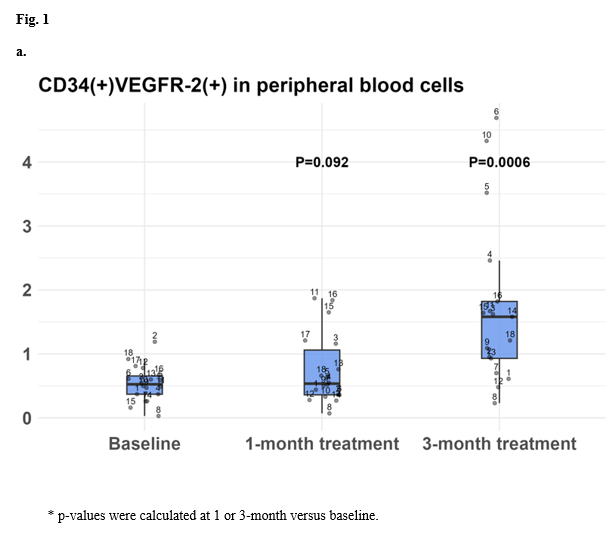
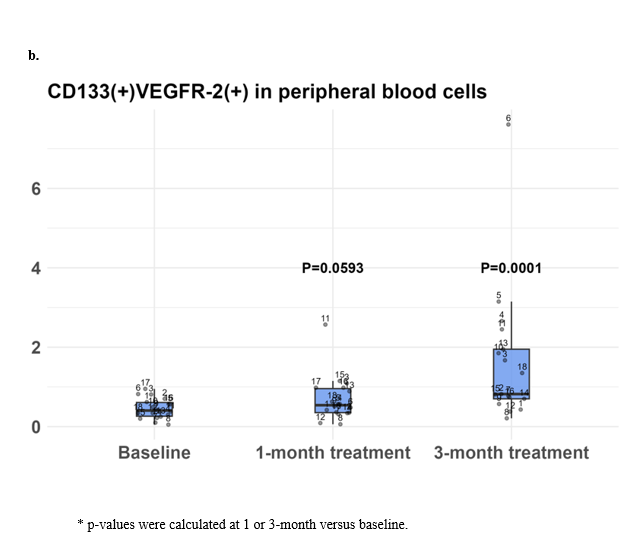
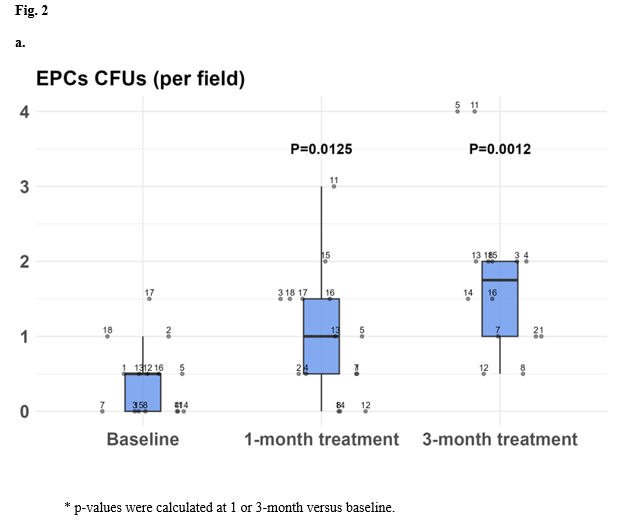
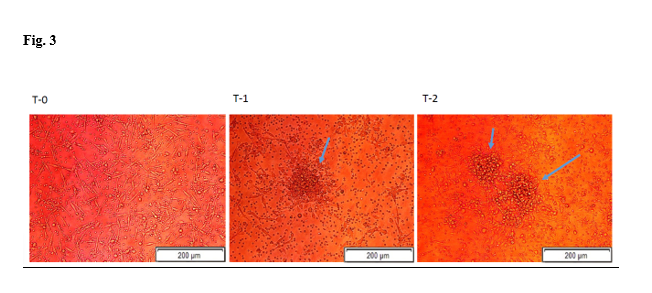
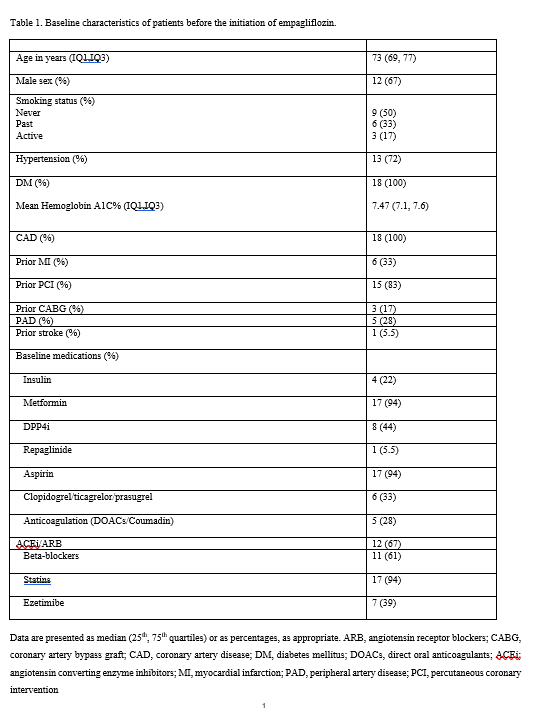
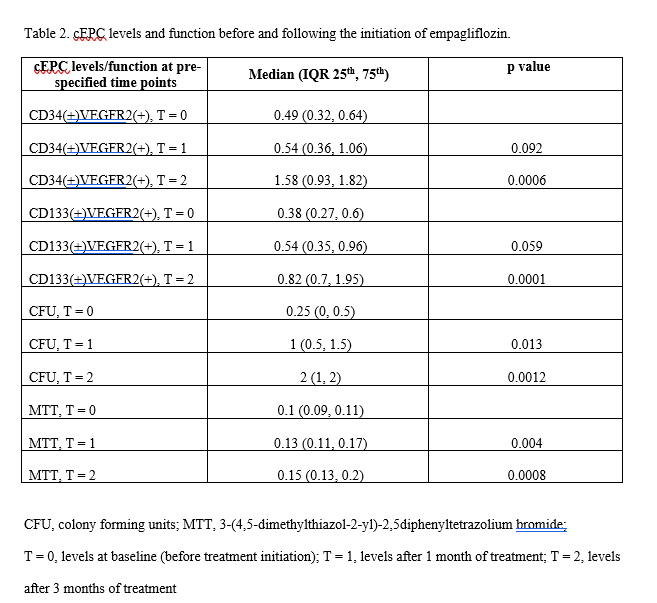
Results: Eighteen patients were included in the study (median age 73, (IQR 69, 77) years, 67% male). After 1 month of treatment with empagliflozin, there was no significant change in cEPCs level or function. However, following 3 months of treatment, a significant increase was observed both in cell levels (CD34(+)/VEGFR-2(+): from 0.49% (IQR 0.32, 0.64) to 1.58% (IQR 0.93, 1.82), p=0.0006; CD133(+)/VEGFR-2(+): from 0.38% (IQR 0.27, 0.6) to 0.82% (IQR 0.7, 1.95), p =0.0001) and in cell function (from 0.25 CFUs (IQR 0, 0.5) at baseline, to 2 CFUs (IQR 1, 2) at 3 months, p=0.0012).
Conclusions: Empagliflozin treatment in patients with DM and stable CAD increases cEPC levels and function, implying a cardioprotective mechanism. These findings highlight the potential of SGLT2i in treating cardiovascular diseases, warranting further research to explore these effects and their long-term implications.
israelheart@ortra.com מייל לשאלות
