
Impact of Mitral TEER on Hospitalizations 1-Year Following Procedure
2Cardiology, Shaare Zedek Medical Centre, Israel
Introduction: Transcatheter edge-to-edge repair (TEER) has emerged as a treatment option for patients with severe symptomatic mitral regurgitation (MR) who are considered at high risk for surgical intervention. Ho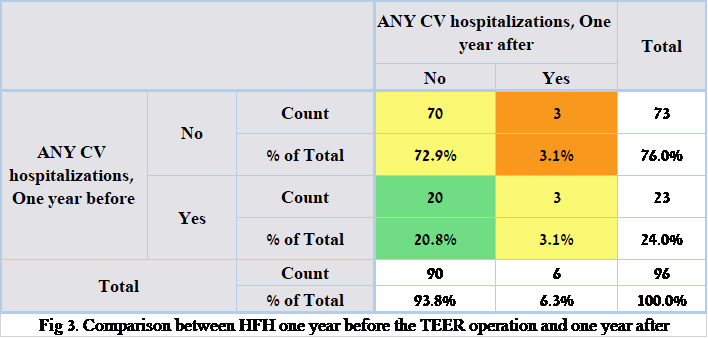 wever, data regarding the effect of the procedure on heart failure hospitalizations (HFH), cardiovascular hospitalizations (CVH) and mortality remain inconclusive.
Methods: We conducted a retrospective longitudinal observational study at Shaare Zedek Medical Center and included patients who underwent TEER for moderate-severe and severe MR between the years 2020-2021. The primary objective of this analysis was to assess the effect of TEER on HFH, CVH, and mortality rates. We compared in this group the rates of HFH and CVH between the year before the procedure and the year after the intervention. In addition, a comparison was made between patients who underwent TEER and those with HF and significant MR who were treated conservatively.
Results: The study group included 125 patients who underwent TEER and a comparison group of 75 patients managed conservatively. The mean age was 71.81 ± 14.34, and the percentage of women was 42% women. Within the TEER group, a significant decrease in HFH and CVH was observed in the year after the procedure compared to the year before (average HFH from 0.61 to 0.35, and CVH from 0.28 to 0.09 (P < 0.001)). However, when the overall mortality and hospitalization rates were compared between the TEER group and the conservatively treated group, no statistically significant differences were found.
Conclusion: TEER reduces hospitalization rates in heart failure patients compared to pre-procedural period. However, the present study did not show a significant difference in mortality or hospitalization rates when comparing patients treated with TEER and those managed conservatively. Further research is needed to clarify the long-term benefits of TEER in this patient population.
israelheart@ortra.com מייל לשאלות
