
Local changes induced by chronic atrial implant in the rat atria are associated with increased atrial fibrillation substrate
2Regenerative Medicine & Stem Cell Research Center, Ben-Gurion University of the Negev, Israel
Introduction: Electrical and structural remodeling are critical factors that contribute to the atrial substrate for atrial fibrillation (AF) and to the progressive nature of AF. We recently revealed that chronic atrial implant on the right atrium (RA) of rats leads to progressive AF susceptibility and atrial effective refractory period (AERP) shortening in the implanted atria. However, the underlying mechanism and the effect of the implant on the AERP in the non-implanted atria remain unclear.
Methods: Adult male rats were divided into three groups: i) RA-implant; Animals subjected to implantation of a quadripolar electrode (our standard implant) on the RA. ii) Sham group; Animal that went through pericardiotomy and temporary quadripolar electrode implantation on the RA for 60 seconds, followed by removal. iii) Native rats. Six weeks following the initial procedure hearts were extracted onto a Langendorff Isolated-Heart apparatus. AERP and AF susceptibility were evaluated in both atria at double diastolic threshold. Additionally, Western Blot assays were performed, one-week post-procedure, on atrial tissues of the three groups.
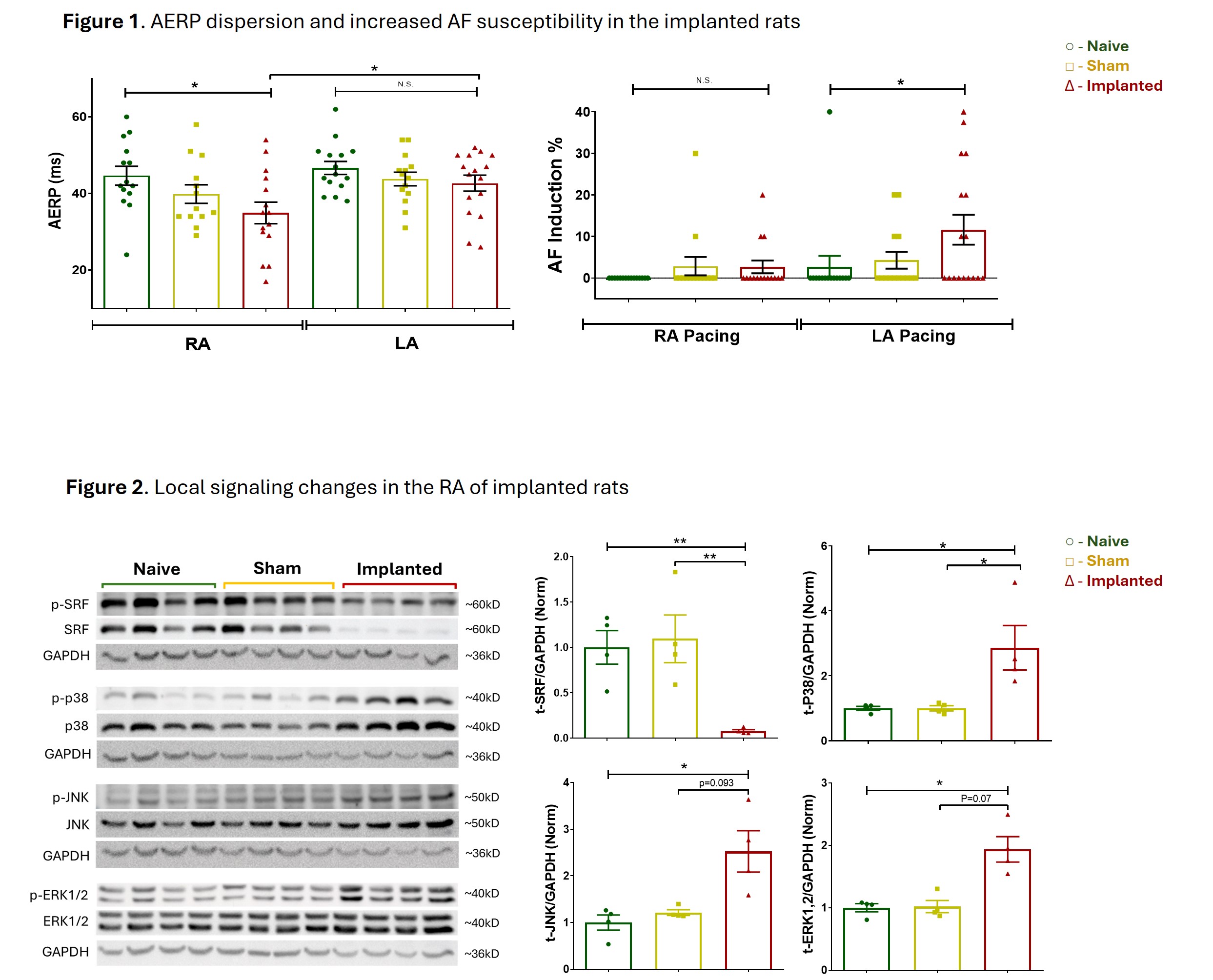
Results: Implanted RA exhibited AERP reduction under supra-physiological pacing compared to naïve rats, but this finding was absent under physiological pacing. Meanwhile, the contralateral left atrium (LA) did not show any changes in AERP properties. Furthermore, chronically implanted hearts were more susceptible to AF induction during contralateral LA pacing compared to other groups (Figure 1). Western Blot analysis 1 week following implantation revealed remarkable changes in MAP-Kinase pathways in the implanted atrium, and a decrease in Serum Response Factor (SRF) expression, compared to both sham and naïve rats (Figure 2).
Conclusions:Chronic electrode implantation was shown to cause local electrical remodeling, as well as alter atrial signal transduction. These changes indicate local atrial remodeling caused by the implant, presumably due to increased mechanical loading on the tissue, which mimics a pathological stimulus that occurs in many clinical scenarios
israelheart@ortra.com מייל לשאלות
