
An emulated target trial on treatment with cardiac rehabilitation and long-term survival of patients following CABG surgery
2Gertner Institute for Epidemiology and Health Policy Research, Sheba Medical Center, Israel
Background
Cardiac rehabilitation (CR) is a comprehensive program combining exercise and risk factor modification, widely recommended for patients post coronary artery bypass graft (CABG) surgery. While evidence supports CR`s benefits, its long-term impact on all-cause mortality is yet to be determined. We emulated a target trial to estimate the effect of CR on long-term all-cause mortality in a cohort of post CABG surgery patients.
Methods
In this prospective study we used data from a multicenter controlled trial aimed at increasing CR participation of cardiac patients after CABG surgery. Intervention was defined as participation in CR within the first year after surgery. Propensity scores for participation in CR were estimated using logistic regression, incorporating demographic and clinical covariates. To balance the groups, the Li and Greene weighting method, analogous to pair matching, was applied. All-cause mortality was analyzed using a weighted Cox proportional hazards model and Kaplan-Meier survival curves.
Results
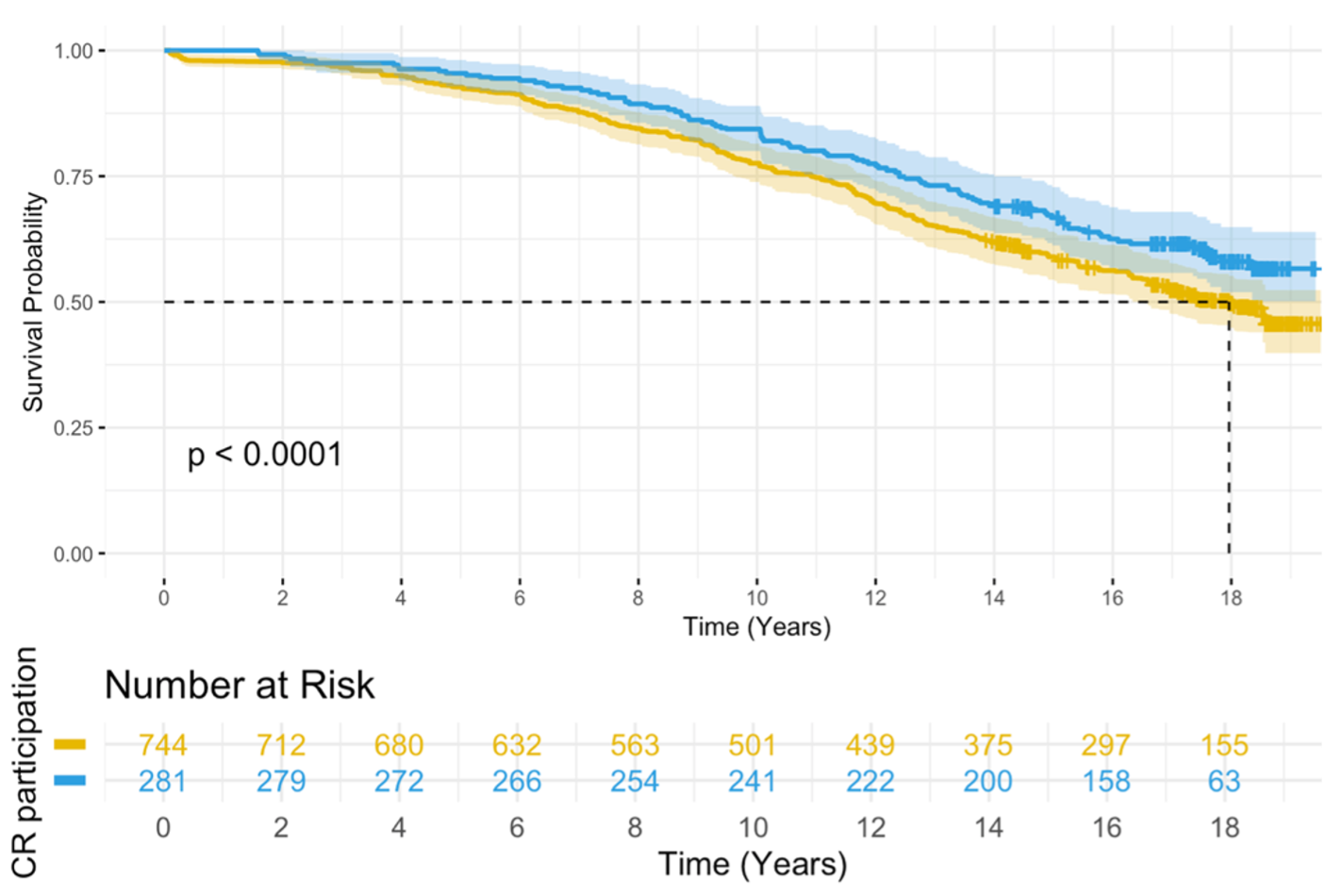
The study cohort comprised 1,025 patients (mean age: 65.5, 22.6% female) who underwent elective or semi-elective CABG surgery in Israel between 2004 and 2007, with follow-up for all-cause mortality extending to December 2023. 27.4% of patients participated in CR, which in turn, was associated with a significant reduction in long-term all-cause mortality (HR = 0.753, 95% CI: 0.595–0.955, p = 0.015) compared to non-participation (Figure 1).
Conclusions
the current study provides evidence to the advantage of CR in prolonging CABG surgery patients’ long-term survival. Healthcare professionals and policymakers should focus on an educational strategy to improve the compliance of patients to CR and on a logistic strategy to make CR accessible to all eligible cardiac patients.
israelheart@ortra.com מייל לשאלות
