
Gender-related differences in use and outcomes of left ventricular assist device
2Department of Cardiology, Leviev Heart Center, Chaim Sheba Medical Center, Tel-Hashomer, Affiliated with the Sackler School of Medicine, Tel Aviv University, Israel, Israel
Background- Heartmate 3 Left Ventricular Assist Device (HM3-LVAD) implantation has become a pivotal intervention for patients with advanced heart failure, serving as either a bridge-to-transplantation (BTT) or as a destination therapy (DT). Emerging evidence indicates that gender-based differences may significantly influence post-LVAD outcomes. Studies have shown that female LVAD recipients often experience higher readmission rates compared to male counterparts [1]. Additionally, research suggests that women may have a higher risk of all-cause mortality and a lower cumulative incidence of heart transplantation post-LVAD implantation [2].
Methods- From 2016 through 2024, 180 adult patients were implanted with the HM3-LVAD. Among them were 146 male patients (male group) and 34 female patients (female group).
Results- The male group mean age was 59 years and the female group was 53 years (p= 0.02). In the male group, 104 (71%) were BTT, whereas 26 (76%) were in the female (p= 0.83). We observed the preoperative (Table 1), intraoperative, and postoperative characteristics (Table 2) as well as short-term and medium-term mortality rates (Table 3). Although bleeding and thrombosis were significantly less frequent in females compared to males (p = 0.00 and p = 0.02, respectively), the 30-day, 6-month, and 12-month post-implantation survival rates were similar between males (90%, 82%, and 82%) and females (91%, 79%, and 74%), with no significant differences (p = 0.968, 0.931, and 0.578, respectively).
Conclusions- Our experience shows no significant difference in the 30-day, 6-month, and 12-month survival rates for male patients compared to female patients who underwent HM3-LVAD implantation. Male patients who underwent HM3-LVAD implantation have shown no significant negative impact on survival outcomes or complications. It is our opinion that before HM3-LVAD implantation, filtering patients according to gender should not affect one’s decision if to perform an HM3-LVAD implantation at that time.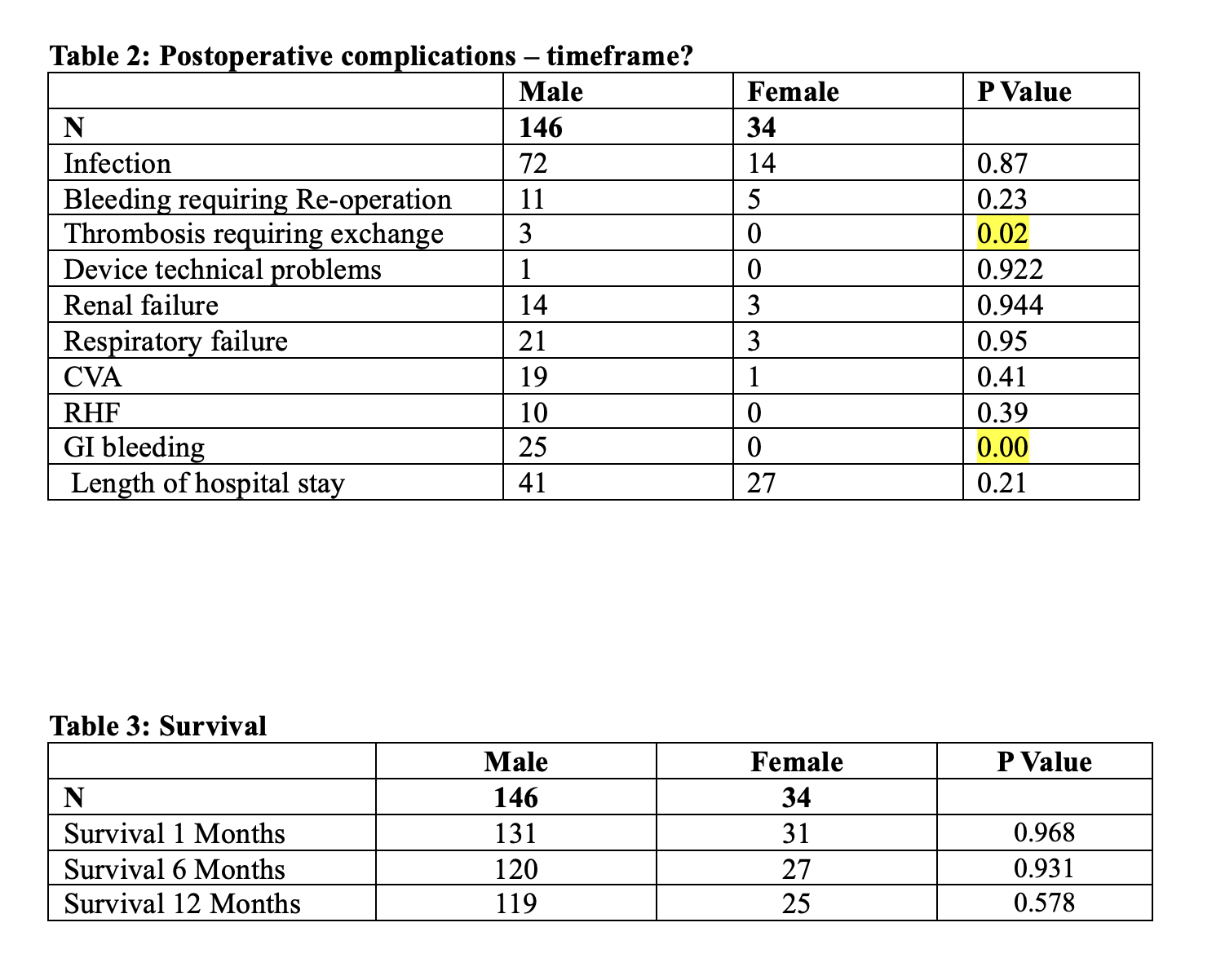
israelheart@ortra.com מייל לשאלות
