
The Prognostic Value of Triglyceride-Glucose and FIB-4 Indices in Patients Undergoing Coronary Angiography: A Retrospective Cohort Analysis
2Faculty of Medicine, Technion, Israel Institute of Medicine, Haifa, Israel, Israel
Background: Triglyceride-glucose (TYG) index, which reflects insulin resistance, and the Fibrosis-4 (FIB-4) index, a measure of liver fibrosis, are non-invasive laboratory-based indicators associated with cardiometabolic risk.
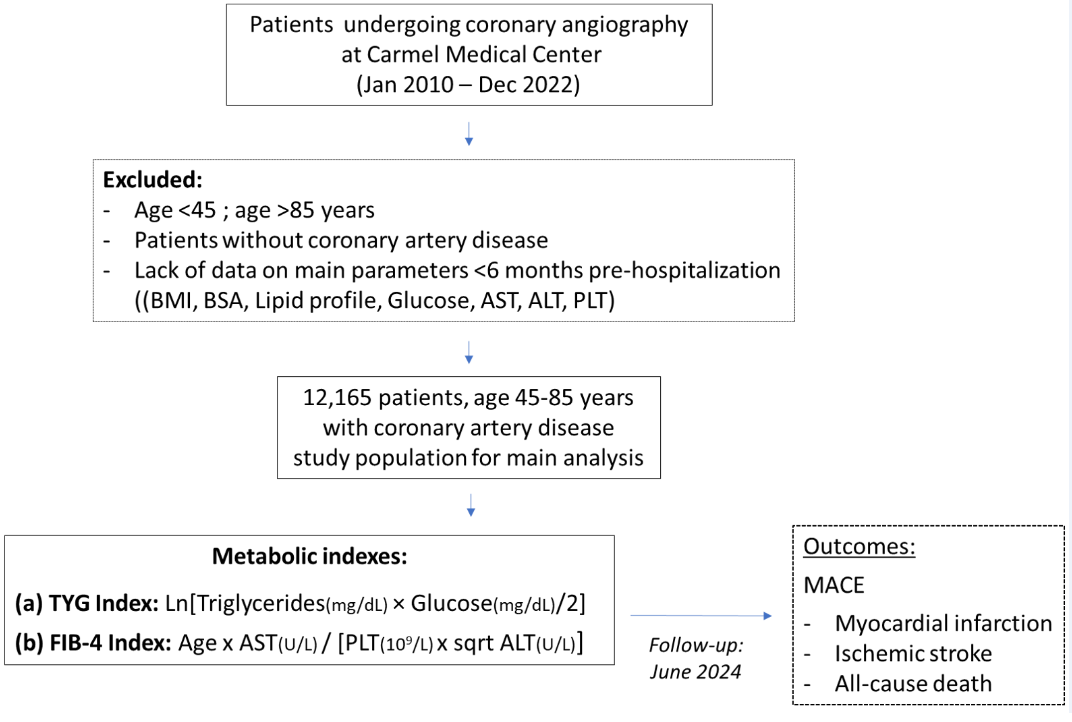
Methods: We performed a retrospective analysis of 12,165 patients who underwent coronary angiography to investigate the association of TYG and FIB-4 indices with the occurrence of myocardial infarction, stroke, or all-cause death (MACE), using multivariate Cox proportional hazards models.
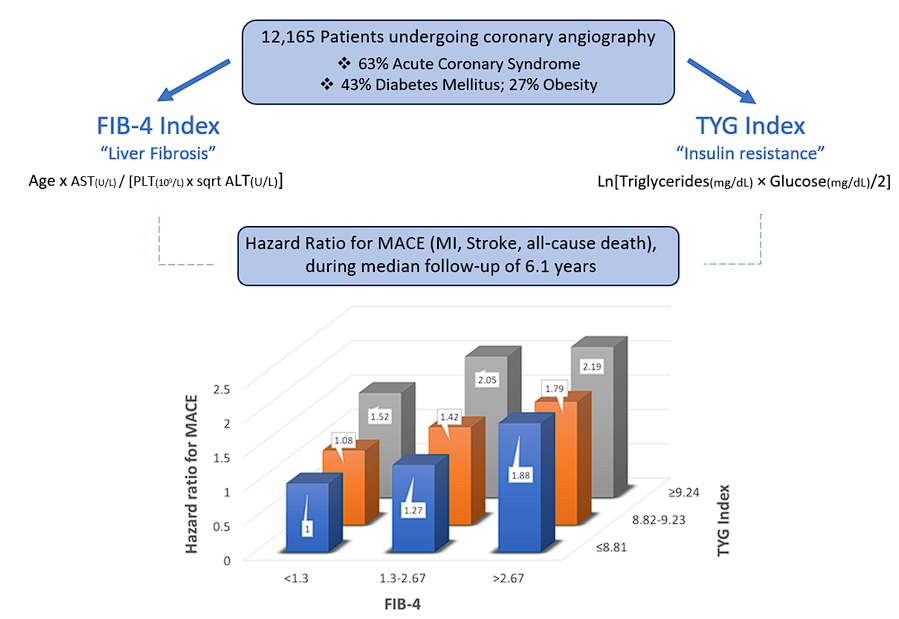
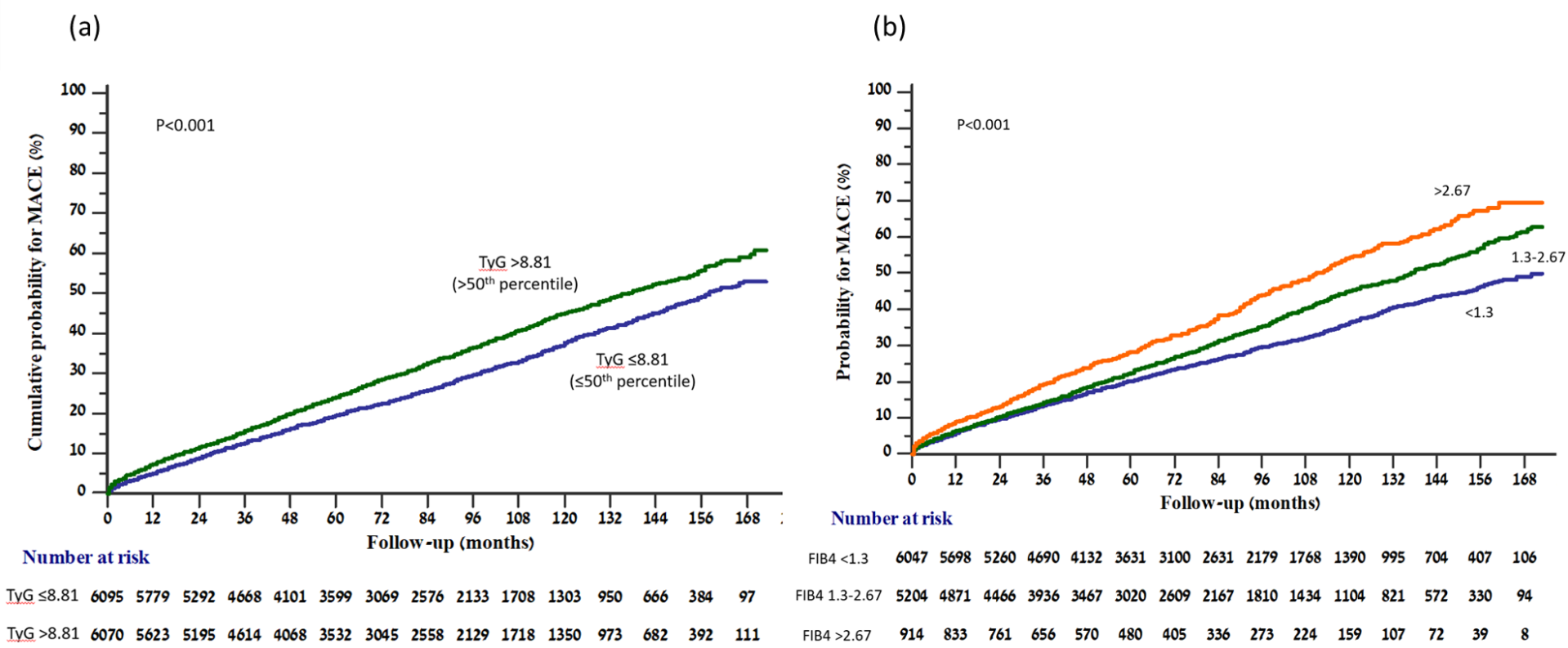
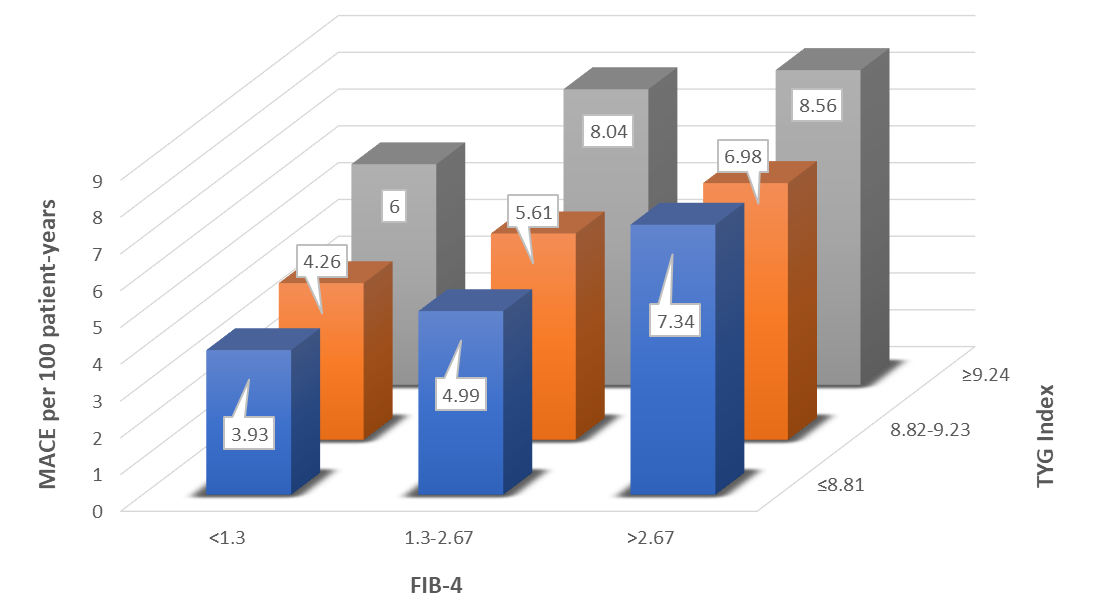
Results: Mean age of the study population was 65±10 years; 63% presented with acute coronary syndrome. During median follow-up of 6.1 years, the first MACE occurred in 4174 patients. Compared to the TYG ≤50th percentile (≤8.81), the multivariable adjusted hazard ratio (95% confidence interval) for MACE was 1.17 (1.10-1.45), 1.32 (1.23-1.43), and 1.72 (1.55-1.99) for TYG levels ≥50th (>8.81), ≥75th (>9.23), and ≥90th (9.66) percentiles, respectively. FIB-4 levels of 1.3-2.67 and >2.67 were associated with an adjusted hazard ratio of 1.19 (1.11-1.27) and 1.67 (1.51-1.87), respectively, compared to FIB-4 levels of <1.3. Regarding the risk of developing MACE, no significant interaction was detected between TYG or FIB-4 levels and the presence of diabetes or obesity. In a combined model of both predictive measures, a gradual increase in the incidence rate of MACE was observed, ranging from 3.93 (TYG≤8.81; FIB-4<1.3) to 8.56 (TYG>9.23; FIB-4>2.67) events per 100 patient-years.
Conclusions: TYG and FIB-4 were independently associated with an increased risk of developing MACE in patients undergoing coronary angiography, both individually and when concomitantly elevated. These simple-to-calculate, non-invasive metabolic biomarkers may aid in the prediction of cardiovascular diseases.
Keywords: Fibrosis-4 index, Triglyceride-Glucose index, Insulin resistance, Fatty liver, Cardiovascular events
israelheart@ortra.com מייל לשאלות
