
Empiric Posterior Wall Isolation Using Pulse Field Ablation
ntroduction: Isolating the pulmonary vein (PVI) alone yields suboptimal outcomes in the ablation of persistent atrial fibrillation (PerAF). The added value of empiric posterior wall isolation (PWI) through thermal ablation has produced controversial results. The use of the pulsed-field ablation FARAPULSE™ system for PWI appears safe and achieves high rates of acute and persistent isolation. However, evidence supporting these assumptions remains limited. We aimed to assess the procedural characteristics, safety, and outcomes of PerAF patients undergoing empiric PWI with FARAPULSE™ in a real-world setting.
Methods: This was a single-center, prospective cohort study involving PerAF patients undergoing PVI with empiric PWI. All procedures were performed skilled operators using the pulsed-field ablation FARAPULSE™ system (Boston Scientific, MA, USA). An electroanatomic mapping system was utilized in 21 cases (19%) (CARTO, Biosense Webster, Abbott). Tissue contact was confirmed via intracardiac echocardiography (ICE). All patients were routinely followed in an outpatient clinic, with Holter ECG monitoring performed at 3, 6, and 12 months, as well as in response to any symptoms.
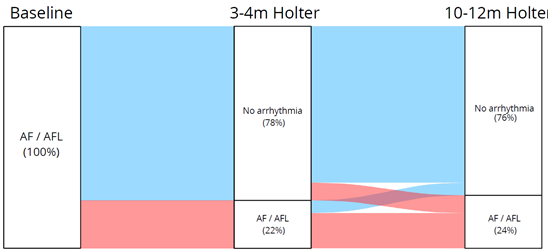
Results: 109 consecutive patients were included (median age: 70[63–75], 33 females[30%], left atrial diameter: 51[47–58] mm, left atrial volume: 162[136–198] ml). Acute PVI and PWI were achieved in 100% of patients, with first-pass isolation confirmed by exit block during the procedure. The mean procedure time was 77±18 minutes. No major complications were observed during the procedure or during the follow-up period. Of the 88 patients (81%) who completed 24-hour Holter monitoring at 3, 6, and 12 months, freedom from recurrent AF/AT was achieved in 81 patients (76%). Multivariate regression identified left atrial size as the sole significant predictor of arrhythmia recurrence (adjusted OR: 1.07 per additional 1mm; 95% CI: 1.01–1.13;p=0.035).
Conclusion: PWI using pulsed-field ablation appears safe and is associated with high acute isolation rates and favorable long-term arrhythmia-free survival.
israelheart@ortra.com מייל לשאלות
