
Mechanisms and therapeutic options for an LMNA mutation in atypical progeria syndrome and severe cardiomyopathy
2Department of Genetics, The Hebrew University of Jerusalem, Israel
Background: Atypical progeria syndrome (APS) is a genetic disorder caused by a mutation in the LMNA gene, leading to lipodystrophy, diabetes, and complications. Patients typically die between ages 40 and 50 from cardiovascular dysfunction. Genetic and molecular mechanisms of this syndrome are poorly understood, prompting investigation into the LMNA mutation.
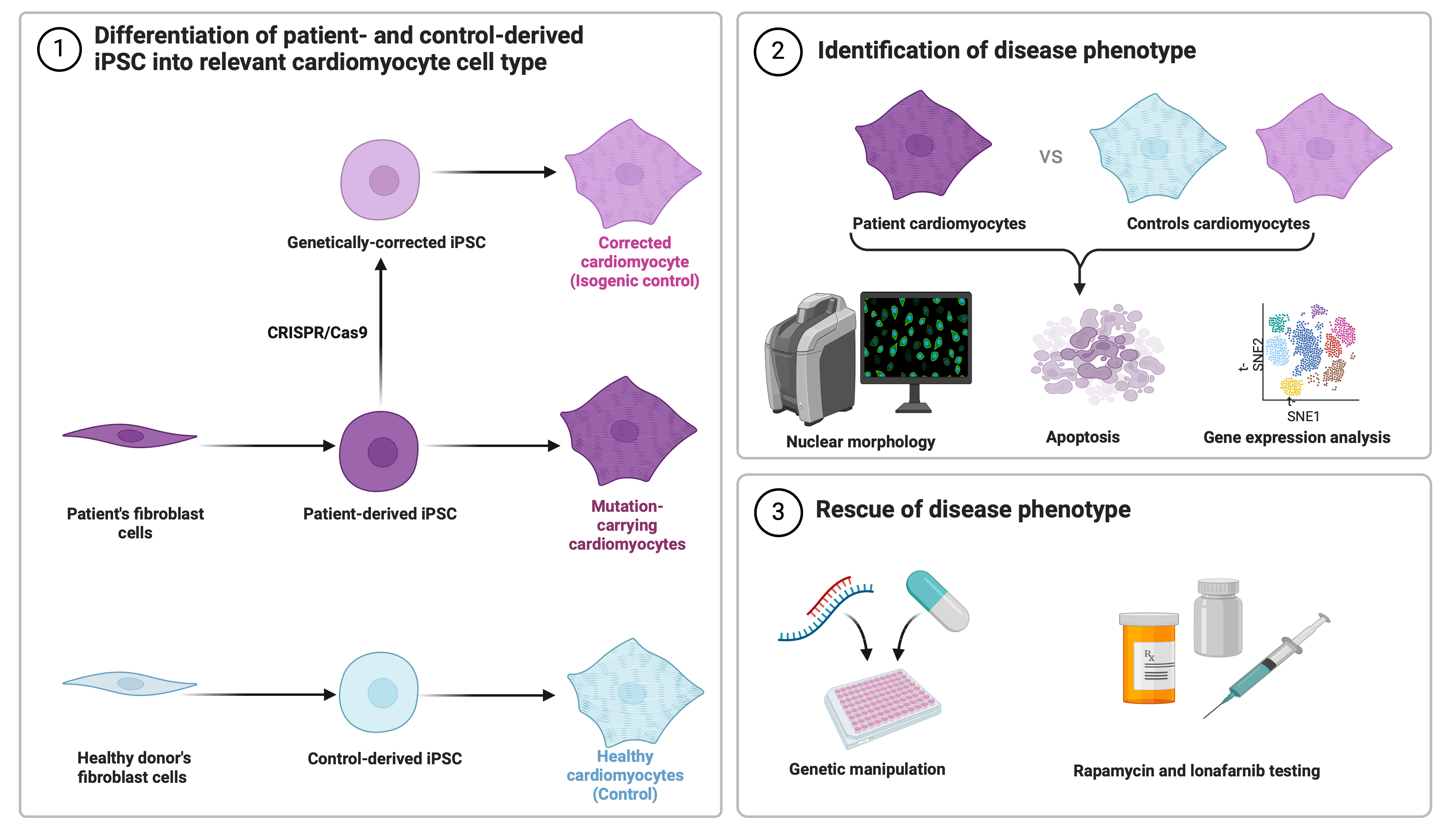
We identified a family with three members having APS, associated with cardiomyopathy and coronary artery disease. These patients carry an LMNA mutation, specifically c.898G>A (p.D300N). We investigate cellular morphology and protein expression in the patient’s skin fibroblasts compared with healthy fibroblasts. Additionally, using patient-derived induced pluripotent stem cells (iPSCs) differentiated into cardiomyocytes, we aim to explore the cardiac implications of the LMNA mutation to understand its contribution to disease mechanisms.
Methods: We obtained skin fibroblast biopsies from a 46-year-old patient and a healthy control. We assessed the effects of the LMNA mutation through immunofluorescence using Anti-lamin A+C antibody to evaluate nuclear morphology, we used Western blot to evaluate Lamin A/C expression level and to check whether Progerin—truncated prelamin A—is expressed in patient cells. We used TUNEL assay to detect apoptosis levels. Additionally, we generated iPSCs from the patient-derived fibroblasts. We are using CRISPR/Cas9 to correct the mutation in the patient-derived iPSCs to generate isogenic lines that will then be differentiated into cardiomyocytes.
Results: We found nuclear morphology abnormalities in patient-derived fibroblasts compared to controls. We found no evidence for progerin accumulation in patients, and did not observe any changes in apoptotic markers. The generated iPSCs line expressed pluripotent markers and differentiated into multiple germ layers, indicating a stable model for further investigation.
Conclusion:Research demonstrates cellular implications of the LMNA mutation in APS and establishes patient-specific iPSC models for exploring disease mechanisms. These findings may facilitate the development of targeted therapeutic strategies for managing cardiovascular and complications associated with this syndrome.
israelheart@ortra.com מייל לשאלות
