
Social Support and 10-year Mortality Following Acute Myocardial Infarction
2Cardiology, Tel Aviv University, Israel
3Medicine, Harvard Medical School, USA
4Emergency Medicine, Soroka University Medical Center, Israel
Introduction. Identification of factors affecting long-term mortality following acute myocardial infarction (AMI) is essential. The interplay between social and emotional determinants and physical health and mortality warrants further research. This study investigates social support type and long-term mortality following AMI.
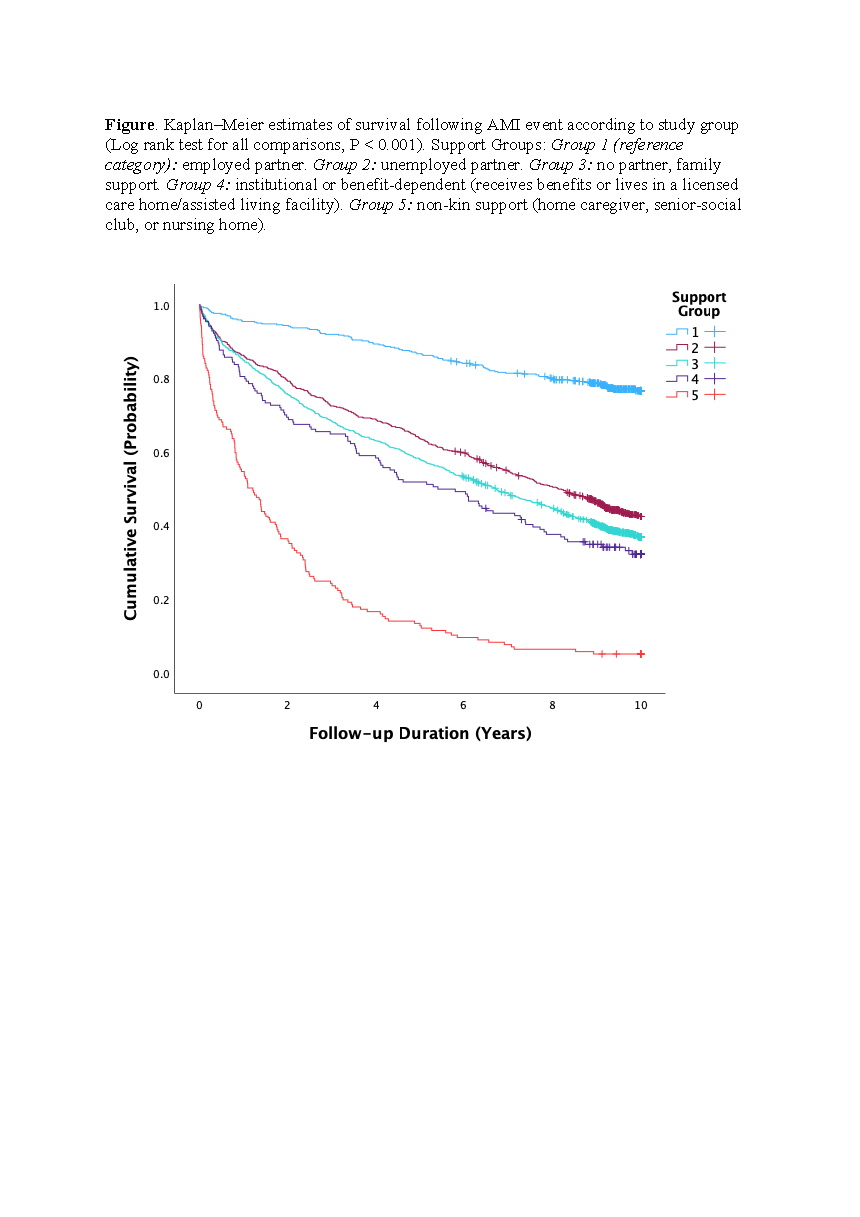
Materials and Methods. Demographic and clinical data were collected retrospectively from Soroka University Medical Center between 2011 and 2017 for all patients with AMI. Patients were divided into study groups based on support type: 1. employed partner (served as the reference group); 2. unemployed partner; 3. no partner, family support; 4. institutional or benefit-dependent and 5: non-kin support (caregiver). Ten-year all-cause mortality risk was assessed and compared between the groups.
Results. We identified 2652 AMI patients with documentation of support type. The mean age was 67.6 (SD=14) years, 66% were male. Forty percent had no partner, followed by those with an unemployed partner (31%). Over the follow-up of (median) 7.6 years, 1471 patients died; significantly higher mortality rates observed in patients without family support (67.9%) or receiving non-kin support (94.9%) (see Figure). Multivariable analysis found those with non-kin support to endure the highest mortality risk: AdjHR=2.20, 95% CI: 1.67–2.91, p<0.001, as compared with the reference group. Subgroup analyses found women below age 75 years, Arab women and those with higher functional status to be most vulnerable to mortality in the absence of family support.
Conclusions. Lack of family support was associated with increased long-term mortality among AMI patients. Assessment of support status among AMI patients is integral for secondary prevention.
israelheart@ortra.com מייל לשאלות
