
Incidence and Risk Factors for Developing Type 2 Diabetes Mellitus After Acute Myocardial Infarction - a Long-Term Follow-Up
2Internal Medicine E, Soroka University Medical Center, Israel
3Nursing Research Unit, Soroka University Medical Center, Israel
4Cardiology, Rabin Medical Center, Israel
5Medicine, Tel Aviv University, Israel
6Cardiology, Harvard Medical School, USA
7Goldman Medical School, Ben-Gurion University of the Negev, Israel
8Emergency Medicine, Soroka University Medical Center, Israel
Introduction. Acute myocardial infarction (AMI) and type 2 diabetes mellitus (T2DM) share common risk factors. Additionally, the long-term side effects of AMI treatment, pathophysiological processes, long-term physical, emotional and social consequences after AMI may be risk factors for T2DM. Aim: to estimate the extent of new-onset T2DM (NODM) after AMI in an elderly population and to identify the risk factors.
Materials and Methods. a retrospective study included AMI adults without pre-existing T2DM hospitalized in Soroka University Medical Center between 2002–2017. Collected data included: demographics, comorbidities, AMI characteristics, and results of echocardiography, angiography and laboratory studies. Eligible patients were followed for up-to 16 years. The outcome was defined as NODM, according to the diabetes diagnosis record or the results of blood tests. Statistical analysis included calculation of T2DM incidence, using survival approach. Additionally, the risk score (TS) was calculated based on the number of risk factors and the strength of their association with the outcome.
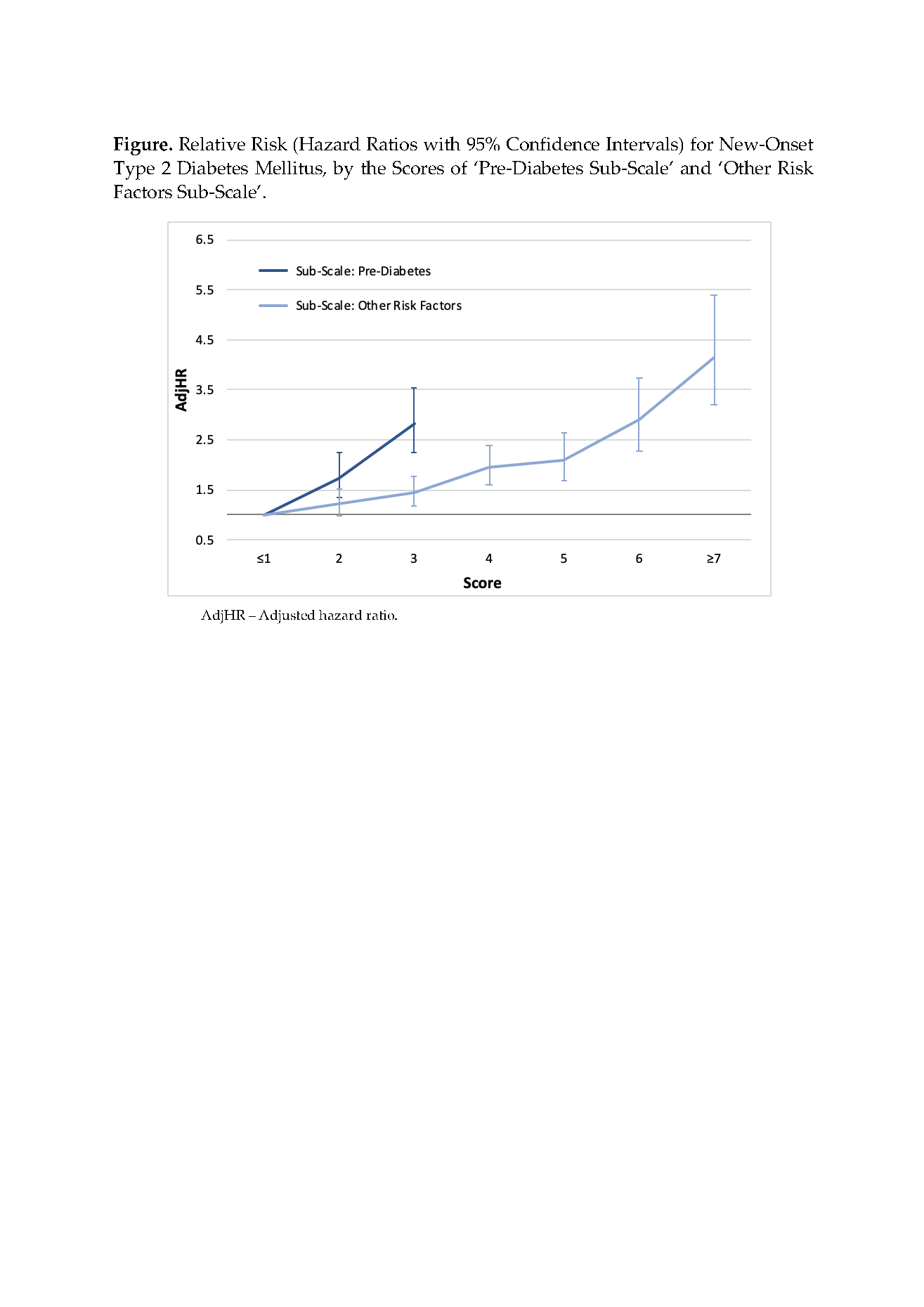
Results. Among 5,147 individuals (74.2% males, mean age 64.6±14.9 years), 23.4% developed NODM (cumulative incidence: 0.541). Key risk factors included: age 50–60 years, minorities (Muslims), smoking, metabolic syndrome (MetS), Hemoglobin A1C (HbA1C) ≥5.7%, and cardiovascular comorbidities. A TS, integrating these factors, revealed a linear association with NODM risk: each 1-point increase corresponded to a 1.2-fold rise (95% CI 1.191–1.276, p<0.001). HbA1C ≥6% on the “Pre-DM sub-scale” conferred a 2.8-fold risk (p<0.001), while other risk factors also independently predicted NODM (see Figure).
Conclusions. post-AMI patients with multiple cardiovascular risk factors, particularly middle-aged individuals, Muslims, and those with HbA1C ≥6% or MetS, are at heightened risk for NODM. Early identification and targeted interventions may mitigate this risk.
israelheart@ortra.com מייל לשאלות
