
Are patients with atrial fibrillation and hypothyroidism protected from developing Amiodarone-induced thyrotoxicosis?
2Department of Community Medicine and Epidemiology, Carmel Medical Center, Israel
 Introduction: Atrial fibrillation (AF) may be treated with medications or ablation. Amiodarone is an effective treatment however concern about the risk of developing thyrotoxicosis limits its use. In this study, we aim to assess the association between Amiodarone treatment and thyrotoxicosis in patients with concomitant diagnosis of AF and treated hypothyroidism.
Methods: We performed a retrospective analysis of Clalit database during 2010-2023 including 4.9 million people. The association between Amiodarone and thyrotoxicosis in AF patients was examined in two separate cohorts defined by their thyroid function status (hypothyroidism vs. normal thyroid status). New cases of thyrotoxicosis case were validated by reviewing personal file to avoid including cases with poor hypothyroidism control. Using Cox proportional models Amiodarone was examined as a time-dependent variable, allowing subjects to transfer from one exposure group to another during follow-up.
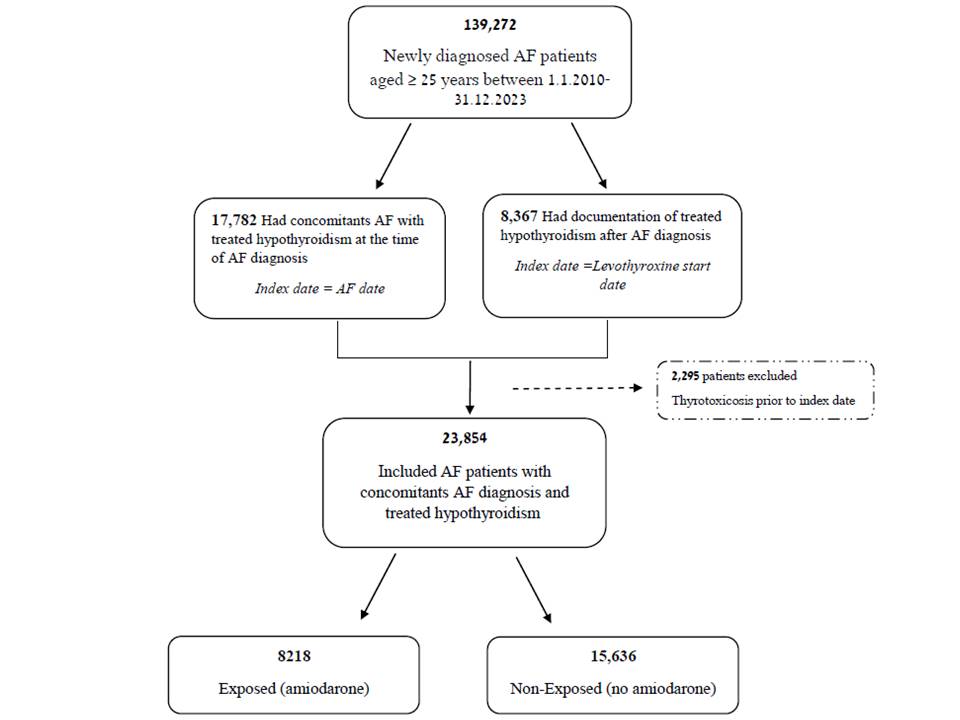
Results and discussion: 139,272 patients with newly-diagnosed AF were identified, 23,854 of those (17.1%) had a concomitant diagnosis of hypothyroidism and third (8218 patients, 34.4%) were exposed to Amiodarone. Overall, 279 of hyperthyroidism were detected. However, after careful file review, only 107 were verified (0.44%). Amiodarone was associated with increased risk of thyrotoxicosis with HR of 17.17 (95% CI, 15.50-19.01) in the normothyroid cohort, and 5.01, 95% CI, 3.34-7.54) in the cohort with concomitant hypothyroidism.
Conclusion: while hypothyroidism state reduces the risk to develop Amiodarone-induced hyperthyroidism, the risk not negligible and still mandates caution.
israelheart@ortra.com מייל לשאלות
