
Attenuation of Diastolic Dysfunction by Photobiomodulation is Associated with Upregulated Mitochondrial Metabolism and Angiogenesis in a Mouse Model of Heart Failure with Preserved Ejection Fraction
2Department of Cardiology, Hadassah Medical Center, the Faculty of Medicine of the Hebrew University, Jerusalem, Israel, Israel
3The Saul and Joyce Brandman Hub for Cardiovascular Research and the Department of Medical Neurobiology, Institute for Medical Research (IMRIC), Faculty of Medicine, The Hebrew University of Jerusalem, Israel., Israel
Background:
Heart failure with preserved ejection fraction (HFpEF) has limited disease-modifying
treatments. Photobiomodulation, a non-ionizing, non-thermal optical irradiation has been
reported to reduce inflammation, increase tissue perfusion, and, stimulate mitochondrial
ATP synthesis -- all of which might counterbalance the pathophysiology of HFpEF. This
study was designed to determine whether PBM can attenuate the deterioration of diastolic
function, and potential molecular mechanisms involved.
Methods:
High-fat diet and the vasoconstrictor, L-NAME (N(G)-Nitro-L-arginine-methyl-ester)(‘2-
hit model’) were used to induce HFpEF in C57/black male mice. PBM was applied
transcutaneously over the heart 3-times/week×10 weeks (904nm super-pulsed, 90
seconds, 4.2J/cm 2 )(HF-PBM, n=12). Sham-treated mice (HFpEF, n=13) underwent
similar procedures with the laser switched off. Additional control animals were fed a
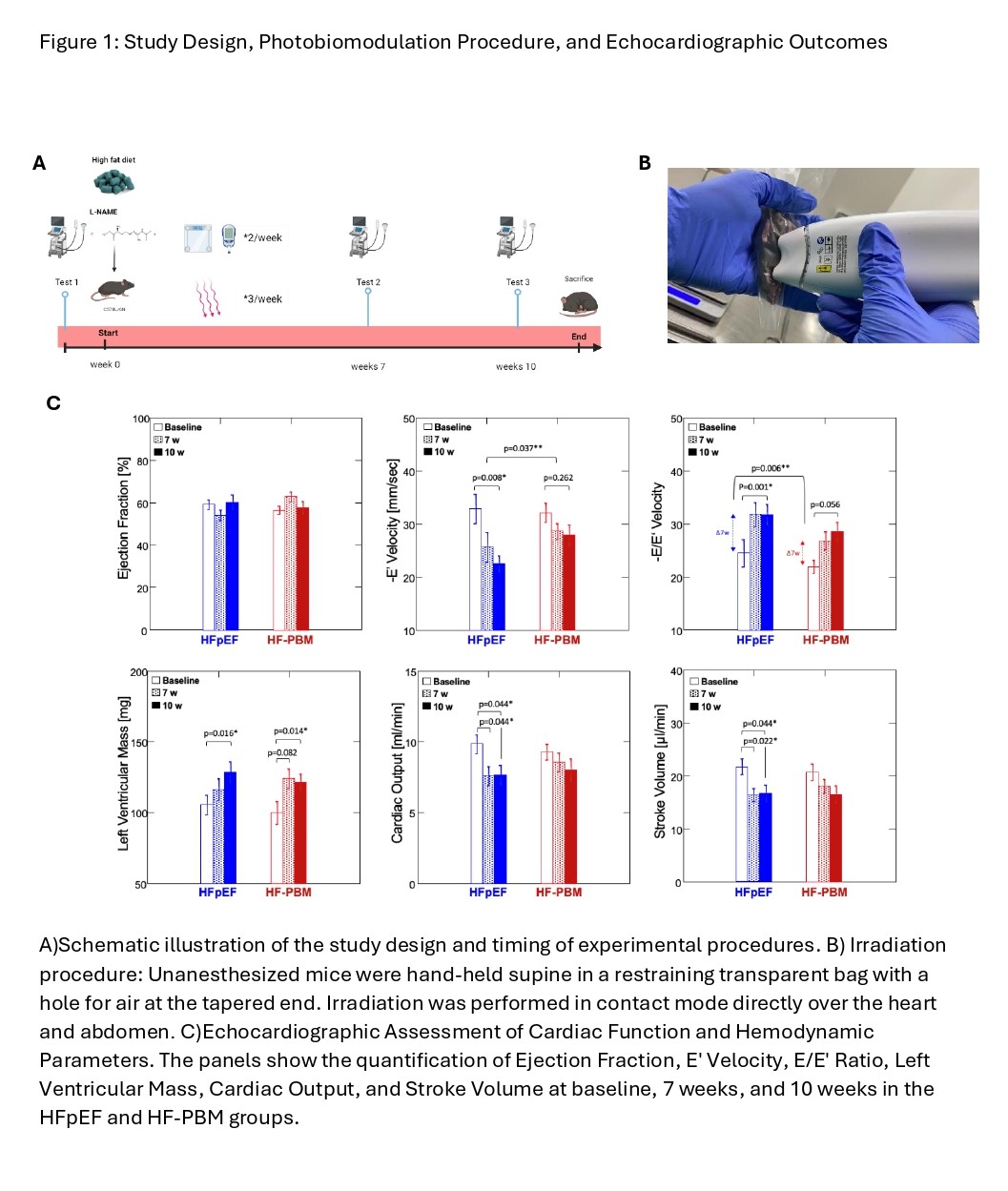
normal diet (ND, n=10). Echocardiography was conducted at baseline, 7 and 10 weeks.
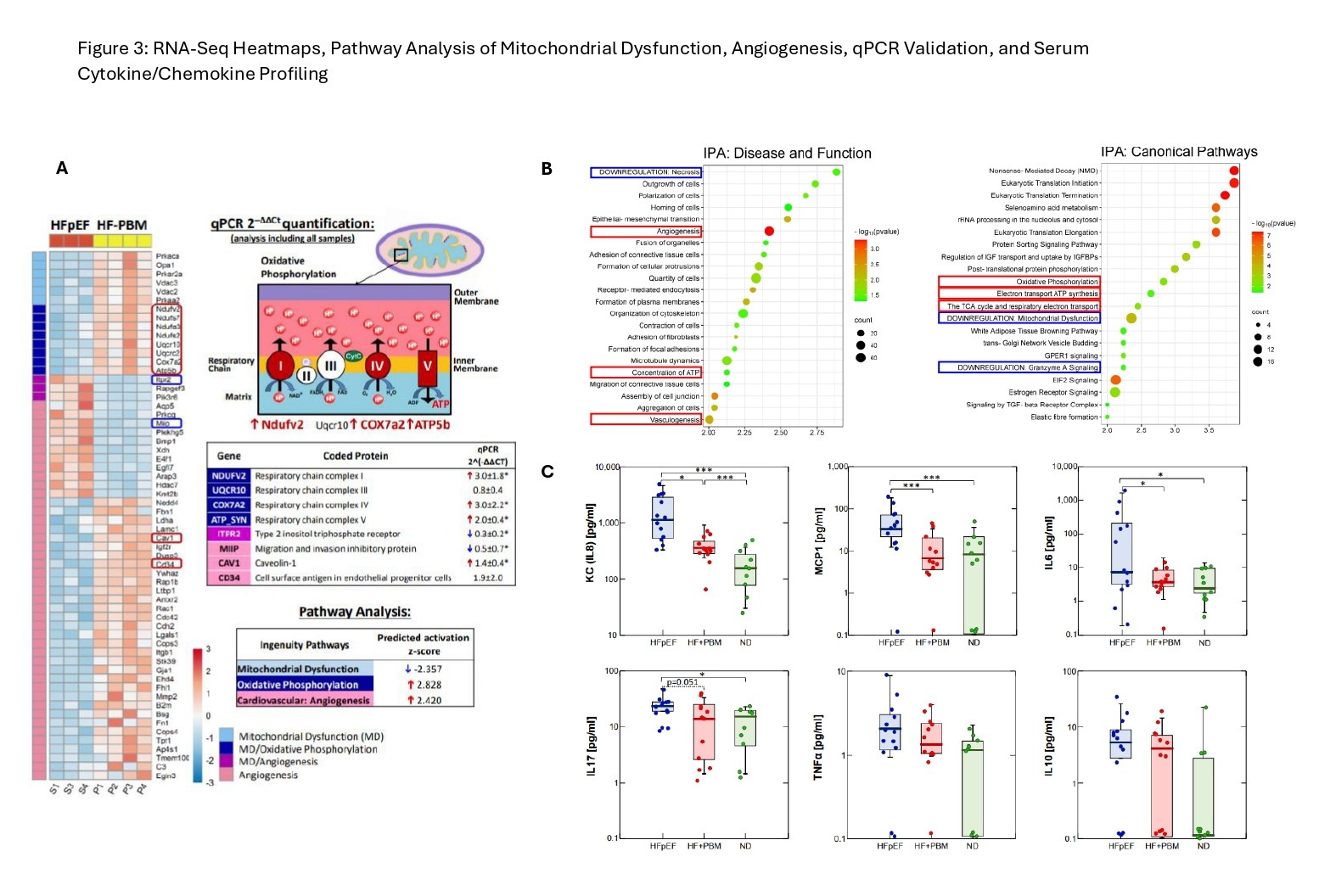
RNA sequencing (RNA-seq) was performed on left ventricular samples, followed by
pathway enrichment analysis. The expression of genes of interest was further quantified
by entire group quantitative real-time PCR (qPCR). Serum underwent multiplex
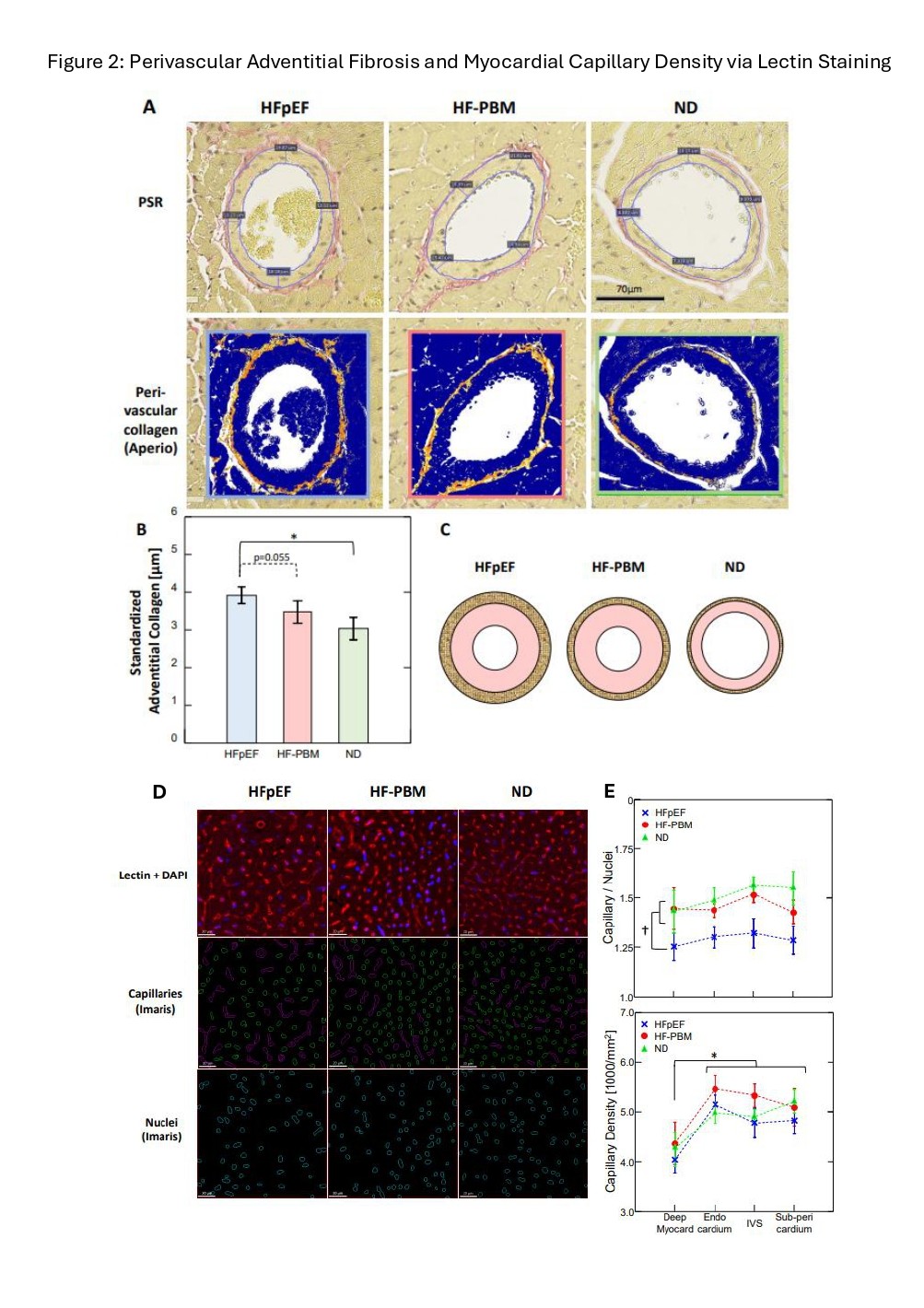
chemokine/cytokine profiling. Heart sections were stained with picrosirius red for
fibrosis and fluorescently with lectin for capillary quantification.
Results:
Mitral E’ deteriorated significantly in the HFpEF group but not in the HF-PBM group,
and PBM delayed the deterioration of E/E’. RNA-seq revealed 551 differentially
expressed mRNAs and that PBM upregulated mitochondrial energy metabolism,
angiogenesis, anti-oxidant activity, protein production, and cell proliferation, while
HFpEF without PBM was significantly associated with apoptosis, cell necrosis, and
mitochondrial dysfunction. PBM was found to attenuate HFpEF-induced inflammatory
chemokines MCP1, IL-6, and IL-8. PBM significantly attenuated HFpEF-induced
capillary rarefaction and perivascular fibrosis.
Conclusions:
PBM treatment mitigated diastolic dysfunction in HFpEF by enhancing mitochondrial
energy metabolism, angiogenesis, and antioxidant defenses, while suppressing
inflammatory chemokines and attenuating capillary rarefaction and fibrosis.
israelheart@ortra.com מייל לשאלות
