
Rethinking Normal: eRVSP Below 35mmHg and Mortality Risk
2Faculty of Medicine, Tel-Aviv University, Israel
3Department of Oncology, Sheba Medical Center, Tel-Hashomer, Israel
4Leviev Heart Center, Sheba Medical Center, Tel Hashomer, Israel
Right ventricular systolic pressure estimated by echocardiography (eRVSP) >35 mmHg is a well-established predictor of mortality across various disease states. However, the prognostic significance of eRVSP values within the traditionally normal range (<35 mmHg) remains unclear. This study aims to evaluate the relationship between eRVSP <35 mmHg and all-cause mortality in a large, real-world patient cohort.
Methods: Consecutive echocardiographic reports linked to clinical data from the largest medical center in Israel (2007-2025) were reviewed (N=293,433). The first test for each patient for which full data were available was selected. The primary outcome was all-cause mortality. Patients with eRVSP ≥ 35 mm Hg were excluded. Smooth multivariate hazard ratio (HR) Cox regressions models were created for the correlation between eRVSP and all-cause mortality. Sub analysis of subsets of the population as well as the interaction between eRVSP and other variables, such as gender, age, obesity, left ventricular ejection fraction, diastolic dysfunction, hypertension, significant valvular disease, chronic kidney disease (CKD) and anemia was conducted.
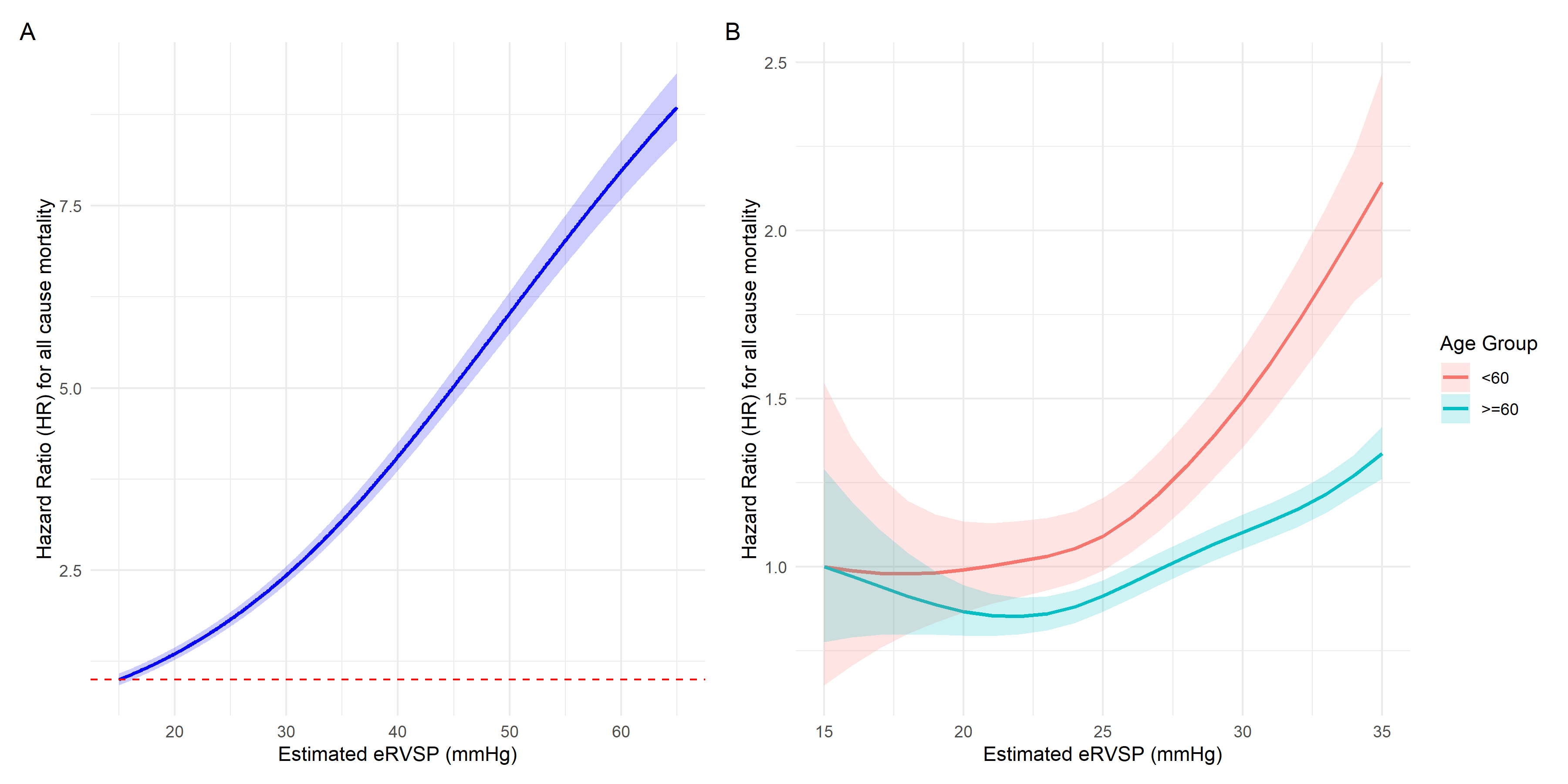
Results: Final study population included 73,025 patients with eRVSP <35 mmHg. The cohort consisted of 58% males with a median(IQR) age of 61 years(48-72). Median (IQR) eRVSP was 28(25-32)mmHg. Smooth univariate HR analysis of the entire cohort showed that eRVSP was associated with higher all-cause mortality. The correlation of eRVSP with mortality was consistent in a multivariate model adjusted for known predictors of poor survival (Figure 1A). Interaction analysis demonstrated that the association of eRVSP within the normal range with survival was more pronounced among younger patients (below 60, p for interaction <.001; Figure 1B)
Conclusions: Increasing eRVSP predicts higher mortality even below the threshold considered to be normal (35mmHg). These findings suggest that eRVSP, even below the conventional threshold of 35 mmHg, may provide valuable prognostic information, particularly in younger patients.
israelheart@ortra.com מייל לשאלות
