
The Modified Sternoplasty: A Novel Surgical Technique for Treating Mediastinitis
2Department of Cardiac Surgery, Leviev Heart Center, Sheba Medical Center, Israel
3The Faculty of Health Sciences, Ben-Gurion University of the Negev, Israel
4Department of Cardiothoracic Surgery, Affiliated to the Faculty of Health Sciences, Ben-Gurion University of the Negev, Assuta Medical Centers, Israel
Introduction
Deep sternal wound infection (DSWI) is one of the most complex and devastating complications following cardiac surgery, with reported mortality rates of up to 35%, along with reinterventions, morbidity, and prolonged hospital stays.
Method and Technique
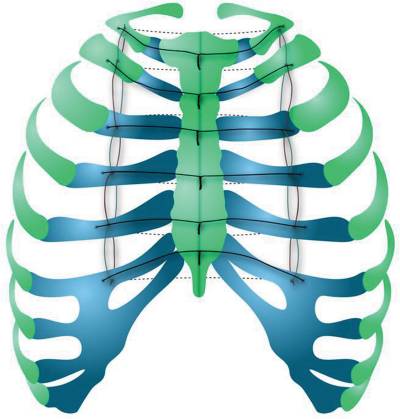
We present here the modified sternoplasty, a novel surgical technique for treating DSWI following cardiac surgery. The technique involves aggressive debridement of the infected sternal bone, dissection of the chest wall from the adhered heart, great vessels, and any underlying bypass grafts below in order to safely allow the insertion of bilateral longitudinal stainless-steel sternal wires along the healthy ribs. This is followed by six to eight horizontal stainless-steel wires that are anchored laterally to the longitudinal wires and directly into the healthy ribs. The reconstructed chest wall is then supported superiorly by bilateral pectoralis muscle flaps, completing the modified sternoplasty surgery.
Results and discussion
Between 2010 and 2024, a total of 124 patients underwent the modified sternoplasty surgery due to DSWI at seven medical centers across three different countries. The mortality rate was 2.4% (3 patients), the reintervention rate was 1.6% (2 patients), and the average length of postoperative stay was 24.63 ± 22.09 days.
The modified sternoplasty for treating DSWI is a more complex operation compared to other conventional sternoplasty techniques. However, this technique has proven to be much more effective, demonstrating a significantly lower rate of mortality, morbidity, reinterventions, and length of hospital stay compared to other surgical methods.
Conclusion
The modified sternoplasty procedure offers a safer and more effective solution for the devastating complication of DSWI, particularly for patients with wide-open sternal wounds exposing the heart and great vessels. It has become the standard of care for our patients.
israelheart@ortra.com מייל לשאלות
