
Procedural and Prognostic Implications of Guide Extension Catheter Use During Percutaneous Coronary
Intervention: A Retrospective Cohort Study
Introduction: The use of guide extension catheters (GECs) has become an essential adjunctive
tool in complex percutaneous coronary interventions (PCIs). GECs provide additional catheter
support and stability, enhancing device deliverability. This study evaluates the technical and
prognostic significance of the use of GECs in complex PCI.
Methods: Our study included 23,299 PCI cases performed in a large tertiary center between 2010
and 2023. The primary endpoint was all cause-mortality. Other included major adverse cardiac
events (MACE) during follow-up. Cox regression, multivariate analysis, and propensity score
matching were used to compare between GEC and non-GEC PCI cases.
Results: Of the 23,299 PCI cases in our study, 532 patients (2%) were treated utilizing GECs.
The entire population consisted of 88% males, and the median age was 66 [IQR 58-75]. GEC
was used more often in calcified, bifurcation and unprotected left main lesions. Patients requiring
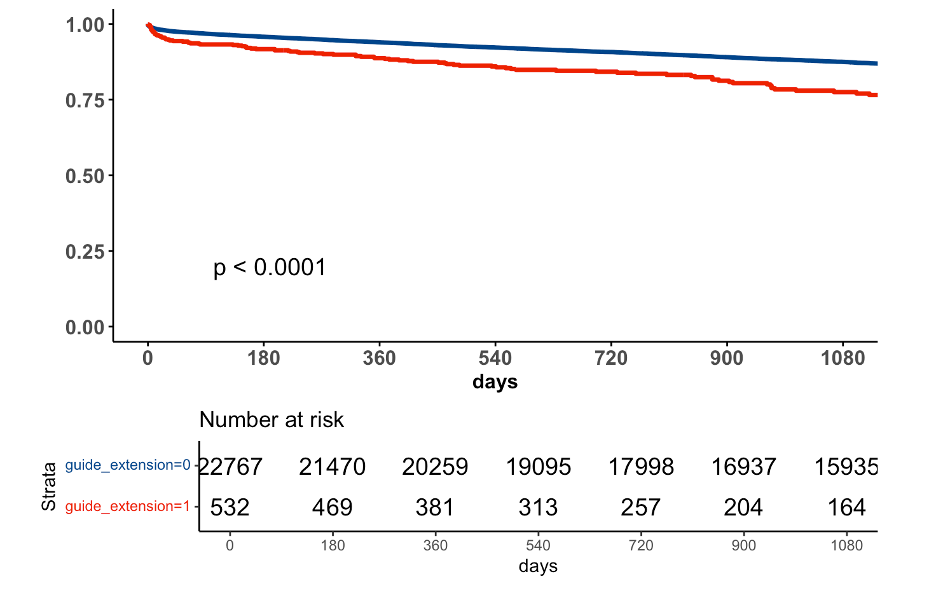
the use of GEC had higher long-term mortality rates (HR 1.86, 95% CI 1.54-2.23, p < 0.001) and
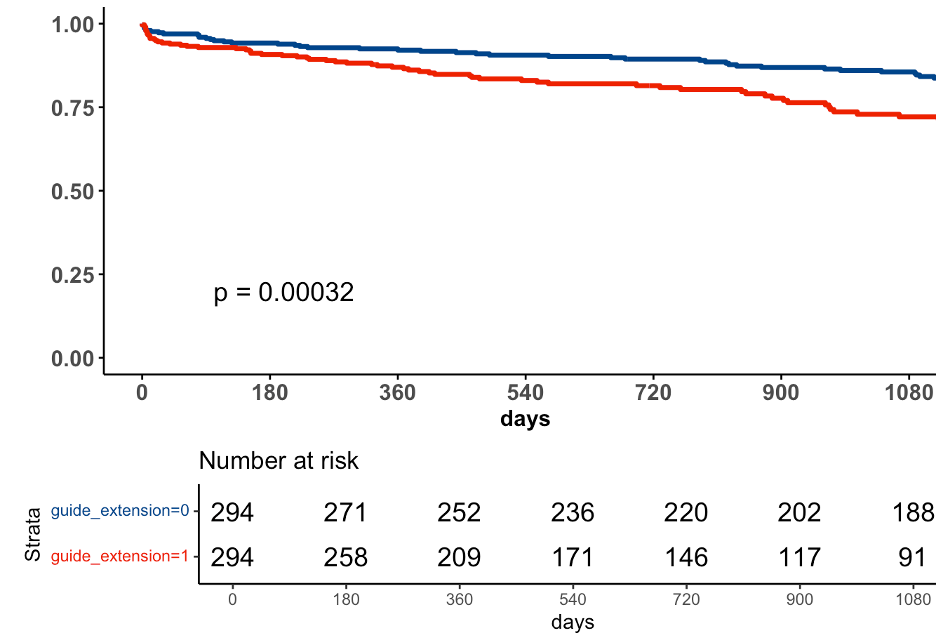
MACE events (HR 1.26, 95% CI 1.07-1.47, P=0.004). Multivariate adjustments, sensitivity
analysis of complex-PCI cases, and a propensity score-matched model showed similar results. A
landmark analysis showed no significant difference in 30-day mortality but divergence of the
survival curves after 30 days with increased mortality among the GEC cohort.
Conclusions: Our study showed that patients who required GEC use during PCI suffered a worse
prognosis. Due to the unique intricacy of PCI cases requiring GEC, its utilization is a surrogate
for sicker patients and procedural complexity, thus requiring careful follow-up and special care.
israelheart@ortra.com מייל לשאלות
