
Prediction of Aortic Stenosis Progression Using Artificial Intelligence: A Machine Learning Model Based on Echocardiographic Data
Introduction: Aortic Stenosis (AS) is amongst the most common valvular heart diseases, particularly in older individuals. Left untreated, the condition carries a significant risk of morbidity and mortality. Current guidelines for monitoring AS progression focus on serial echocardiographic assessment, which is resource-intensive and subject to variability. Artificial intelligence (AI) may offer an opportunity to enhance the early identification of patients at risk of developing severe AS.
Methods: We retrospectively analyzed a single center database of 9,330 echocardiograms performed on patients originally diagnosed with mild or moderate AS and followed for up to 5 years. Our model was developed using the CatBoost algorithm, which is agnostic to any patient data outside the scope of the echocardiography report. Performance was assessed for accuracy, AUC-ROC, and calibration. SHAP values provided interpretability for the model’s predictions.
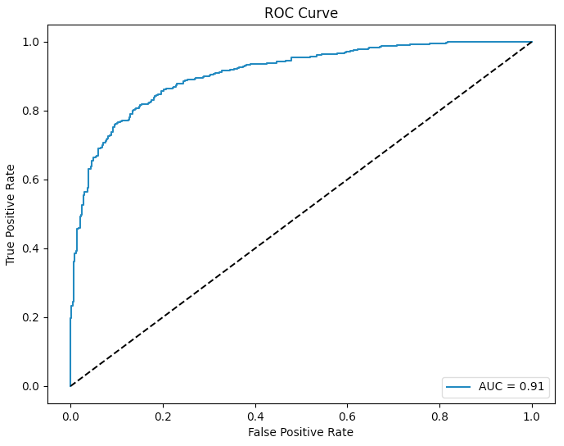
Results: The model demonstrated a strong predictive performance, manifested by an AUC-ROC of 0.93, an accuracy of 85%, and a sensitivity of 86%. Key predictors for severe AS development included maximal and mean systolic aortic valve gradients, calculated aortic valve area, and ascending aortic diameter. The model successfully identified patients at high risk of progression, with robust calibration and generalizability confirmed through cross-validation.
Conclusions: Our novel, echocardiography-focused AI model is a reliable tool for the early identification of patients at risk of progression to severe AS. Pending future, multi-center, prospective validation, such models may facilitate personalized follow-up strategies and timely interventions, ultimately leading to improved patient outcomes and resource utilization.
israelheart@ortra.com מייל לשאלות
