
The Prognostic Value of Normal Troponin on Admission in STEMI Patients: An 8-year Multicenter Cohort
2Azrieli Faculty of Medicine, Bar Ilan University, Israel
3Cardiology And Heart Disease, Bnai Zion medical Center, Israel
4Cardiology Division, Galilee Medical Center, Israel
5Kittner-Davidai Division of Cardiovascular Medicine and Surgery, Tzafon (Poriya) Medical Center, Israel
Since the beginning of the 2000s, troponin has been the preferred biomarker for diagnosis of myocardial infarction. Small studies have shown that patients with ST-elevation myocardial infarction (STEMI) and normal troponin values on admission have a lower short-term mortality rate compared to those with higher values. We compared the outcomes of STEMI patients with normal troponin levels (below rule-in for MI cut-off) on admission with those with elevated troponin values (above rule-in for MI cut-off).
Methods: We used the Israeli Ministry of Health database (‘KINERET”) and obtained the mortality data from the ‘Israeli population registry’. All patients with STEMI admitted to the Cardiovascular Divisions at Tzafon Medical Center, Galilee Medical Center, Bnei-Zion Medical Center, and Hilel-Yaffe Medical Center between 2016 and 2024 were included in this analysis. The cut-off Troponin levels were determined by ESC rule-in for MI criteria (52 ng/ml for Troponin T and 64 ng/ml for Troponin I). We used a multivariable logistic regression model to adjust for possible confounders.
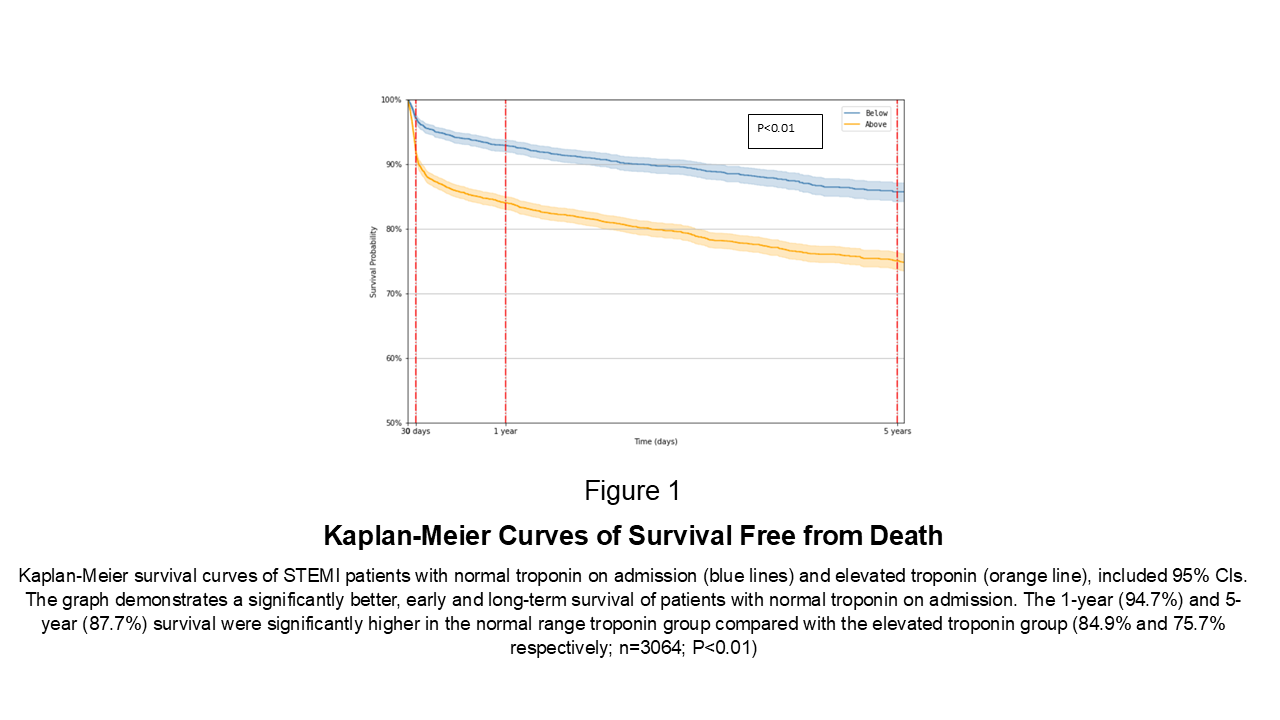
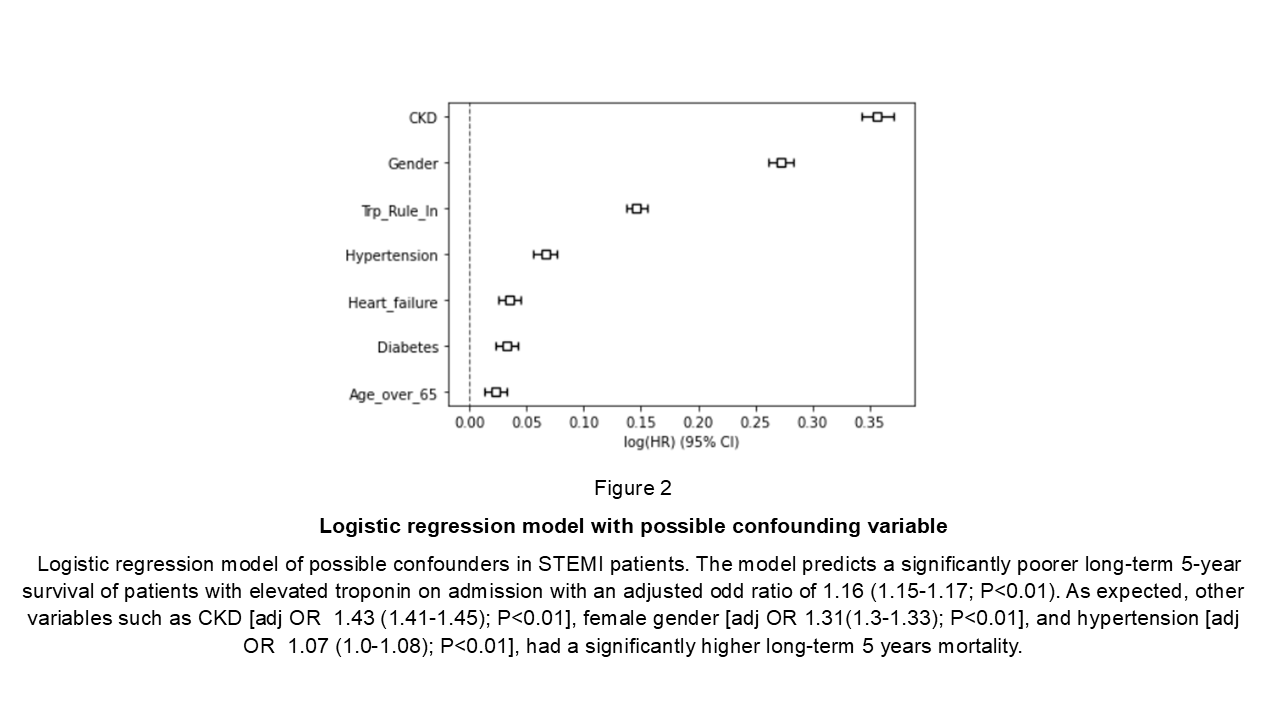
Results: A total of 8394 patients (76% male, mean age 68.3±13 years) were included in this study. The patients` initial troponin was elevated at 63.5% (n=5330). The 1-year (94.7%) and 5-year (87.7%) survival were significantly higher in the normal range troponin group compared with the elevated troponin group (84.9% and 75.7% respectively; n=3064; P<0.01; Figure1). In a multivariable analysis, after adjusting for possible confounding variables (age, gender, hypertension, diabetes, previous heart failure, chronic kidney disease) patients with elevated troponin levels still face significantly worse outcomes (adjusted OR=1.16±0.01; P<0.01; Figure 2).
Conclusion: This is the largest study to evaluate the long-term prognosis of STEMI patients with normal troponin levels on admission. We found that STEMI patients with normal Troponin levels on admission have better short and long-term prognoses compared with STEMI patients with elevated troponin levels on admission.
israelheart@ortra.com מייל לשאלות
