
Blazing New Paths: Stereotactic Radioablation as a Lifeline for Refractory Ventricular Tachycardia
2Department of Radiotherapy, Rambam Health Care Campus, Israel
3Institute for Robotics and Cognitive Systems, University of Lbeck, Germany
4Department of Cardiology and Angiology, Hannover Medical School, Germany
5Department of Radiation Oncology, University Medical Center Schleswig-Holstein, Germany
Introduction
Ventricular tachycardia (VT) is a life-threatening arrhythmia that often remains resistant to treatment with antiarrhythmic drugs, implantable cardioverter-defibrillators (ICDs), or catheter ablation. Stereotactic arrhythmia radioablation (STAR), using stereotactic body radiation therapy, is an innovative, non-invasive treatment targeting arrhythmogenic substrates. This trial evaluates STAR’s safety and efficacy in Israeli patients with refractory VT, following STOPSTORM.eu consortium benchmarks.
Material and Methods
This phase I/II trial included patients with symptomatic monomorphic VT despite failed catheter ablation and antiarrhythmic therapy. Patients underwent cardiac CT and electroanatomical mapping (EAM) to identify scar and active arrhythmia zones. The EAM geometry was registered with the cardiac CT model, and the arrhythmogenic area was converted into a planning target volume for STAR delivery. A single 25Gy radiation fraction was delivered with motion management to mitigate respiratory and cardiac motion. Follow-up assessments included ICD interrogation for VT burden, echocardiography, and evaluation of adverse events. Secondary outcomes included antiarrhythmic medication adjustments and quality-of-life measures.
Results and Discussion
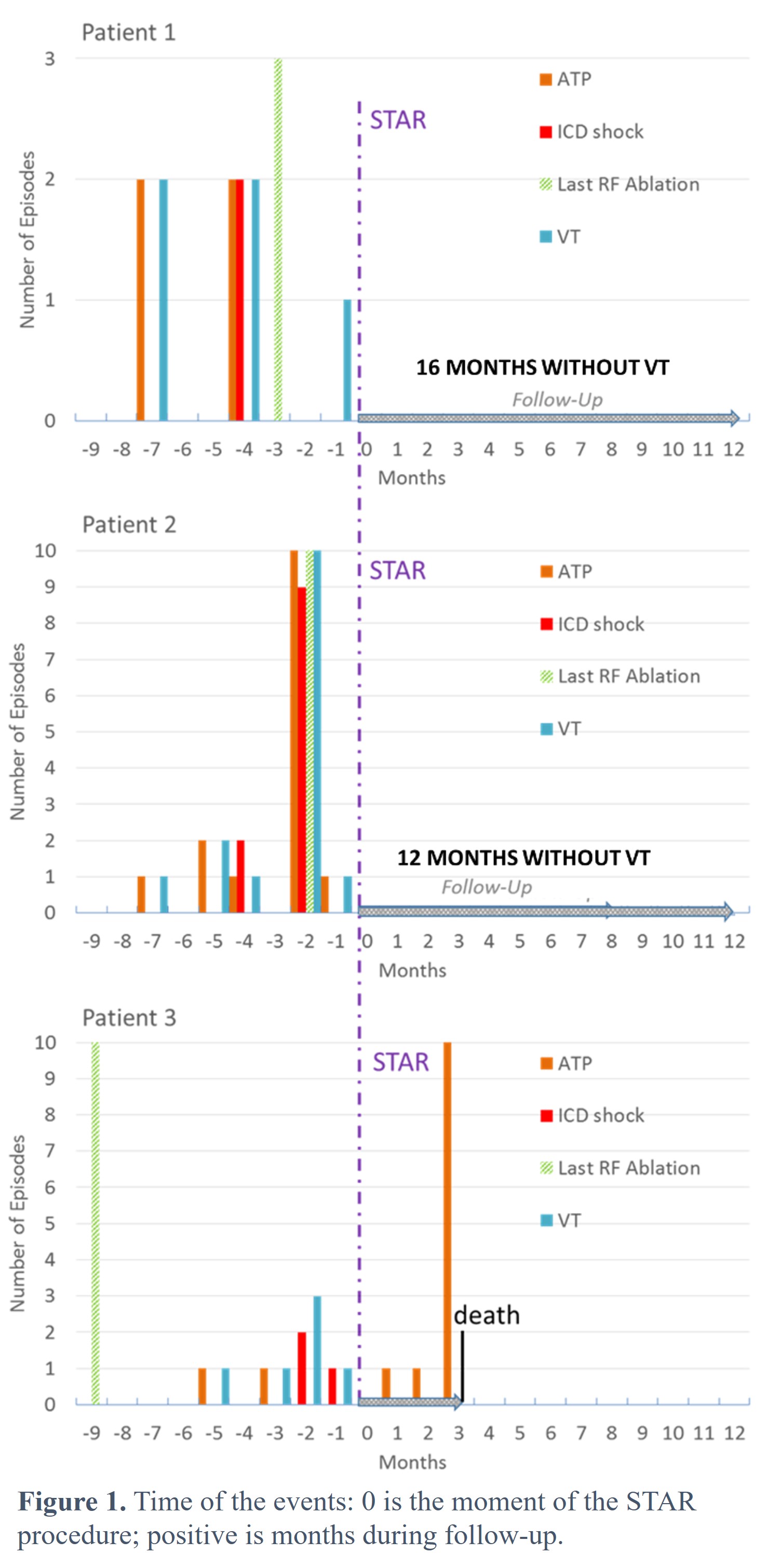
From August 2023 to August 2024, three male patients (ages 63–72) with reduced ejection fraction (15–30%) and multiple attempts of endocardial ablation, underwent STAR. Planning target volumes ranged from 47.8-91.8cc, with no grade ≥3 adverse events observed. ICD interrogation revealed no VT episodes in the first two patients over 16 and 12 months of follow-up (Figure 1). Left ventricular ejection fraction remained stable, and no radiation-induced inflammatory changes were noted. The third patient, with advanced heart failure and comorbidities, experienced VT recurrence and succumbed to progressive heart failure three months post-treatment.
Conclusion
STAR is a promising, non-invasive therapy for refractory VT, achieving significant arrhythmia suppression without severe adverse effects. While findings are encouraging, further research is needed to optimize patient selection, refine target delineation, and evaluate long-term outcomes. This approach represents a paradigm shift in managing refractory VT for cardiologists.
israelheart@ortra.com מייל לשאלות
