
Cardioneural ablation (CNA) via right internal jugular vein for vasovagal syncope aggravating sinus node dysfunction in a young patient with left heterotaxy.
2Pediatric cardiology unit, Share Zedek Medical Center, Israel
3Radiology Department, Share Zedek Medical Center, Israel
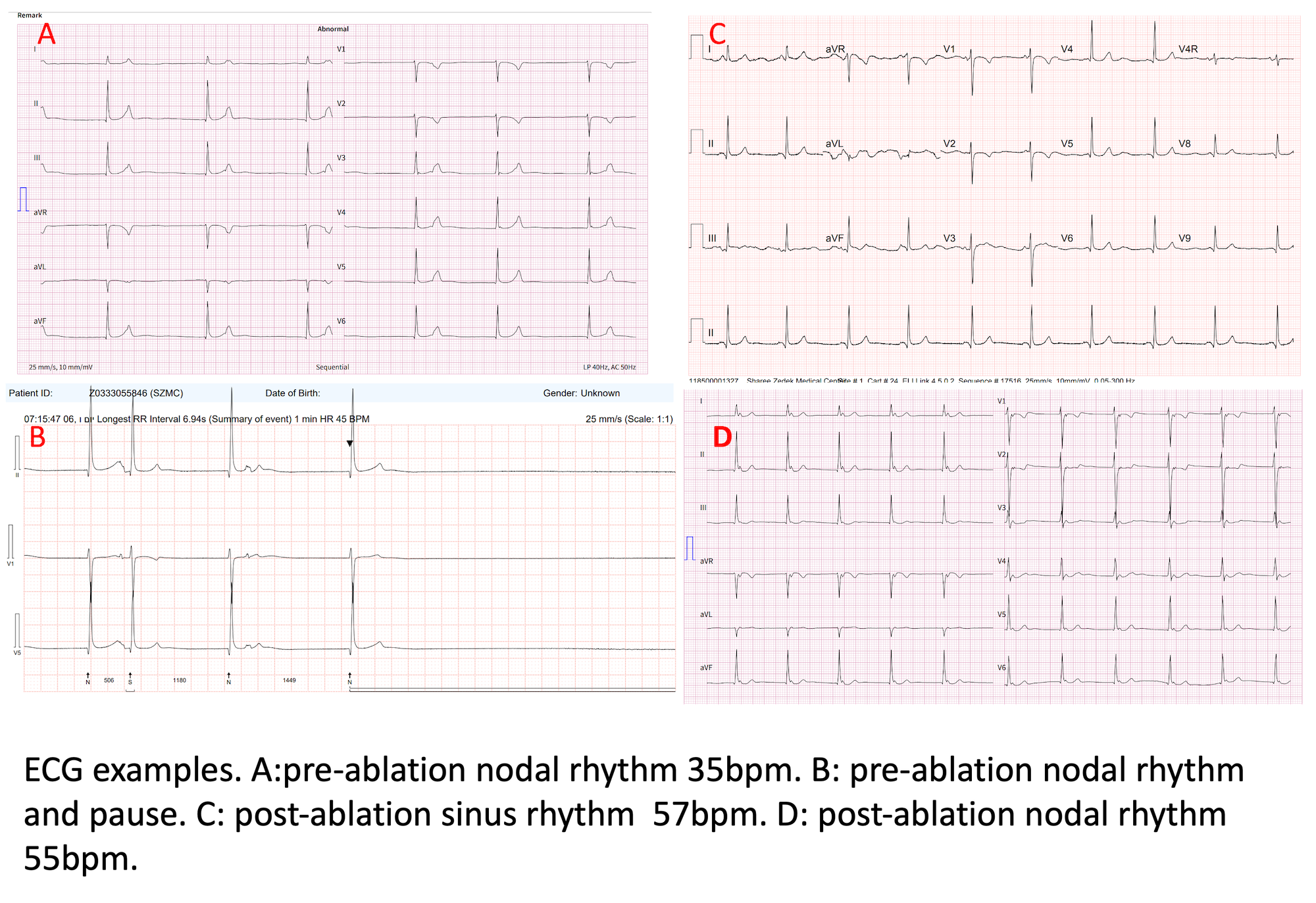
14y.oF presented with syncope episodes. Family history of a sister with sudden infant death syndrome at 10 weeks old. Syncope episodes were post-exercise or after standing. ECG showed nodal rhythm 50bpm, Holter demonstrated alternating sinus and nodal rhythms, mean 62bpm, 3.2s pauses at night. Exercise test showed increase in nodal rhythm and during maximal exercise sinus rhythm of 162bpm, during recovery different p wave morphologies with frequent change in rate and missed P waves not consistent with sinus arrhythmia or sinus exit block.
CMR showed LV and RV normal size and function, venous anomaly with bilateral SVC, left SVC connecting to dilated coronary sinus, interrupted IVC with azygos continuation to left SVC. Repeated exercise-test showed nodal rhythm acceleration with some change in P wave morphology (still retrograde or simultaneous) with rapid decrease in rates during recovery consistent with sinus node dysfunction. Tilt-test repeatedly evoked syncope due to classic cardioinhibitory response with up to 16s asystole. Genetic testing for cardiac panel found only VUS mutation. During a 2y FU repeated syncope episodes occurred. Vagal-mediated syncope on top of sinus node dysfunction was suspected. We performed CNA via right internal jugular approach. No sinus activity was seen on electroanatomical mapping of the RA. Using an electrogram-based approach the right superior ganglionic plexi was targeted only from the SVC-RA. An increase in sinus rhythm from 10-15 irregular bpm to 50 bpm was seen, with simultaneous increase in nodal rhythm. Tilt-test post-CNA with nitroglycerin evoked only presyncope without bradycardia. Revision of CMR findings were typical of left heterotaxy, a rare disorder characterized by abnormal lateralization and isomerism of thoraco-abdominal organs across the left–right axis of the body, here with bilateral left atria with resulted SND. ILR was implanted. Few syncope episodes occurred of suspected vasodepressor type, without bradycardia in ILR during 5m FU. Midodrine was started, without further episodes, proving vagal-mediated mechanism on top of SND.
israelheart@ortra.com מייל לשאלות
