
From Wrist to Precision: Enhanced Atrial Flutter Detection with Modified Smartwatch Single-Lead Electrocardiogram Placement
Background
Smartwatches, such as the Apple Watch (AW), are well-established tools for detecting atrial fibrillation (AF). We hypothesize that atrial flutter (AFL) is frequently misdiagnosed using traditional single-lead ECG configurations and that modified device positioning could substantially improve diagnostic accuracy.
Methods
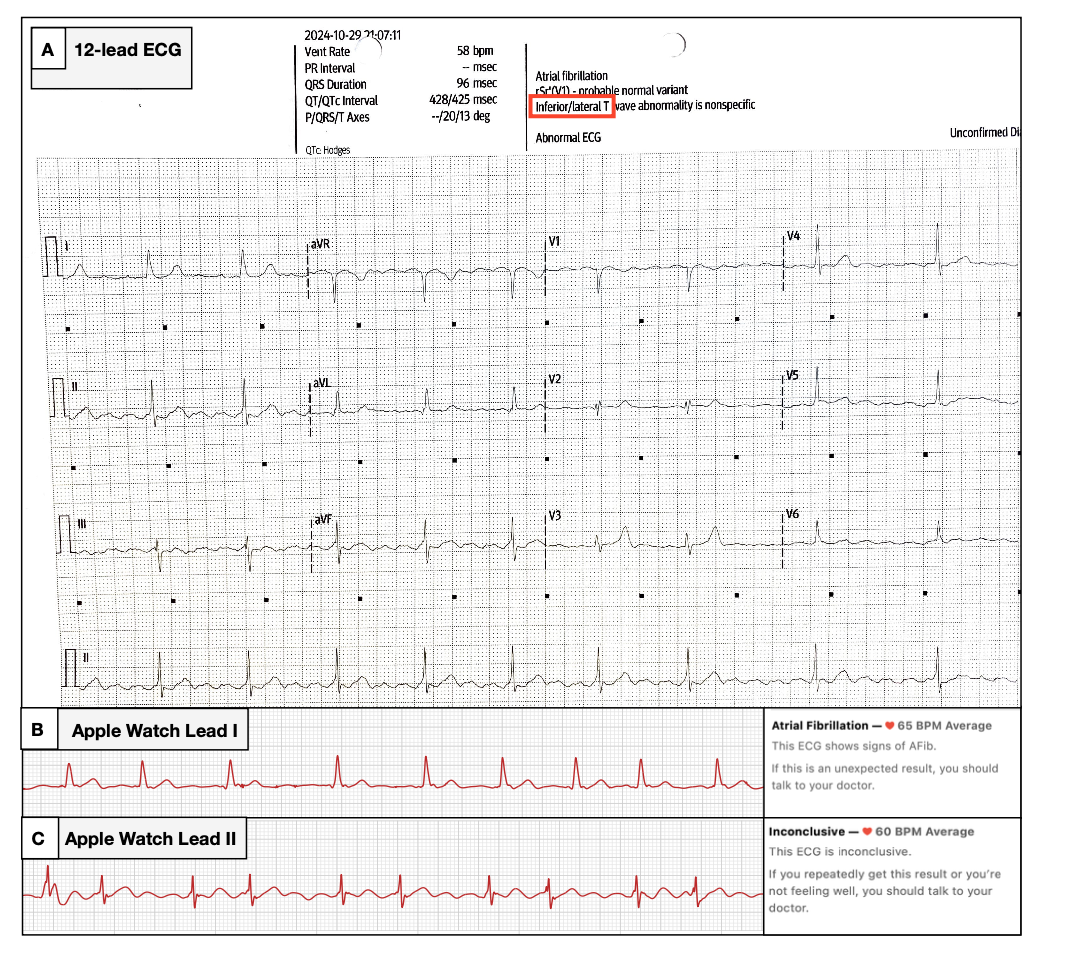
Standard smartwatch lead I (AW-I) recordings were obtained from 75 patients, including 25 with AFL, 25 with AF, and 25 with sinus rhythm (SR). Additionally, modified lead II (AW-II) recordings were collected for all AFL cases, resulting in a total of 100 tracings. Twenty blinded physicians from four different specialties independently analyzed all recordings.
Results
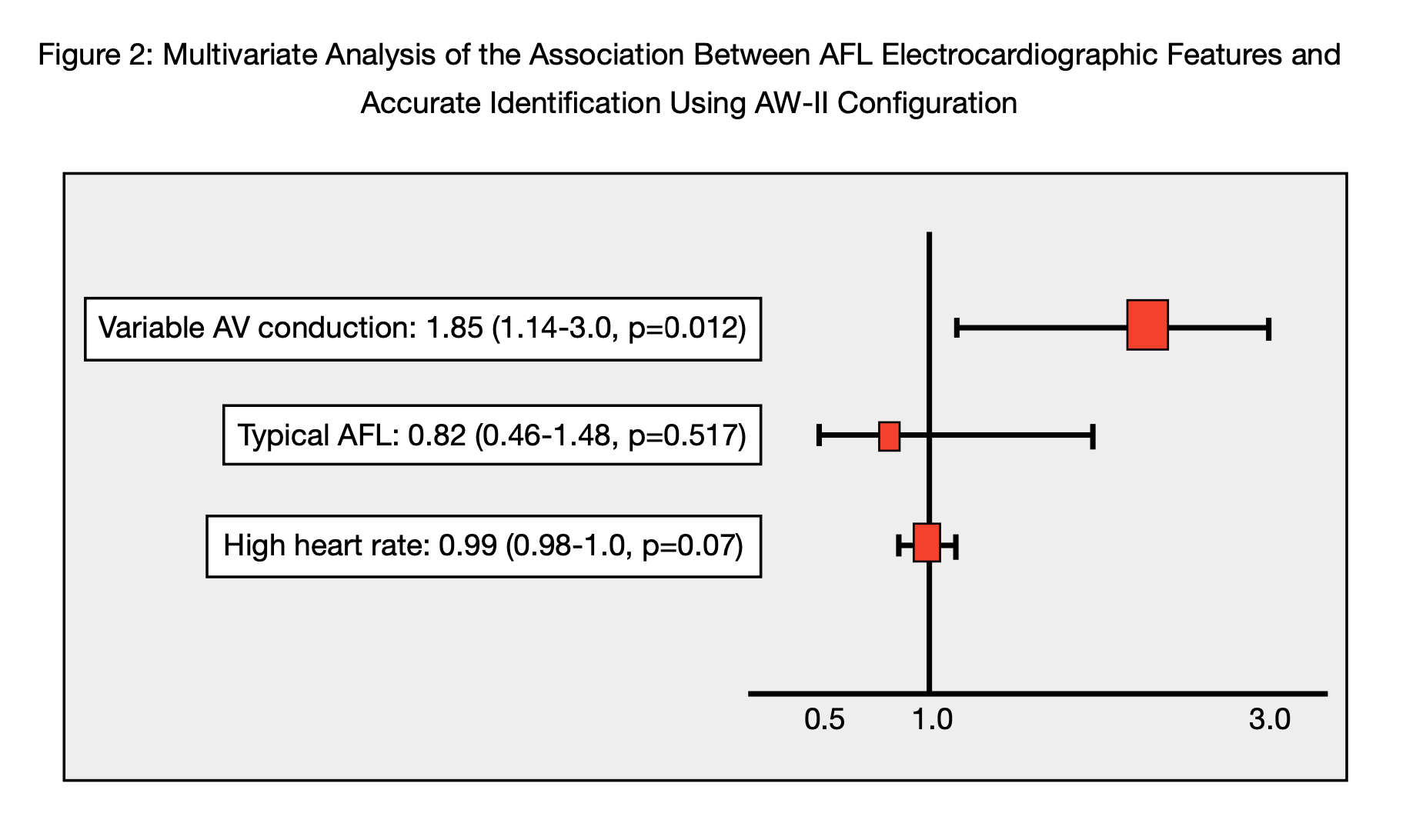
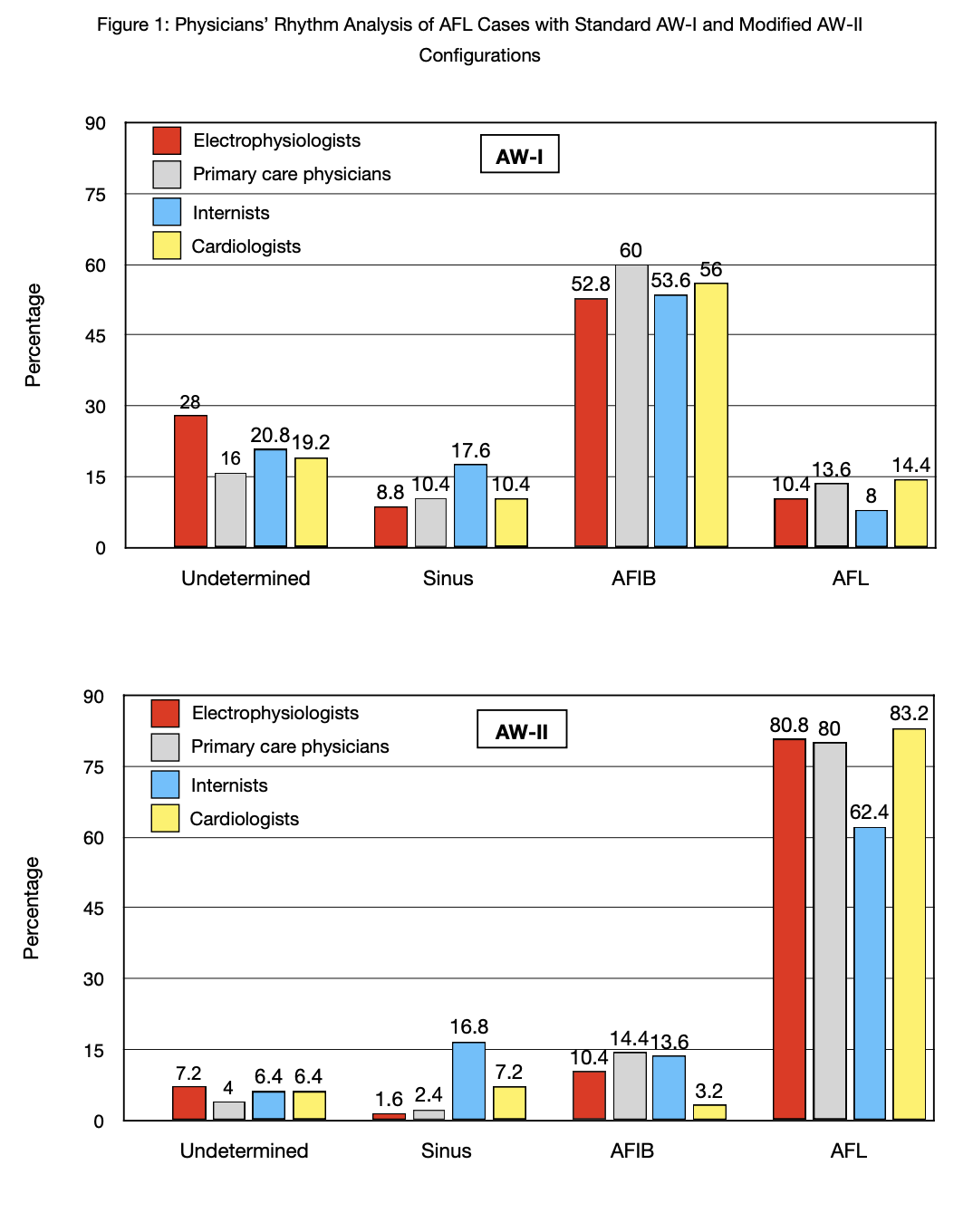
Physicians’ ability to detect AFL using the AW-I lead was poor, with only 11.6% correctly identified (p=0.362). AFL was most often misdiagnosed as AF (55.6%), undetermined (21%), or SR (11.8%). Diagnostic accuracy improved significantly with the AW-II lead, exceeding 80% among electrophysiologists, cardiologists, and primary care physicians (p=0.001). Variable AV conduction was strongly associated with correct diagnosis exclusively through the AW-II lead (OR 1.85, 95% CI 1.14–3.0, p=0.012). Both typical and atypical AFL patterns demonstrated comparable diagnostic improvements with AW-II (p=0.320). Higher heart rates were linked to lower diagnostic performance, regardless of lead configuration.
Conclusion
The conventional lead I configuration used by smartwatches is frequently associated with a high rate of misdiagnosing AFL as AF. Modified positioning significantly improved diagnostic accuracy for AFL, especially in cases with variable atrioventricular conduction. Adopting this modified device configuration may prove especially advantageous in high-risk populations predisposed to developing AFL.
israelheart@ortra.com מייל לשאלות
