
Predictors and Outcomes of Ventricular Pacing Post- Transcatheter Aortic Valve Replacement: 5 Years of Follow-Up
2Medicine, Tel Aviv University, Israel
Introduction: Permanent pacemaker (PPM) implantation after transcatheter aortic valve replacement (TAVR) is associated with adverse outcomes. This study aimed to evaluate the long-term outcomes of PPM implantation post-TAVR in patients with high and low ventricular pacing (Vp) burden.
Methods: A single-center, retrospective cohort study of consecutive patients who underwent PPM implantation within 30 days post-TAVR from 2003 to 2022. Clinical outcomes were evaluated by landmark analysis with cut-off at 1 year after the PPM implantation.
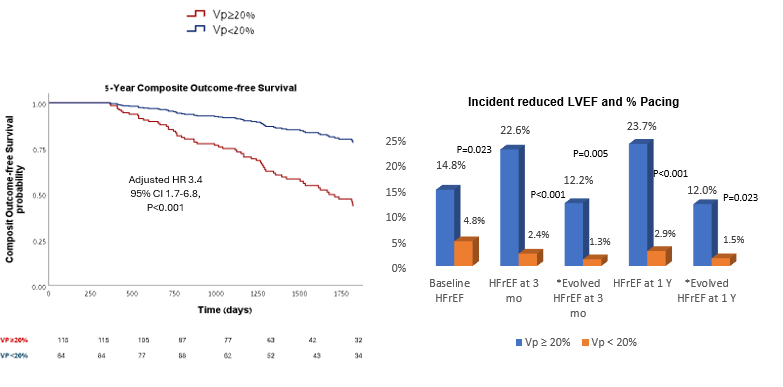
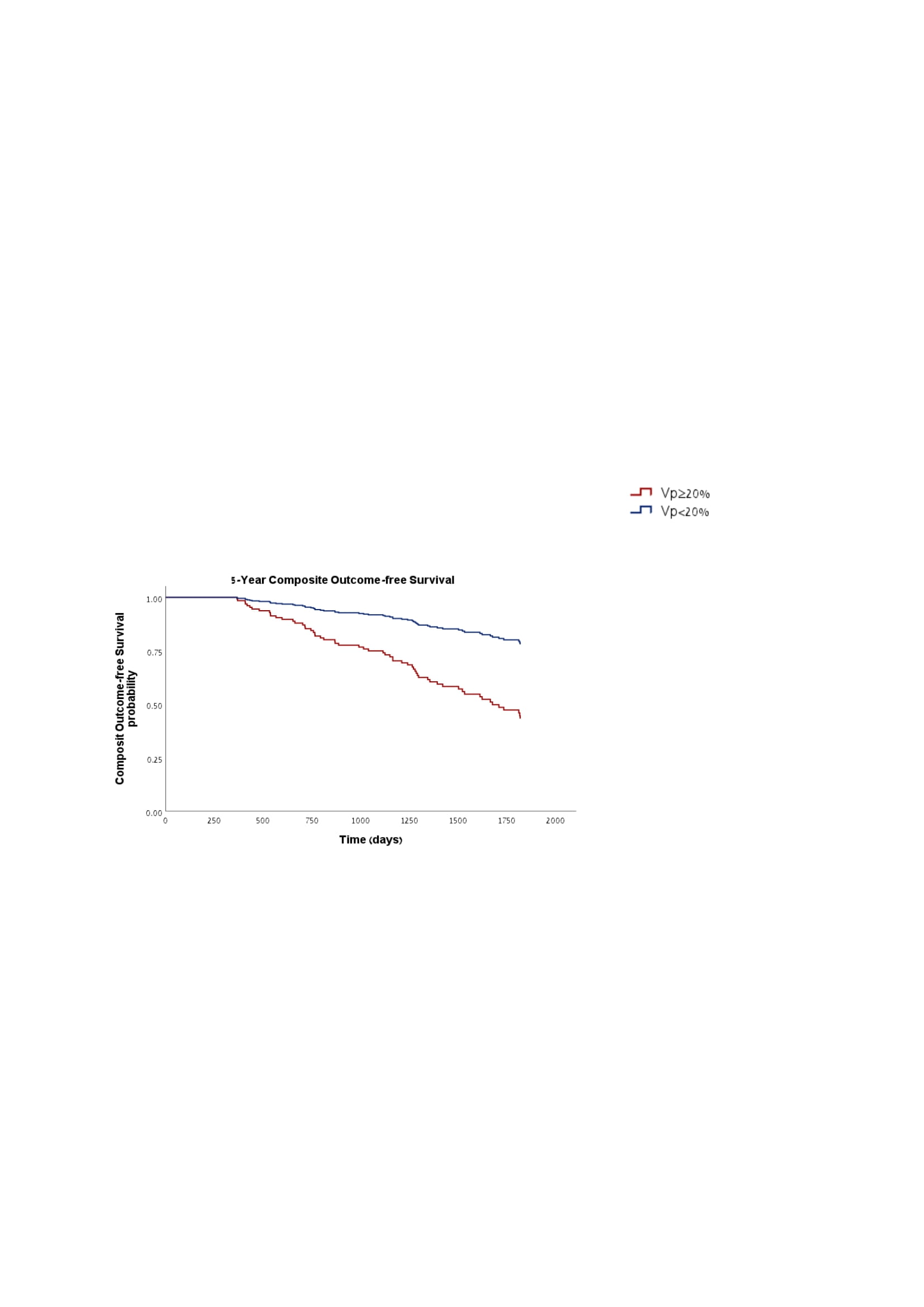
Results: Of 1573 TAVR patients, 229 required a PPM, of whom 199 had complete Vp data at 1 year post PPM implantation and were included: 84 (42%) patients with Vp<20% and 115 (58%) patients with Vp≥ 20%. Persistent complete atrioventricular block (CAVB) was the most common PPM indication in patients with Vp≥20% (66% vs. 11%, P<0.001), while transient CAVB was more prevalent in those with Vp<20% (48.2% vs. 11.8%, P<0.001). Over 5 years, patients with Vp≥20% had higher rates of the composite outcome of cardiac-related first hospitalization or mortality (adjusted HR 3.4; 95% CI 1.7-6.8; P<0.001), driven by each of its independent components. They also had a higher incidence of new reduced left ventricular ejection fraction (LVEF<40%) at 3 months (12.2% vs. 1.3%, P=0.005) and at 1 year (12% vs. 1.5%, P=0.023). In multivariate analysis, persistent CAVB was the strongest predictor of Vp≥ 20% at 1 year (adjusted OR 14.2; 95% CI 5.3-37.9; P<0.001).
Conclusion: 1-year VP ≥20% post-TAVR PPM implantation was associated with higher cardiac hospitalizations and mortality over 5 years of follow-up.
israelheart@ortra.com מייל לשאלות
