
Rapid Door-to-ECMO: Improving Survival and Organ Donation Outcomes Through a Multidisciplinary ECPR Program for Refractory Cardiac Arrest
2Intensive Care Unit, Tel Aviv Sourasky Medical Center, Israel
Introduction: In 2023, we launched a collaborative initiative between the cardiology division, the general intensive care unit (ICU), and the emergency department to establish a comprehensive extracorporeal cardiopulmonary resuscitation (ECPR) program at our center. This report details the program’s outcomes over its first two years.
Methods: We prospectively collected data on all ECPR cases performed between 2023 and 2024. All patients had cardiac arrest refractory to conventional advanced cardiovascular life support (ACLS). Collected data included the location of cardiac arrest, initial rhythm, initial lab values, time intervals of ACLS and cannulation, cannulation details and additional treatments. Outcome measures focused on survival with good neurological function and organ donation rates.
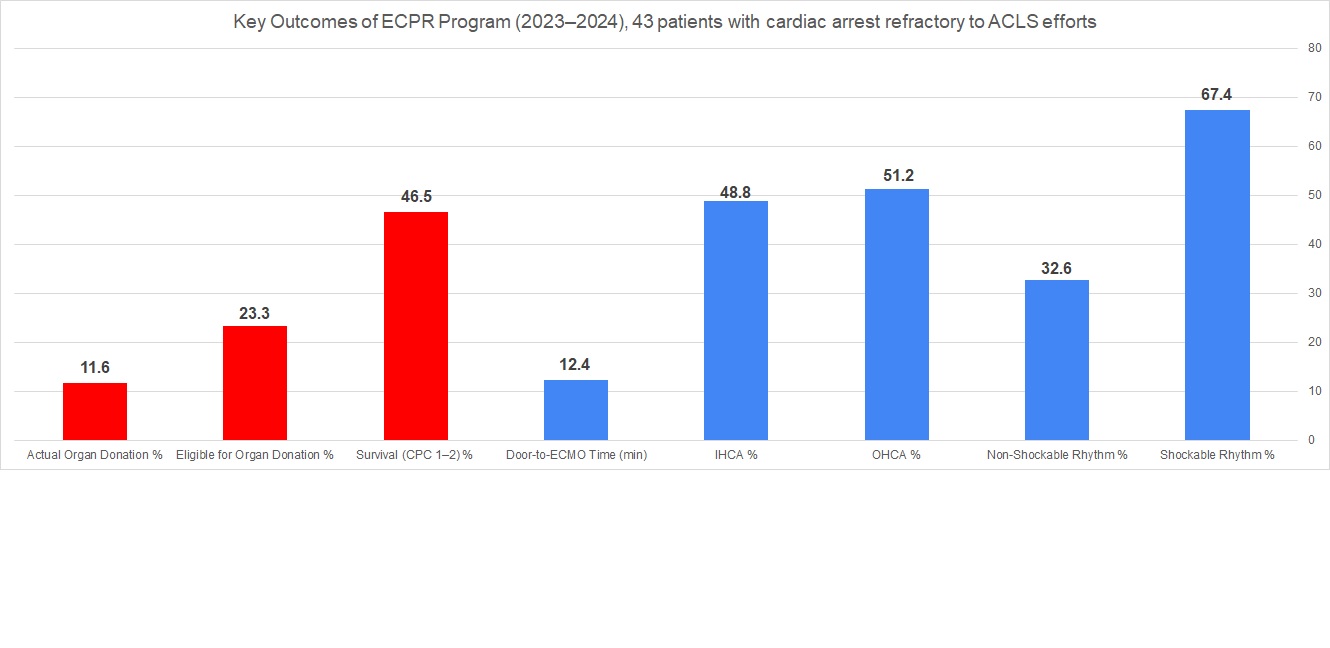
Results: A total of 43 patients (mean age:54.8±15.4 years) were included, with 76.7% male(n=33). The initial rhythm was shockable in 67.4%(n=29). Out-of-hospital cardiac arrest occurred in 51.2%(n=22) of cases, with a mean arrest-to-door time of 40.0±14.9 minutes. The mean lactate level upon presentation was 11.78±4.3 mmol/L, and the mean pH was 7.03±0.22. Cannulation was performed in the cath lab (41.9%,n=18), the emergency department (34.9%,n=15), or at the bedside in various ICUs (23.3%,n=10), in a percutaneous femoral approach. The mean door-to-ECMO time was 12.4±2.7 minutes. Coronary angiography was performed in 67.4%(n=29) of cases. LV unloading strategies included no unloading in 48.8%(n=21), intra-aortic balloon pump in 32.6%(n=14), and Impella in 18.6%(n=8).
Thirty-day survival with good neurological status was achieved in 46.5%(n=20). Ten were deemed brain dead and eligible for organ donation, leading to 5 successful organ donations.
Conclusion: Our ECPR program demonstrates the feasibility of a multidisciplinary collaboration and the effectiveness of rapid door-to-ECMO protocols in saving lives that would otherwise have been lost. By improving survival outcomes and enabling organ donation opportunities, this program highlights its critical role in treating the sickest patients and its potential for broader adoption in healthcare systems.
israelheart@ortra.com מייל לשאלות
