
The Effects of Surgical and Transcatheter Aortic Valve Replacement for Aortic Stenosis on Regression and Progression of Mitral Regurgitation -A propensity Score Matched Analysis
2Cardiothoracic Surgery, Rabin Medical Center, Israel
Introduction: Significant mitral regurgitation (MR) is commonly observed in patients with severe aortic stenosis (AS)undergoing Surgical Aortic Valve Replacement (SAVR) or Transcatheter Aortic Valve Replacement (TAVI). This study aims to compare the effects of these procedures on MR outcomes.
Methods: From 1997 to 2023, a total of 3,642 patients with AS were followed at our center, comprising 1,809 who underwent SAVR and 1,833 who received TAVI. Patients were matched using propensity score analysis based on age, gender, and pre-procedural echocardiographic characteristics. Changes in MR were assessed through baseline and follow-up echocardiograms, classified into two groups: grades 0-3 (0 = none to 3 = mild-moderate) and 4-6 (4 = moderate to 6 = severe). Regression was defined as MR improvement from group 4-6 to group 0-3, while progression indicated by the opposite cross over.
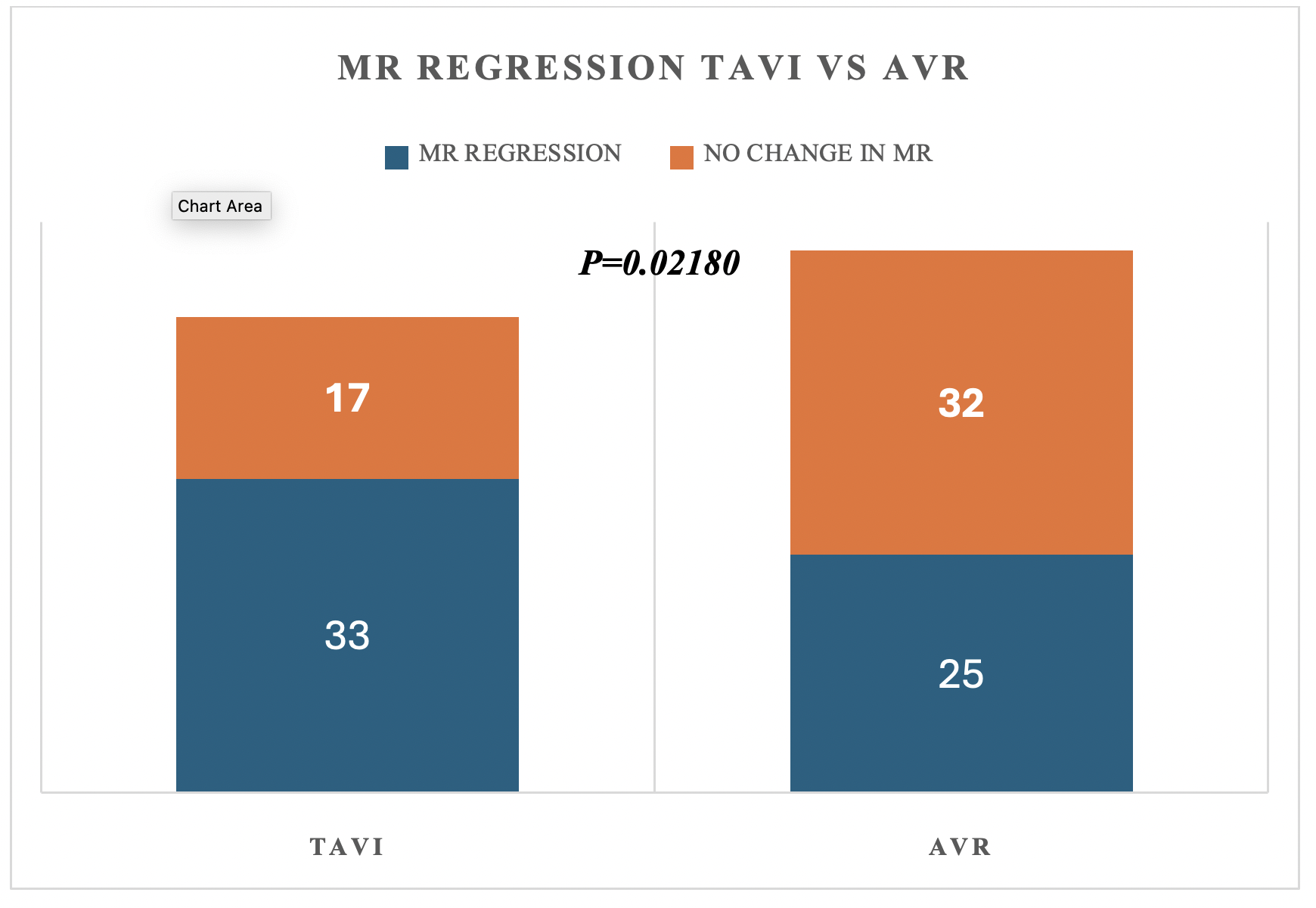
Results: Matched cohorts of 539 patients from each group SAVR and TAVI (mean age 76.91 years, SD 6.57; 49% female) with comparable distributions of risk factors were analyzed. In the SAVR group, 27 patients (5.83%) progressed to grades 4-6, while 16 patients (3.58%) in the TAVI cohort showed similar progression (p=0.109). MR regression (fromgrade 4-6 at baseline to grade 0-3 during follow-up) was observed in 25 patients (43.86%) in the SAVR group and 33(66%) in the TAVI group (p=0.0218) .
Conclusion: SAVR and TAVI have a similar minor effect on the progression of mitral regurgitation (MR). However, TAVI patients with moderate or greater MR at baseline exhibit a significantly greater rate of MR regression compared to those who underwent SAVR.
israelheart@ortra.com מייל לשאלות
