
Exploring the occurrence and outcome of acute myocarditis in patients with nasopharyngeal swab-confirmed viral infections
Introduction: Acute myocarditis (AM), an inflammatory cardiac condition with diverse clinical manifestations, poses a diagnostic challenge due to overlapping symptoms with other acute cardiac conditions and limited available diagnostic rools. It is crucial to detect the disease early in its course and prevent persisting inflammation that may lead to dilated cardiomyopathy or sudden cardiac death. The widely recognized association between viral infections and AM is marked by common flu-like symptoms. Respiratory viruses identified through nasopharyngeal swabs, are increasingly recognized as triggers for this condition.
Purpose: This study aims to investigate the prevalence and outcomes of respiratory viruses in the upper respiratory airways of individuals diagnosed with AM.
Methods: A comprehensive retrospective analysis was performed to assess the frequency of respiratory viruses detected in nasopharyngeal swabs among patients admitted to Sheba Medical Center with a confirmed diagnosis of AM during the period from January 2005 to December 2020.
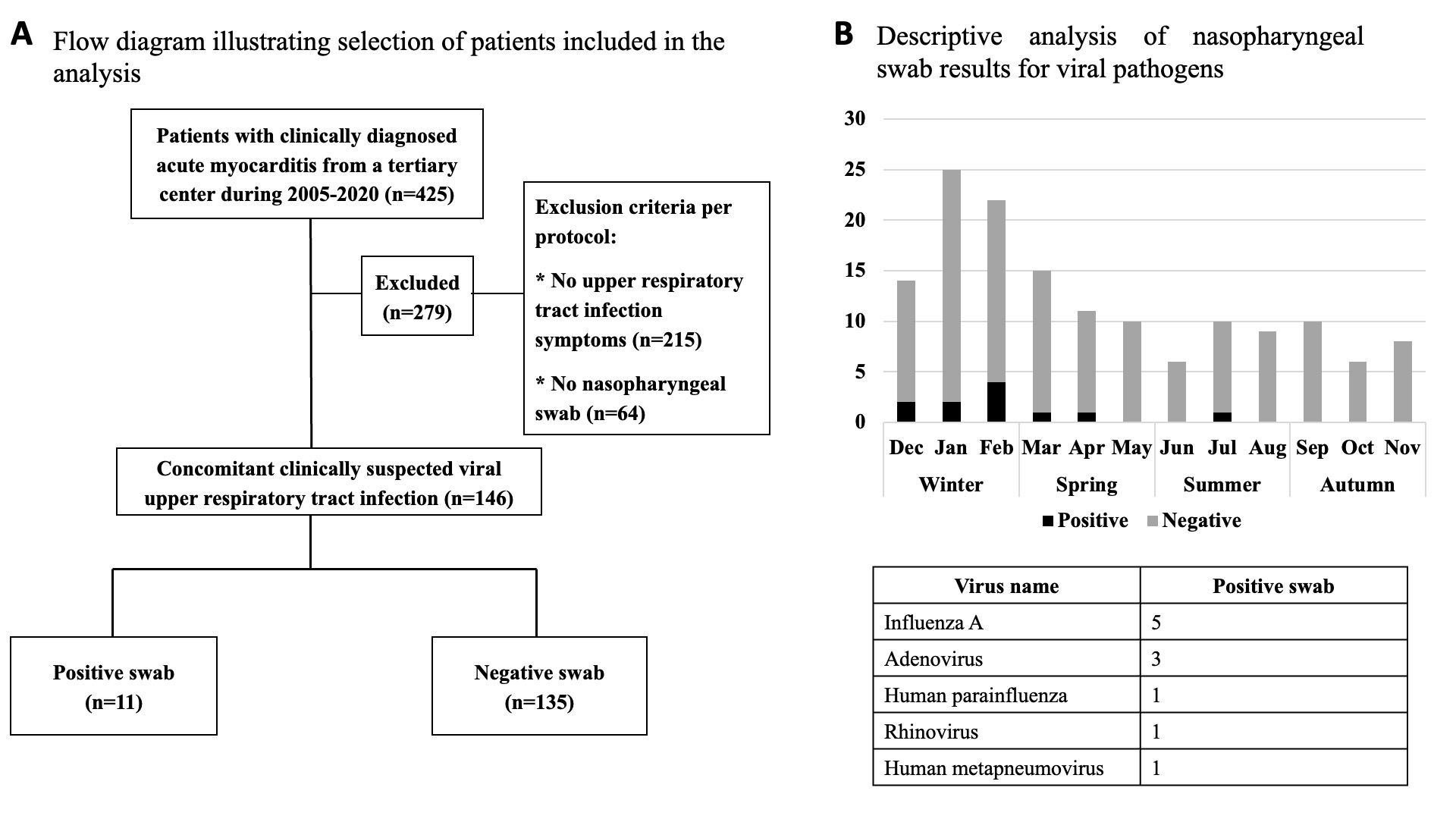
Results: Out of 425 cases. we analyzed data from 146 consecutive patients hospitalized with a diagnosis of AM, who had a nasopharyngeal swab taken at admission. Among these, 11 cases (representing 8%) tested positive for viral pathogens, with influenza A (n=5) and adenovirus (n=3) being the predominant viruses detected. These positive cases, with one exception, were identified during winter and early spring (10/77, 13%). For the patients with positive swabs, the average onset of symptoms prior to hospitalization was 10±9 days. All these patients experienced typical flu-like symptoms, such as fever, cough, or sore throat, and presented with chest pain (72% nonpleuritic and 28% pleuritic). Cardiac magnetic resonance imaging showed subepicardial late gadolinium enhancement in 64% of cases. Congestive heart failure developed in only one case during hospitalization.
Conclusions: This study provides valuable insights into the prevalence, clinical characteristics, and outcomes of AM associated with respiratory viruses. The incorporation of nasopharyngeal swabs in the diagnostic process could serve as a valuable tool for identifying viral triggers in AM, particularly during winter and early spring.
israelheart@ortra.com מייל לשאלות
