
Mitral Valve Repair in Endocarditis: A Two-Decade Follow-up on Surgical Outcomes
Background: Mitral valve repair is a cornerstone of valvular surgery, yet its suitability and outcomes among patients with endocarditis remain understudied. This study aims to evaluate whether mitral valve repair in endocarditis patients yields outcomes comparable to those without endocarditis.
Methods: This retrospective study included patients who underwent mitral valve repair between 2004 and 2024 at two tertiary centers in Israel. A total of 1370 patients were included, of whom 100 (7.3%) had endocarditis. Baseline clinical and echocardiographic parameters were compared between patients with and without endocarditis.
Results: The cohort had a median age of 60 years, IQR: 51–68. Patients with endocarditis were significantly younger than those without endocarditis (median 51, IQR: 36–63 vs. median 60, IQR: 51–69, p < 0.01). There were 3 in-hospital mortalities, all of which in the non-endocarditis group (0.0% vs. 0.2%, p = 0.98). No significant differences were observed in other early outcomes. At follow-up (median 78 months, IQR: 32–135 months), 3-year survival was 97% for the endocarditis group and 98% for the non-endocarditis group (p = 0.65). There were 169 (12.5%) all-cause deaths, with no significant difference between the groups (9.6% vs. 12.7%, p = 0.52). Freedom from recurrent mitral regurgitation was comparable between groups (10% recurrence in both groups, p = 0.97). Reoperation rates were also not significantly different (7.2% vs. 6.0% reoperation, p = 0.79).
Conclusions: Mitral valve repair in patients with endocarditis demonstrates comparable outcomes to those without endocarditis, with no significant differences in long-term mortality, mitral regurgitation recurrence, and reoperation rates.
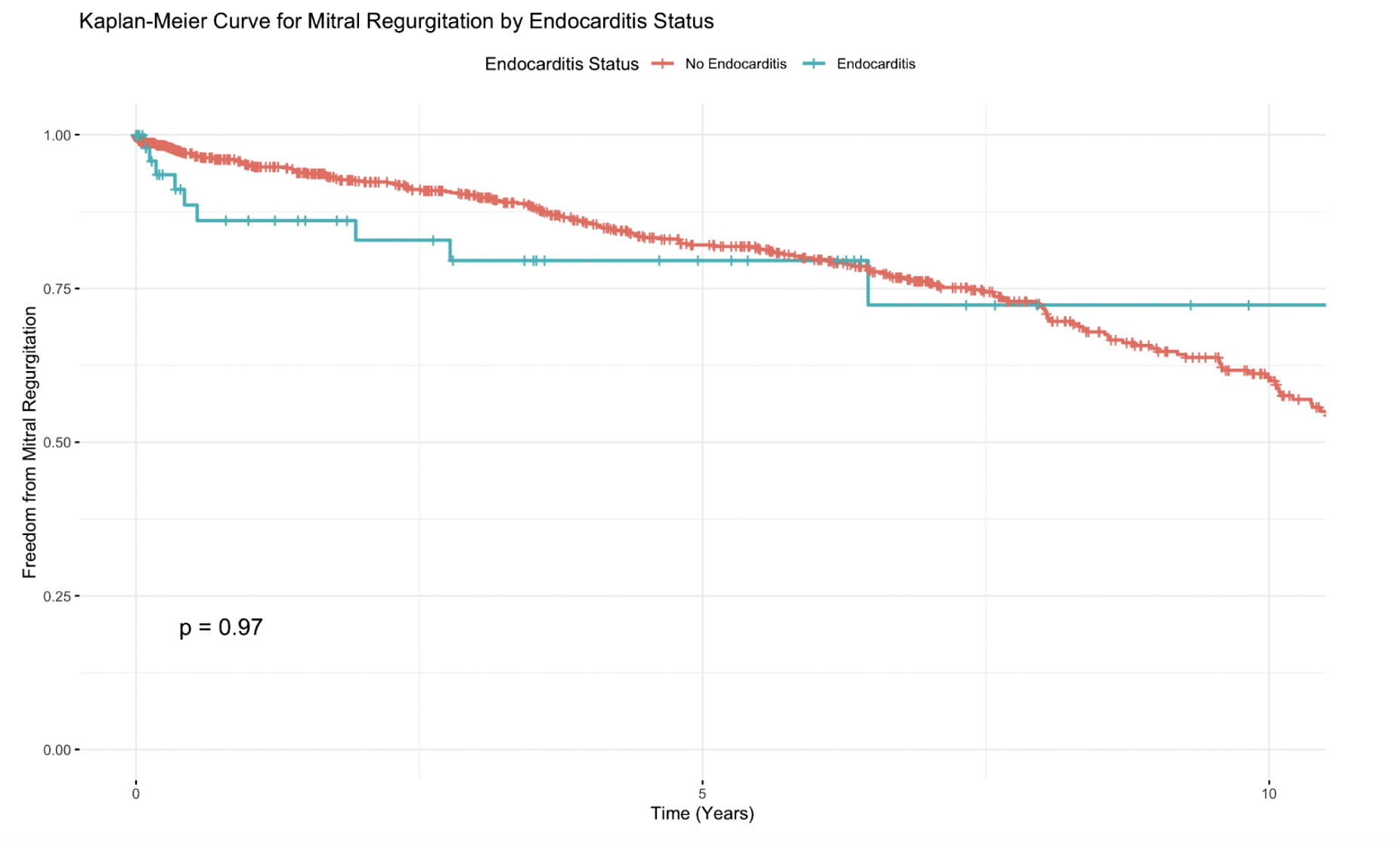
Figure: Unadjusted Kaplan Meier survival curve comparing mitral repair patients with endocarditis and without in relation to mitral regurgitation recurrence.
israelheart@ortra.com מייל לשאלות
