
Mitral Valve Endocarditis: Repair or Replace?
Background: Mitral valve (MV) endocarditis often requires surgical intervention; however, the optimal approach, repair versus replacement, remains uncertain. This study evaluates the impact of surgical type on early and late outcomes.
Methods: This retrospective study included patients who underwent mitral valve surgery for endocarditis between 2004 and 2024 at two tertiary centers in Israel. A total of 100 patients underwent mitral valve (MV) repair, and 82 patients underwent mitral valve replacement (MVR). The decision to repair or replace was at the discretion of the surgeon and was dependent on the patient’s clinical condition and the extent of MV tissue destruction.
Results: Patients who underwent repair were younger (median 51, IQR: 35.8–63 vs. median 64.5, IQR: 54–72, p < 0.001) and had lower preoperative EuroSCOREs (median 3, IQR: 2–6 vs. median 7, IQR: 5–10, p < 0.001). There were 4 in-hospital mortalities, with 0 (0.0%) in the repair group and 4 (4.9%) in the replacement group (p = 0.04). No significant differences were observed in other early outcomes. At follow-up (median 78 months, IQR: 32–135 months) 2-year survival was 83% for the repair group and 77% for the replacement group, respectively (p = 0.35). At follow-up, freedom from recurrent endocarditis was 98.0% in the repair group and 93.9% in the replacement group (p = 0.3). Freedom from recurrent mitral regurgitation (MR) was 87.5% in the repair group and 90.7% in the replacement group (p = 0.76) (Figure). Freedom from re-operation on the MV was 94.0% in the repair group and 92.6% in the replacement group (p = 0.77).
Conclusion: In selected patients, when compared to MV replacement, MV repair offers superior early and late clinical outcomes.
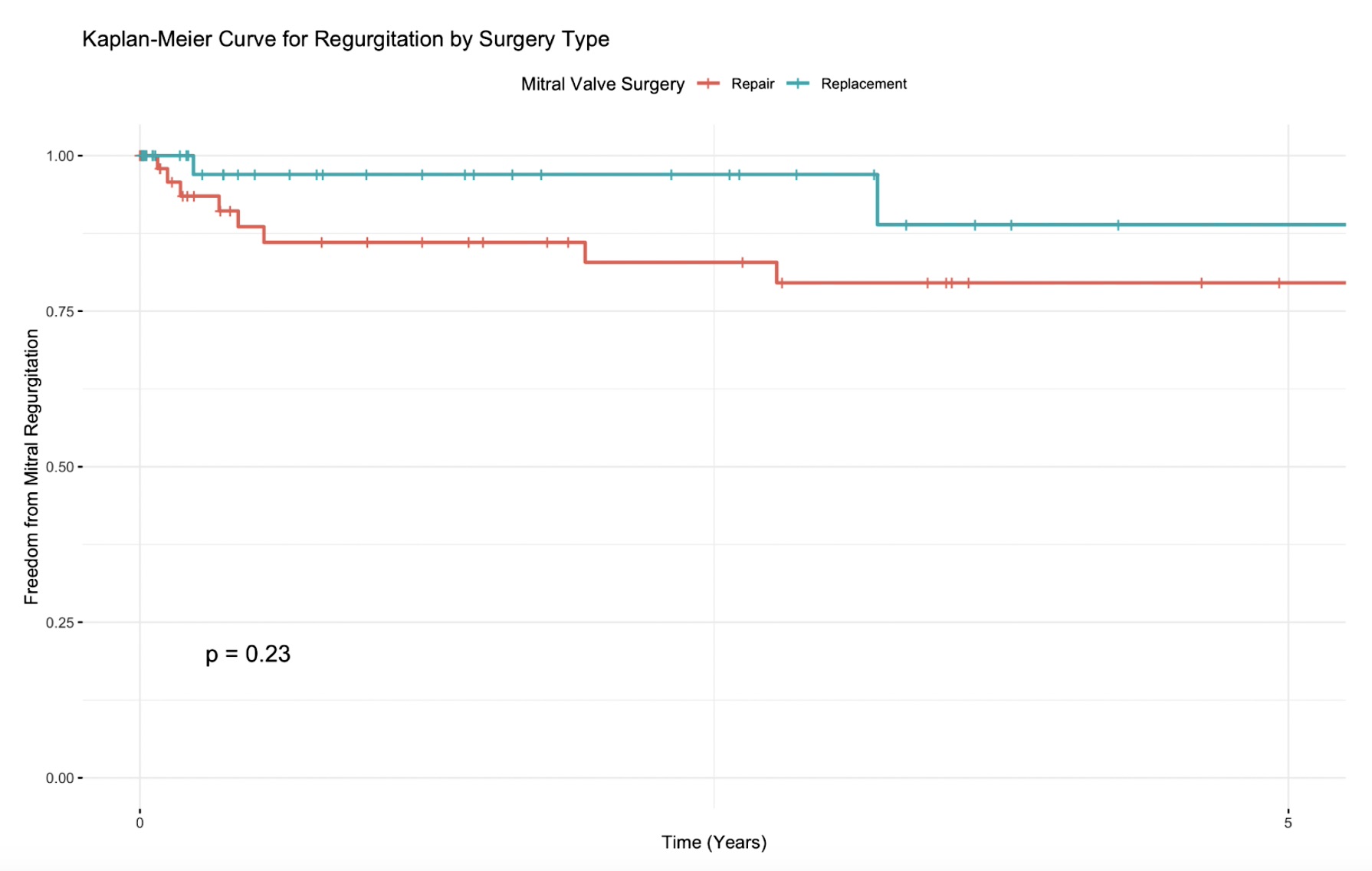
Figure: Kapalan-Meier plot comparing mitral replacement and repair among endocarditis patients relating to recurrence of mitral regurgitation.
israelheart@ortra.com מייל לשאלות
