
Mexiletine as Adjunct Therapy for Long QT Syndrome Type 2: a prospective interventional cohort study
Introduction
Long QT syndrome is an inherited primary arrhythmia associated with life threatening ventricular arrhythmias (VA) and sudden cardiac death (SCD). While beta blockers (BB) are first line therapy, residual risk for VA and SCD remain, underscoring the need for additional therapies. Mexiletine, a class Ib antiarrhythmic that suppresses the late sodium current, may shorten the QT interval and serve as adjunctive therapy in long QT type 2 (LQTS2). In this prospective interventional study, we examine the effect of mexiletine on QT duration in patients with genetically confirmed LQTS2.
Material and methods
Patients with genetically confirmed LQTS2, a QTc of ≥460 ms, and on maximal non-selective BB, were included. A 7-day mexiletine trial (target dose of ~9 mg/kg/day) was conducted. QTc was measured at baseline and after mexiletine treatment using resting electrocardiogram (ECG), different stages of exercise ECG testing and at different heart rates on a 12-lead Holter monitor.
Results and discussion
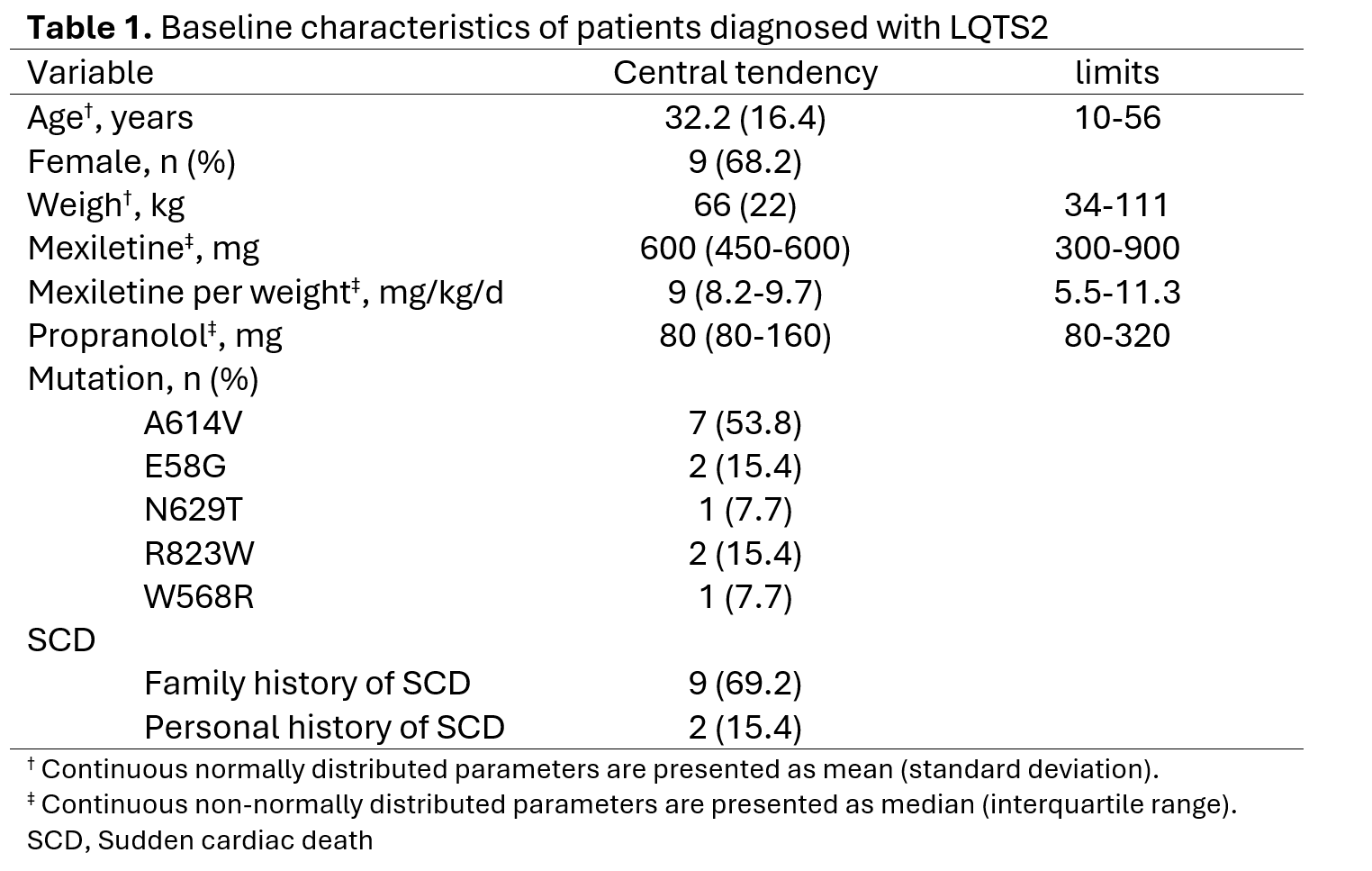
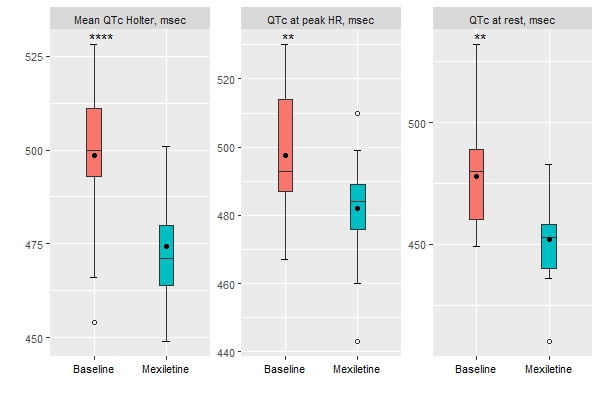
Fourteen patients were recruited, one withdrew due to gastrointestinal (GI) symptoms, and two others received a reduced dose for the same reason. Table 1 summarise the patients characteristics. After 7 days of treatment with mexiletine (Figure 1), QTc on resting ECG was shorter by 26 ms (95% CI: 10.8-41.2; p=0.003), QTc was also shorter at each stage of exercise ECG testing, with a reduction of 15.7 ms at peak heart rate (95% CI: 4.7–26.7; p=0.009), and across different heart rates on 12 lead holter monitor averaging a reduction of 24.2 ms (95% CI: 15.5-32.8; p=<.001).
Conclusion
Among patients with LQTS2 on BB therapy, treatment with mexiletine has shortened the QT interval considerably and consistently. Shortening the QT interval among these patients could translate to a reduction in the risk of SCD. Large randomized clinical trials are needed to confirm the suggested clinical benefit.
israelheart@ortra.com מייל לשאלות
