The Association Between Temporal Bone Pneumatization and Superior Semicircular Canal Dehiscence
2Dept. of Otolaryngology-Head and Neck Surgery and Dept. of Maxillofacial Surgery, Tel Aviv Sourasky Medical Center, Israel
Objective: To investigate the relationship between temporal bone pneumatization (TBP) and superior semicircular canal dehiscence (SSCD) by using a contralateral-control methodology to minimize potential confounding factors.
Study Design: Retrospective paired temporal bone imaging analysis.
Setting: Tertiary referral center.
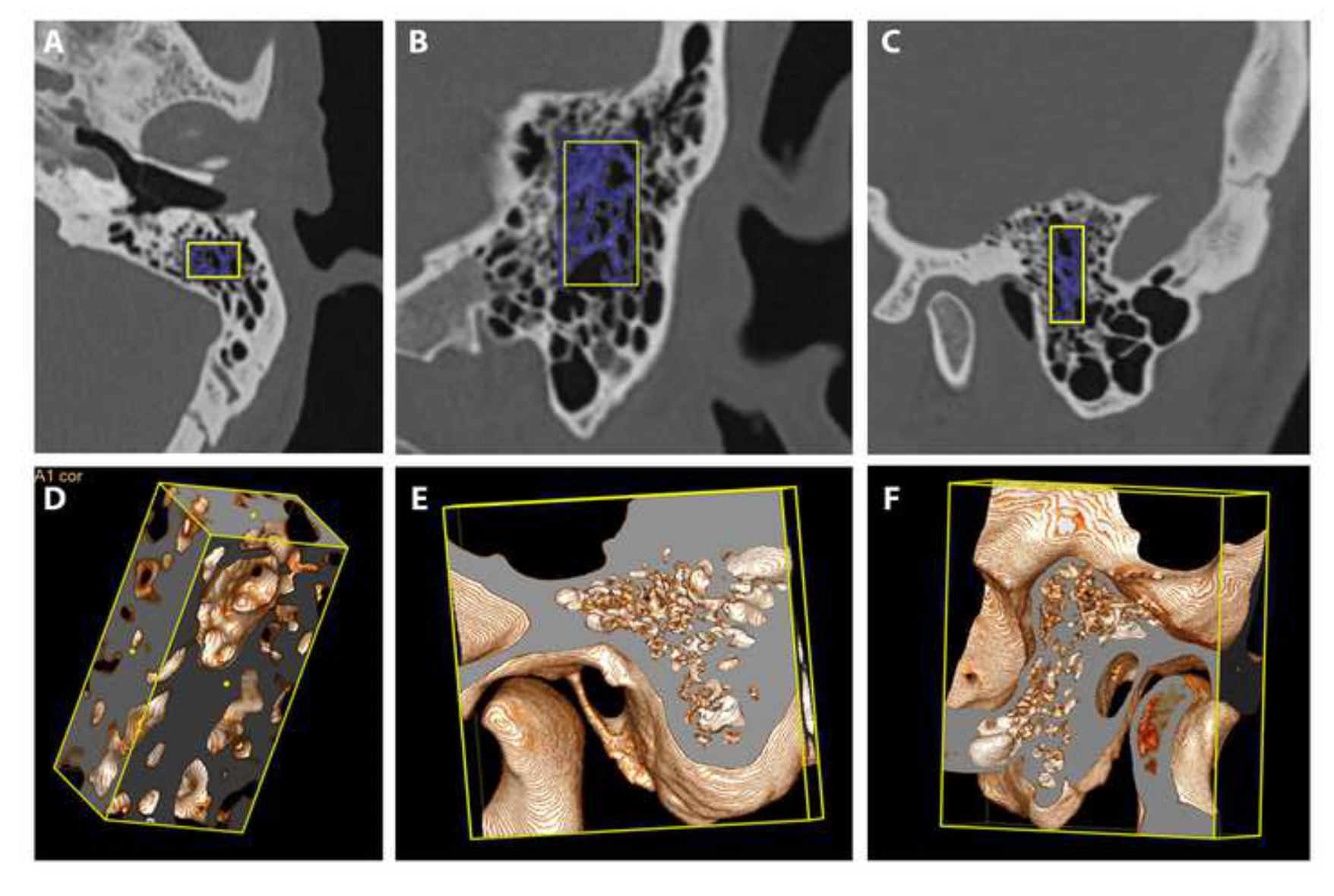
Methods: High-resolution temporal bone computerized tomographic scans of patients with unilateral SSCD between 2017 and 2025 were analyzed. Patients with suspected idiopathic intracranial hypertension, inadequate image quality, additional tegmen defects, or bilateral SSCD were excluded. TBP was assessed by established qualitative grading systems and a quantitative mastoid ossification index. Each SSCD temporal bone was compared with its contralateral paired normal control.
Results: Fifty patients met the inclusion criteria (27 females, 23 males; median age 59 years). Strong agreement was observed among all qualitative pneumatization grading systems, with the mastoid ossification index correlating strongly with each (P < .001). No significant association was identified between pneumatization and sex or laterality, while a weak positive correlation was noted with increasing age (P = .20 and P = .043).
Temporal bones with SSCD demonstrated significantly reduced pneumatization compared to contralateral controls across all grading systems, with a higher mean ossification index in the SSCD bones (0.65 vs. 0.43, P < .001).
Conclusion: This contralateral-control study demonstrates that temporal bones with SSCD are significantly less pneumatized than their paired controls, supporting an association between reduced temporal bone pneumatization and the development of SSCD. These findings suggest that impaired temporal bone aeration may contribute to SSCD pathogenesis.