Seeing Beyond Stenosis: Vessel Wall MRI in VZV Associated Vasculopathy
Background:
Varicella-zoster virus (VZV) vasculopathy is an important and potentially treatable cause of ischemic stroke. Diagnosis may be challenging when conventional vascular imaging demonstrates no significant arterial stenosis. Vessel wall imaging (VWI) may reveal inflammatory arterial changes that remain occult on luminal imaging.
Case Presentation:
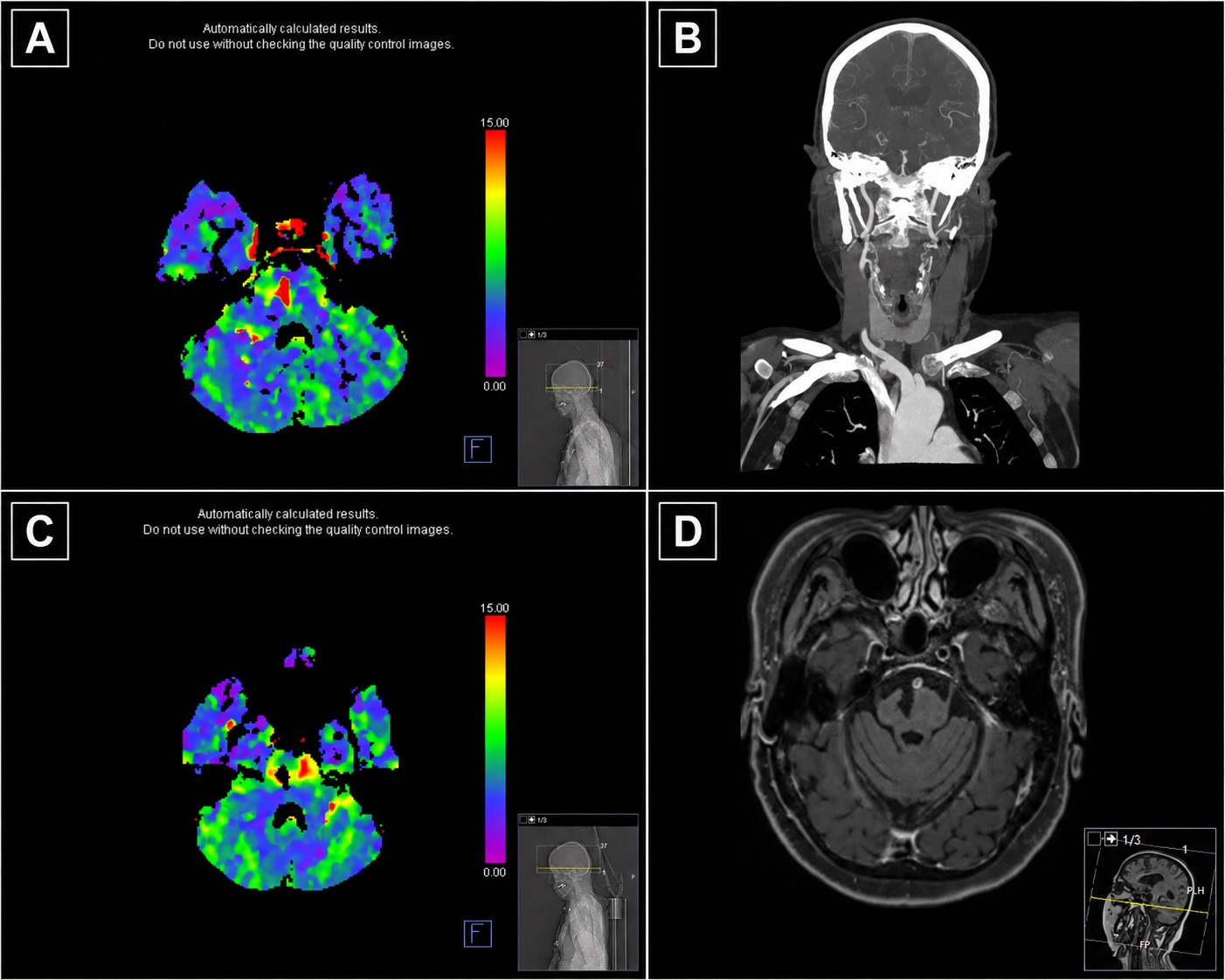
A 58-year-old woman presented with acute left-sided weakness. Initial perfusion imaging demonstrated an acute right pontine infarction (A). Vascular imaging includes CTA Carotis showed a certain degree of stenosis of the basilar artery (B). She was treated according to standard acute stroke protocols, and subsequent etiologic investigation, including cardiac echocardiography, failed to identify an embolic source.
During hospitalization, despite antithrombotic therapy, the patient developed new contralateral neurological symptoms. Repeat perfusion imaging demonstrated a new contralateral pontine infarction (C). The occurrence of sequential bilateral pontine ischemic events despite treatment, in the absence of significant luminal abnormalities or an identified embolic source, raised suspicion for an alternative vascular mechanism.
Intracranial VWI was subsequently performed and demonstrated enhancement of the basilar artery wall with concentric luminal narrowing (D), suggesting an underlying inflammatory vasculopathy. Further directed clinical history revealed a recent painful cutaneous eruption that had been diagnosed as herpes zoster. In the setting of recurrent posterior-circulation ischemia, basilar artery wall enhancement, and recent VZV infection, the findings were considered consistent with post-herpetic VZV vasculopathy.
Conclusion:
This case highlights the diagnostic value of VWI in patients with recurrent ischemic stroke and otherwise unrevealing vascular imaging. VZV vasculopathy may cause clinically significant arterial inflammation despite preservation of the vessel lumen. Sequential pontine infarctions may provide an important clue to basilar arteriopathy, with VWI revealing an otherwise occult and potentially treatable cause of recurrent stroke.